
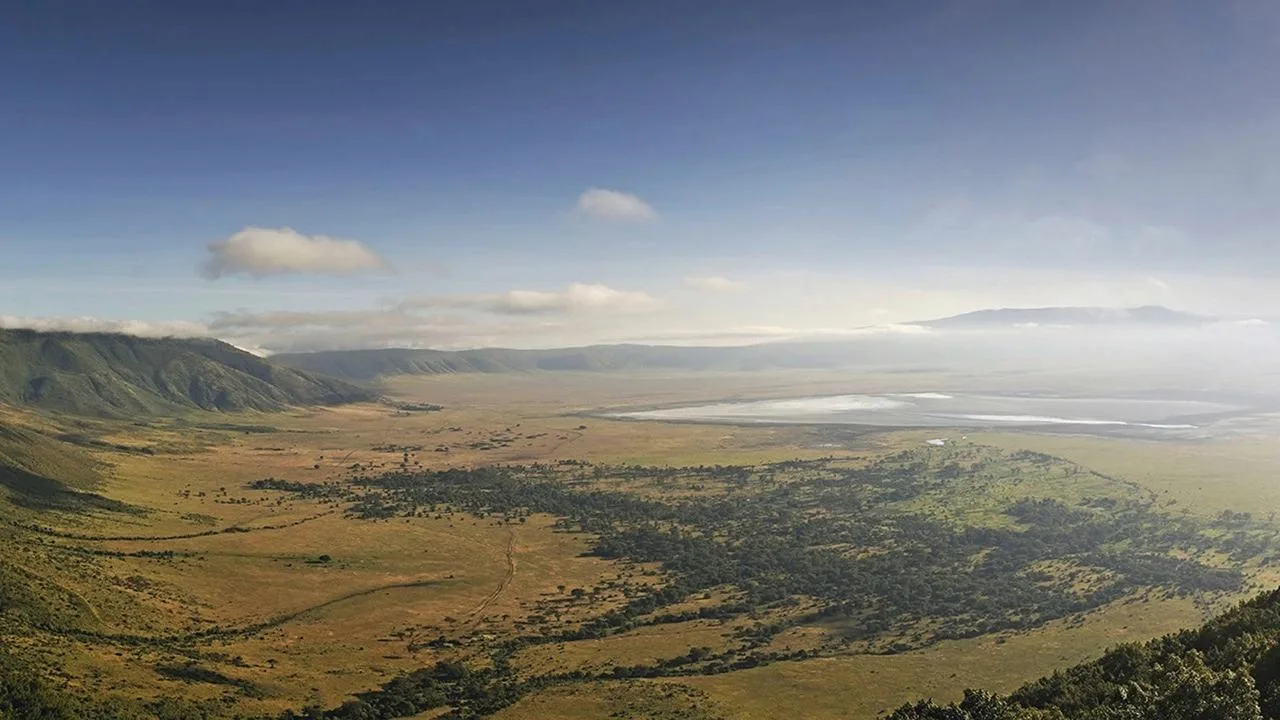
How Community Conservancies Work
An in-depth look at how community conservancies work: communities leasing land for wildlife, revenue sharing that benefits local people, lower vehicle density and quieter game viewing, habitat protected beyond national park boundaries, and leading examples from Kenya and Namibia.
When most people picture protecting African wildlife, they imagine national parks with firm boundaries and government rangers. Yet some of the most important and fastest-growing conservation happens outside those lines, on land owned or lived on by local communities. Community conservancies are a model in which communities set aside land for wildlife and, in return, share directly in the income that tourism and conservation generate. It is one of the most hopeful ideas in modern safari travel. The logic is powerful. Parks alone are rarely large enough to hold the ranges that wildlife needs, and animals move far beyond official boundaries. If the surrounding land is hostile to wildlife, those animals are squeezed and lost. Conservancies turn this around by making living wildlife more valuable to communities than the alternatives, so people choose to protect habitat, tolerate predators and welcome tourism. Done well, the result is more space for animals, real benefits for people, and often a quieter, more exclusive safari for visitors. This guide explains how conservancies actually function: how communities lease or dedicate land, how revenue sharing works, why vehicle density is usually lower than in busy parks, and how the model extends habitat beyond park boundaries. It also looks at well-known examples in Kenya and Namibia, so you can understand why choosing a conservancy-based safari is often one of the most positive decisions a traveller can make.
Key things to know
- Conservancies are land set aside for wildlife by the communities who own or live on it
- Communities share directly in tourism and conservation revenue
- The model makes living wildlife more valuable than the alternatives
- Vehicle numbers are usually limited, giving quieter, more exclusive game viewing
- Conservancies extend protected habitat far beyond national park boundaries
- They create vital corridors that let wildlife move between core areas
- Kenya and Namibia offer some of the best-known conservancy models
- Choosing a conservancy-based safari channels your spending toward local people and habitat
What a community conservancy is
A community conservancy is an area of land that a community sets aside primarily for wildlife, usually while continuing to own it and often while still living alongside it. Instead of the land being converted entirely to farming, fencing or livestock, part or all of it is managed so that wild animals can thrive, and tourism is welcomed as a source of income. The community, rather than a distant government alone, is central to the decisions and the benefits.
This is fundamentally different from a classic national park, which is typically state-owned land from which most human settlement and use is excluded. Conservancies blur that hard line, blending conservation with community ownership and livelihoods. In many regions they sit alongside or around national parks, adding a softer, community-managed buffer where wildlife and people share the landscape. The exact legal arrangements vary widely, but the core idea is consistent: local people are partners in conservation, not bystanders to it.
- Land set aside primarily for wildlife by a community
- Usually owned by, and shared with, local people
- Tourism is welcomed as a source of community income
- Different from state-owned national parks that exclude settlement
- Local people are partners in conservation, not bystanders
Leasing land and sharing revenue
The financial heart of most conservancies is a combination of land agreements and revenue sharing. In many models, tourism operators lease land or the right to build camps from the community, paying regular fees, bed-night levies or a share of income. This money flows back to the community through a mixture of direct payments, employment, and funding for shared priorities such as schools, clinics, water and bursaries. Crucially, the benefits are tied to keeping the land wild and the wildlife healthy.
This structure changes the basic economics of living with wildlife. Where animals were once seen mainly as a threat to crops and livestock, or as bushmeat, they become a lasting source of income that only continues if they are protected. Communities gain a direct, tangible reason to guard habitat, support anti-poaching, and tolerate predators and elephants that might otherwise be persecuted. When revenue sharing is transparent and fair, it builds long-term local ownership of conservation rather than dependence on outside charity.
- Operators typically lease land or camp sites from the community
- Income comes from fees, bed-night levies or a share of tourism revenue
- Benefits include jobs, direct payments and funding for schools and clinics
- Benefits are tied to keeping land wild and wildlife healthy
- Fair, transparent sharing builds lasting local ownership of conservation
Lower vehicle density and quieter game viewing
One of the most noticeable differences for visitors is how much quieter a good conservancy feels. Because the community and operators control access, they can strictly limit the number of camps and vehicles allowed. This often means far fewer cars at a sighting than in a busy national park, where anyone with an entry ticket may converge on the same lion or leopard. In a well-run conservancy, you might share a special sighting with only one or two other vehicles, or none at all.
This lower density is not just about comfort; it shapes the entire quality of the experience. With fewer vehicles, guides can approach sensitively, linger longer and position thoughtfully for behaviour and light, rather than jostling for space. Many conservancies also permit activities that are restricted or banned in national parks, such as off-road driving to follow a sighting, night drives and guided walking safaris. Together, these freedoms make conservancy game viewing feel more intimate, flexible and immersive.
- Access is controlled, so camp and vehicle numbers can be strictly limited
- Far fewer cars typically gather at each sighting
- Guides can approach sensitively and linger rather than jostle
- Off-road driving, night drives and walks are often permitted
- The result is more intimate, flexible and immersive game viewing
Extending habitat beyond park boundaries
Perhaps the greatest conservation value of conservancies is spatial. National parks, however famous, are essentially islands, and their boundaries rarely match the true ranges of wide-ranging species like elephants, wild dogs and lions. Animals must move to follow rain, grazing and prey, and that movement inevitably takes them outside park lines. If the surrounding land is hostile, those journeys become deadly and populations are cut off.
Conservancies address this by keeping large areas of land beyond the parks open and friendly to wildlife. They effectively enlarge the protected landscape and, just as importantly, create corridors that connect core areas so animals can move safely between them. This connectivity supports healthier, more resilient populations and preserves natural processes like seasonal migration. In many regions, the total area under conservancies now rivals or exceeds the formal parks they surround, making them essential to conservation at a landscape scale rather than in isolated pockets.
Kenya, Namibia and leading examples
Kenya and Namibia are widely seen as pioneers of the community conservancy model, each in its own way. In Kenya, a network of conservancies has grown up around and beyond famous parks and reserves, particularly in and near the greater Maasai Mara and in the north of the country. Here, landowning communities have pooled land into conservancies, capped tourism density, and channelled tourism income back into local livelihoods, becoming a widely studied example of community-led conservation.
Namibia is often cited for enshrining communal conservancies within its national approach, giving rural communities rights over wildlife and the income it generates across vast areas. This has been associated with the recovery of several species and the return of wildlife to lands where it had declined. While every conservancy is different and none is a perfect fix, these examples show the model's potential. For travellers, the practical takeaway is simple: choosing a conservancy-based safari tends to direct more of your money toward local communities and habitat, while offering a quieter, richer experience in return.
References & further reading
- Sinclair, A. R. E., et al. (Eds.) (2015). Serengeti IV. Chicago: University of Chicago Press.
- Estes, R. D. (2012). The Behavior Guide to African Mammals. Berkeley: University of California Press.
- Kingdon, J. (2015). The Kingdon Field Guide to African Mammals (2nd ed.). London: Bloomsbury.
- IUCN (2024). The IUCN Red List of Threatened Species, Version 2024-1. www.iucnredlist.org.
Do it with SafariLingo
Take SafariLingo on safari: 300+ species, real animal calls, offline maps and sighting logs — all in your language, wherever you roam.
Get the appFrequently asked questions
What is a community conservancy?
It is an area of land that a local community sets aside primarily for wildlife, usually while still owning it and often living alongside it. Tourism is welcomed as a source of income, and the community shares directly in the benefits, making them partners in conservation rather than bystanders. It differs from a state-owned national park that excludes most settlement.
How do communities benefit financially?
Through a mix of land or camp leases, bed-night levies or a share of tourism revenue, plus jobs and funding for shared priorities like schools, clinics and water. Crucially, these benefits are tied to keeping the land wild and wildlife healthy, giving communities a direct reason to protect habitat and tolerate predators.
Why is game viewing often quieter in a conservancy?
Because access is controlled, conservancies can strictly limit the number of camps and vehicles. This usually means far fewer cars at a sighting than in a busy park, and guides can approach sensitively and linger. Many conservancies also allow off-road driving, night drives and walking safaris that parks restrict.
How do conservancies help wildlife beyond parks?
Parks are essentially islands whose boundaries rarely match the ranges wildlife needs. Conservancies keep surrounding land open and friendly to animals, effectively enlarging the protected landscape and creating corridors that connect core areas, so wildlife can move safely and populations stay healthier and more resilient.
Where are the best-known conservancy examples?
Kenya and Namibia are widely seen as pioneers. Kenya has a network of conservancies around famous reserves and in its north, while Namibia enshrined communal conservancies in its national approach, giving rural communities rights over wildlife across vast areas. Both are studied as leading models of community-led conservation.
Related guides
 Destinations
 Human-Wildlife Conflict Explained
Why people and wildlife collide in Africa — crop-raiding elephants, livestock predation and retaliation — and the mitigation, from fences to corridors, plus the traveller's role.
 Destinations
 Tanzania's Northern Circuit Explained
How the Serengeti, Ngorongoro, Tarangire, Lake Manyara and Arusha link into one classic safari — routing, seasons, migration timing and who each park suits best.
 Destinations
 Tanzania's Southern Circuit Explained
A guide to Nyerere (Selous) and Ruaha — Tanzania's wilder, quieter south, with boat and walking safaris, thriving wild dogs, and how it compares to the famous northern parks.