
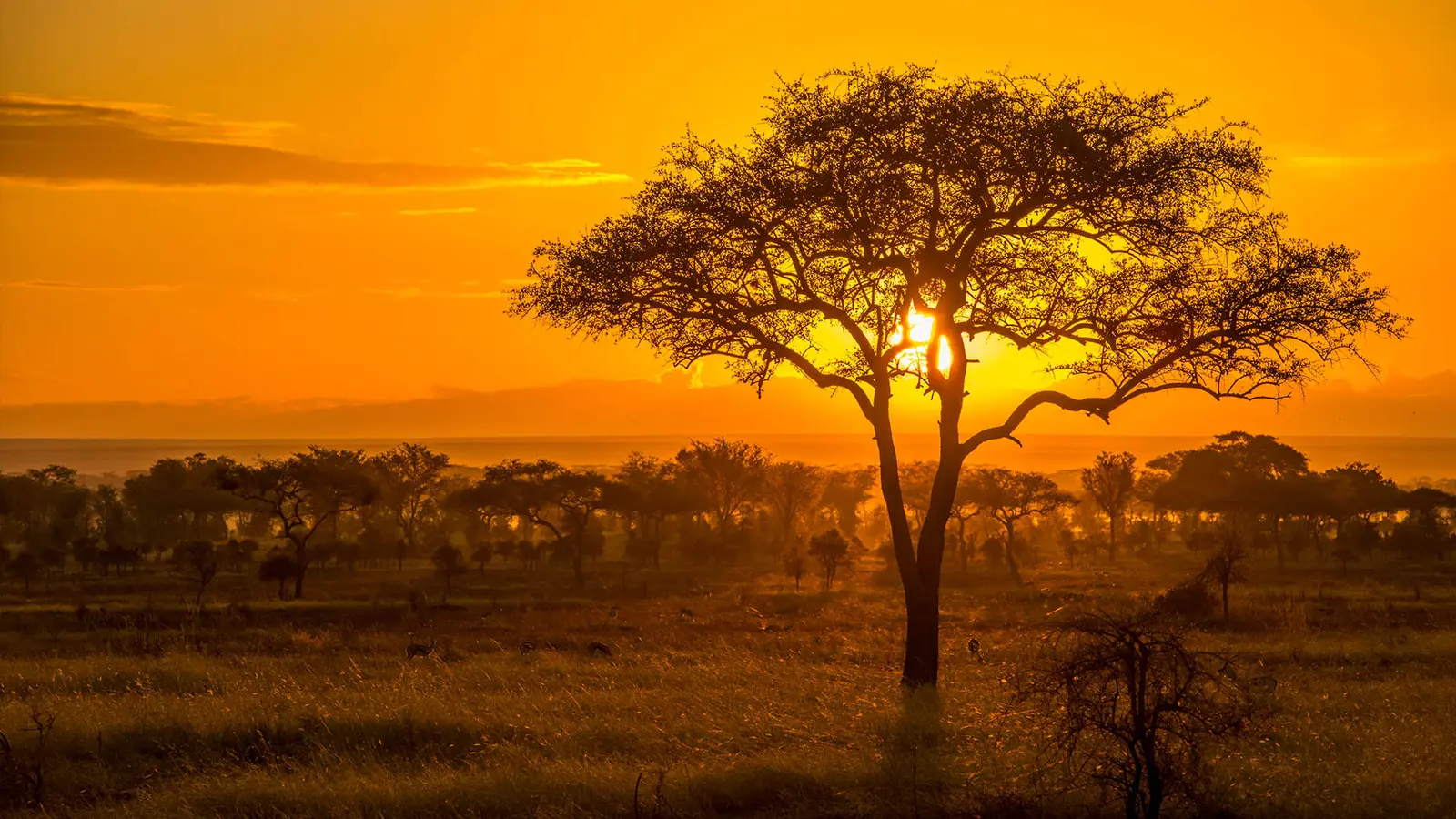
Tanzania's Northern Circuit Explained
How the Serengeti, Ngorongoro, Tarangire, Lake Manyara and Arusha link into one classic safari — routing, seasons, migration timing and who each park suits best.
Tanzania's Northern Circuit is the most famous safari route in Africa, and for good reason: within a few hours' drive of the town of Arusha lie some of the richest wildlife areas on Earth, strung together like beads on a necklace. Most first-time safaris to East Africa follow some version of this loop, and understanding how the parks connect — and when each is at its best — is the key to planning well. The circuit's genius is variety. In a single trip you can watch a million wildebeest thunder across the Serengeti plains, descend into the wildlife amphitheatre of the Ngorongoro Crater, walk among ancient baobabs and elephant herds in Tarangire, and scan the flamingo-fringed shallows of Lake Manyara. Each park has a distinct character, season and specialty. This guide lays out the parks in the order most itineraries visit them, explains how they link by road and by air, when to go for the migration and other highlights, and how to shape a route that suits your time, budget and interests.
Key things to know
- The core parks are the Serengeti, Ngorongoro Crater, Tarangire, Lake Manyara and Arusha, all reached from Arusha town or Kilimanjaro Airport.
- The Serengeti is the star: vast plains, big cats and the Great Migration; you need at least two or three nights to do it justice.
- The Ngorongoro Crater packs extraordinary density into a small caldera and is one of the most reliable places to see black rhino.
- Tarangire is famous for large elephant herds and baobabs, and is at its best in the dry season from roughly June to October.
- Lake Manyara offers a quick, scenic, birdlife-rich stop, often used as a first or last night on the loop.
- Most people combine road and light-aircraft transfers; flying saves long hours on rough roads, especially into the far Serengeti.
- Migration timing shifts through the year: calving on the southern plains around January to March, river crossings in the north around July to October.
- Green-season travel (roughly November to May) is quieter and cheaper, with dramatic skies and superb birding, at the cost of some rain.
The parks and what each is for
Each park on the circuit earns its place by offering something the others don't. The Serengeti is the headline act — nearly 15,000 square kilometres of plains, woodland and rivers, home to enormous predator populations and the wildebeest migration for much of the year. Its sheer scale means you choose a region (south, central Seronera, west or north) to match the season. The Ngorongoro Crater is the opposite: a collapsed volcanic caldera packing lions, elephants, buffalo and one of Tanzania's best chances of black rhino into a compact, jaw-dropping bowl.
Tarangire and Lake Manyara add texture. Tarangire, dominated by the Tarangire River and studded with giant baobabs, draws huge elephant herds and concentrated dry-season game. Lake Manyara is small but scenic, with groundwater forest, a soda lake often pink with flamingos, and famous tree-climbing lions. Arusha National Park, closest to town, is an easy day trip with Mount Meru, forest and giraffe, and is often used to acclimatise or fill a spare day.
- Serengeti: vast plains, big cats, the Great Migration.
- Ngorongoro Crater: dense wildlife, reliable black rhino.
- Tarangire: big elephant herds and baobabs, superb in the dry season.
- Lake Manyara & Arusha: scenic, birdy short stops near the start of the loop.
How the parks link
Geographically the circuit runs roughly northwest from Arusha: Arusha and Lake Manyara are closest, Tarangire is a short hop south, then the road climbs to the Ngorongoro highlands before dropping into the Serengeti beyond. A classic road itinerary strings them together over seven to ten days, with a private guide and vehicle carrying you the whole way — scenic, flexible and good value, but with some long, dusty drives, especially the stretch into the central and northern Serengeti.
The alternative is to fly. Light aircraft link Arusha and the Serengeti's airstrips in about an hour, versus the better part of a day by road, which is why many higher-end trips drive the near parks and then fly into the Serengeti. A common hybrid is to drive Manyara, Tarangire and the Crater, then fly one-way into the Serengeti and out again, saving a full day of backtracking. When you plan, weigh cost against the hours and comfort that flying buys you.
- Road safari: one guide and vehicle throughout; scenic and flexible.
- Fly-in: light aircraft cut long transfers to the Serengeti to about an hour.
- Hybrid: drive the near parks, fly the Serengeti leg.
- Budget more transfer time in the wet season when roads slow down.
Timing the Great Migration
The migration is not an event on a fixed date but a year-round movement of well over a million wildebeest and hundreds of thousands of zebra following the rains and grass. Roughly speaking, the herds are on the southern short-grass plains near Ndutu around December to March, when the dramatic calving season brings hundreds of thousands of births in a few weeks and intense predator action. As the plains dry, the animals move west and north.
The famous Mara River crossings, where columns of wildebeest brave crocodile-filled water, generally happen in the northern Serengeti around July to October, mirroring the timing across the border in Kenya's Masai Mara. Because the movement depends on rainfall, exact dates vary year to year, so the reliable strategy is to choose your Serengeti region by season — south for calving, north for crossings — rather than expecting the herds to be everywhere at once.
- December–March: calving on the southern plains near Ndutu.
- April–May: herds moving through the central and western Serengeti.
- July–October: Mara River crossings in the northern Serengeti.
- Dates shift with the rains — pick your region to match the season.
Dry season vs green season
The long dry season, roughly June to October, is the classic time to visit: game concentrates around water, vegetation thins so animals are easier to spot, and skies are clear. This is peak season, with the highest prices and the busiest camps, and it lines up with the northern Serengeti crossings — a superb but crowded and costly window. Book far ahead if you want this period.
The green season, broadly November to May with a wetter spell around March to May, is a different experience. The country turns lush, migrant birds arrive, the calving drama unfolds on the southern plains, and prices and crowds drop sharply. The trade-off is rain, which can be heavy in the long rains and may make some roads slow, though downpours are often short and the light for photography is spectacular. For a first trip focused on classic dry-season game viewing, June to October is safest; for value, birds and calving, the green months reward the flexible traveller.
Who the Northern Circuit suits
The Northern Circuit suits first-time safari-goers who want the iconic scenes — endless plains, the migration, the Crater, big cats and big herds — packed into a single, well-oiled route with excellent infrastructure. It works for families, honeymooners and photographers alike, and there is accommodation at every level, from public campsites and mid-range lodges to some of the most luxurious tented camps in Africa.
It is less ideal if your priority is total solitude, since the best-known spots can get busy in peak season, or if you specifically want walking safaris and night drives, which are more restricted here than in, say, Zambia. Travellers seeking wilder, quieter country sometimes pair the north with Tanzania's Southern Circuit (Ruaha and the Nyerere/Selous area) or look to other countries. But for a rich, reliable, greatest-hits introduction to East African safari, nothing beats it.
- Ideal for first-timers wanting iconic scenery and the migration.
- Great for families, honeymoons and photography.
- Accommodation at every budget, from campsites to luxury tents.
- Less suited to those seeking solitude or extensive walking and night drives.
References & further reading
- Sinclair, A. R. E., et al. (Eds.) (2015). Serengeti IV. Chicago: University of Chicago Press.
- Estes, R. D. (2012). The Behavior Guide to African Mammals. Berkeley: University of California Press.
- Kingdon, J. (2015). The Kingdon Field Guide to African Mammals (2nd ed.). London: Bloomsbury.
- IUCN (2024). The IUCN Red List of Threatened Species, Version 2024-1. www.iucnredlist.org.
Do it with SafariLingo
Take SafariLingo on safari: 300+ species, real animal calls, offline maps and sighting logs — all in your language, wherever you roam.
Get the appFrequently asked questions
How many days do I need for the Northern Circuit?
A satisfying loop takes about seven to ten days. In a week you can reasonably combine Tarangire or Manyara, the Ngorongoro Crater and two or three nights in the Serengeti. Fewer than five days means either a rushed trip or dropping the Serengeti, which is the one park most people don't want to miss.
When is the best time to see the migration in the Serengeti?
It depends which spectacle you want. For the calving and dense predator action, visit the southern plains around January to March. For the dramatic Mara River crossings, aim for the northern Serengeti around July to October. Exact timing shifts with the rains, so choose your region by season rather than a fixed date.
Should I do the circuit by road or fly between parks?
Both work. A road safari with one guide throughout is scenic, flexible and good value but involves some long drives. Flying by light aircraft cuts the long transfers into the Serengeti to about an hour and suits shorter trips or those who dislike rough roads. Many people do a hybrid: drive the near parks and fly the Serengeti leg.
Is the Ngorongoro Crater worth it despite the crowds?
For most people, yes. The Crater's density of wildlife in a compact, scenic caldera is remarkable, and it's one of the best places in Tanzania to see black rhino. It can get busy on the crater floor mid-morning, so descend early, and treat it as one memorable day rather than a multi-day destination.
Is the green season a bad time to visit?
Not at all — it's just different. Roughly November to May brings lush scenery, excellent birding, the southern calving and far lower prices and crowds, at the cost of some rain. The heaviest rains around March to May can slow roads, but downpours are often brief. For value and photography many guides love it; for guaranteed dry-season game viewing, June to October is the safe pick.
Related guides
 Destinations
 Tanzania's Southern Circuit Explained
A guide to Nyerere (Selous) and Ruaha — Tanzania's wilder, quieter south, with boat and walking safaris, thriving wild dogs, and how it compares to the famous northern parks.
 Destinations
 Serengeti vs Masai Mara: Which to Choose
A guide-level comparison of the two great migration destinations — size, seasonality, river crossings, crowds, cost, access and big cats — to help you decide or combine both.
 Destinations
 The Okavango Delta Safari Explained
How Botswana's Okavango Delta works: the annual flood, water versus land camps, mokoro trips, big game and birding, exclusivity and cost, best months and access via Maun.