
Tanzania's Southern Circuit Explained
A guide to Nyerere (Selous) and Ruaha — Tanzania's wilder, quieter south, with boat and walking safaris, thriving wild dogs, and how it compares to the famous northern parks.
Most first-time visitors to Tanzania head straight for the northern circuit: the Serengeti, Ngorongoro and the Great Migration. But south of the well-trodden trail lies a wilder, emptier, and in many ways more adventurous Tanzania — the Southern Circuit, anchored by the vast Nyerere National Park (carved from the former Selous Game Reserve) and the rugged, baobab-studded Ruaha National Park. The south trades the north's sheer density of vehicles and easy migration spectacle for space, solitude and a broader range of activities. Here you can drift down the Rufiji River by boat, walk the bush on foot with an armed guide, and stand a genuine chance of seeing Africa's most endangered large carnivore, the African wild dog. It is safari for those who want the wilderness to feel truly wild. This guide explains what the Southern Circuit is, what makes Nyerere and Ruaha special, the boat and walking safaris that set the south apart, the wild dogs and other predators, when to go, how it stacks up against the north, and how easily it combines with the beaches of Zanzibar for a classic bush-and-beach finale.
Key things to know
- The Southern Circuit centres on Nyerere National Park (from the former Selous) and Ruaha National Park.
- It is wilder and far quieter than the north, with few vehicles at sightings.
- Boat safaris on the Rufiji River and walking safaris are signature southern experiences.
- The south is one of Africa's best strongholds for endangered African wild dogs.
- Ruaha holds large elephant populations and a dramatic mix of predators and antelope.
- The dry season, roughly June to October, is the prime game-viewing window.
- Access is usually by short light-aircraft flights from Dar es Salaam or the northern parks.
- The south pairs beautifully with Zanzibar for a bush-and-beach combination.
What is the Southern Circuit?
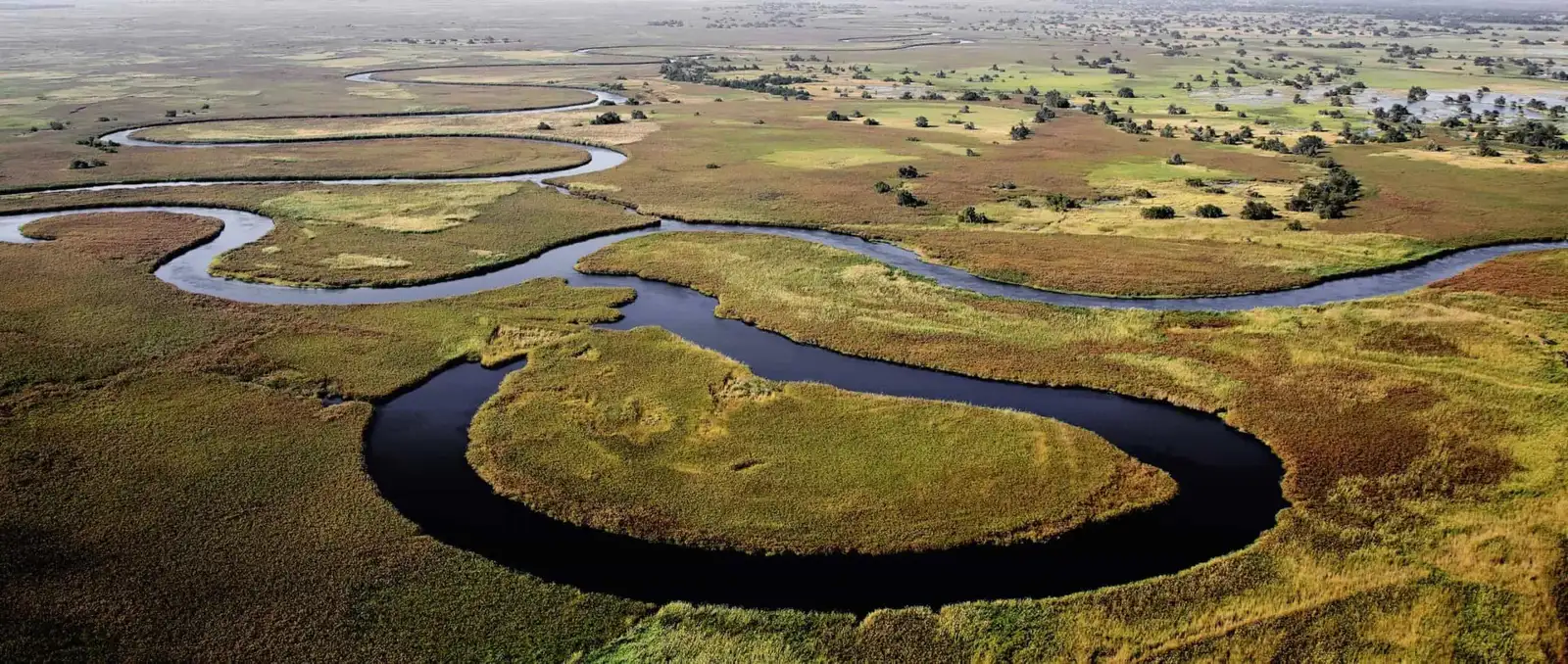
The Southern Circuit is Tanzania's less-visited safari region, centred on two enormous protected areas in the south and centre of the country. Nyerere National Park was proclaimed from the northern part of the former Selous Game Reserve, one of Africa's oldest and largest protected areas, and is defined by the broad, life-giving Rufiji River, its lakes, channels and floodplains. Ruaha National Park, further inland and higher, is a rugged landscape of rolling hills, seasonal rivers and iconic baobab trees, and ranks among the largest national parks in Tanzania.
Together they offer a very different experience from the northern circuit. There are far fewer camps and vehicles, the sense of wilderness is profound, and the activities go well beyond the standard game drive. The trade-off is that you will not see the great wildebeest herds of the migration here, and wildlife can be more spread out, rewarding patience and repeat drives. For travellers who prioritise atmosphere, exclusivity and adventure over guaranteed big-herd spectacle, the south is hard to beat.
- Nyerere National Park: created from the northern former Selous, built around the Rufiji River.
- Ruaha National Park: rugged, remote, baobab country in the centre-south.
- Far fewer vehicles and camps than the northern circuit.
- Activities include boating and walking, not just driving.
- No Great Migration, but deep wilderness and exclusivity instead.
Nyerere and the Rufiji River
Nyerere National Park is dominated by the Rufiji River and its associated lakes and channels, which act as a magnet for wildlife and give the park its distinctive character. Along the water you will find dense concentrations of hippos and crocodiles, elephants coming down to drink, and a spectacular array of waterbirds, from fish eagles to skimmers and storks. The riverine woodland and palm-fringed lakes make for some of the most beautiful safari scenery in Tanzania.
The river is also what makes Nyerere unique among Tanzania's big parks: it is one of the few places where boat safaris are a core activity. Gliding along the Rufiji at eye level with basking crocodiles and grazing hippos, or drifting past elephants at the water's edge in the golden light of late afternoon, is a completely different perspective from the game-drive vehicle. Combined with excellent land-based game viewing for lion, leopard, giraffe and buffalo, Nyerere offers a wonderfully varied safari.
Ruaha: baobabs, elephants and big-cat country
Ruaha National Park feels like the essence of wild Africa: a vast, rugged interior of golden hills, ancient baobabs and the seasonal Great Ruaha River, which becomes the focus of animal life as the dry season bites. Ruaha is renowned for its large elephant population and for being a transition zone where eastern and southern African species overlap — it is one of the best places anywhere to see both greater and lesser kudu, alongside sable and roan antelope in places.
For predator enthusiasts, Ruaha is a standout. It supports very healthy populations of lion, including some famously large prides, along with leopard, cheetah and spotted hyena, and it is a crucial refuge for African wild dogs. The dry-season concentration of game around the shrinking river makes for intense predator-prey action with very few other vehicles around. Ruaha's remoteness keeps visitor numbers low, so a sighting here often feels like a private encounter with the wild.
- Iconic baobab-studded landscape and the Great Ruaha River.
- Large elephant herds, especially in the dry season.
- Both greater and lesser kudu, plus sable and roan in places.
- Strong lion, leopard, cheetah and hyena populations.
- An important stronghold for endangered African wild dogs.
Wild dogs and the south's predators
The African wild dog — also called the painted wolf — is one of the continent's most endangered large carnivores, and the Southern Circuit is one of its most important refuges. Both Nyerere and Ruaha support significant packs, and a sighting of these charismatic, highly social hunters, with their mottled coats and enormous rounded ears, is a highlight of any southern safari. Wild dogs are efficient cooperative hunters, often most active in the cool hours of early morning and late afternoon.
Beyond the dogs, the south delivers the full predator suite. Lions are common and often seen in large prides, leopards haunt the riverine forests and rocky outcrops, cheetahs hunt the more open country, and spotted hyenas are abundant. Because there are so few vehicles, predator sightings in the south tend to be uncrowded and unhurried, letting you watch natural behaviour unfold rather than jostling for a view. For many, this quality of sighting is the single biggest reason to choose the south.
Walking and boat safaris
What truly sets the Southern Circuit apart is the range of ways you can experience the bush. Walking safaris, led by an armed and highly trained guide, let you step out of the vehicle and engage the wilderness on foot — reading tracks and dung, understanding the smaller creatures, plants and insects that a drive skims past, and feeling the genuine thrill of sharing the ground with big game. It is a slower, more intimate and more visceral way to experience Africa.
Boat safaris, especially on the Rufiji in Nyerere, add yet another dimension, bringing you close to hippos, crocodiles, drinking elephants and a wealth of birdlife from the water. Many southern camps combine game drives, walking and boating into a single stay, so you can vary your days and see the same landscape from multiple angles. This variety, rare on the northern circuit, is one of the south's greatest strengths.
- Walking safaris with an armed guide reveal the bush's fine detail.
- Boat safaris on the Rufiji offer close, low-angle wildlife views.
- Activities can be combined within a single camp stay.
- On-foot experiences suit travellers wanting depth over checklists.
- Multiple activity types keep multi-day stays varied and fresh.
When to go, access and combining with Zanzibar
The prime time for the Southern Circuit is the dry season, roughly June to October, when vegetation thins, animals concentrate around the rivers and lakes, and game viewing is at its best; this is also the peak window for wild dog denning in some areas. The green season, roughly November to April, brings lush landscapes, superb birding and newborn animals, but some camps close and heavy rains can limit access, especially in Nyerere's low-lying areas. Choose according to whether you prioritise peak game density or green-season beauty and lower prices.
Access to the south is typically by short scheduled light-aircraft flights from Dar es Salaam, Zanzibar or the northern parks, which keeps the region blissfully uncrowded. This also makes the south exceptionally easy to combine with a beach finale on Zanzibar or Mafia Island — a short hop away — for the classic Tanzanian bush-and-beach itinerary. A typical trip might pair several nights in Nyerere or Ruaha with a few days unwinding on the Indian Ocean coast.
- Dry season (about June to October) is best for game viewing.
- Green season (about November to April) offers birding, lush scenery and lower rates.
- Access is mainly by short light-aircraft flights.
- The south combines easily with Zanzibar or Mafia Island beaches.
- A classic itinerary pairs southern bush with an Indian Ocean finale.
References & further reading
- Sinclair, A. R. E., et al. (Eds.) (2015). Serengeti IV. Chicago: University of Chicago Press.
- Estes, R. D. (2012). The Behavior Guide to African Mammals. Berkeley: University of California Press.
- Kingdon, J. (2015). The Kingdon Field Guide to African Mammals (2nd ed.). London: Bloomsbury.
- IUCN (2024). The IUCN Red List of Threatened Species, Version 2024-1. www.iucnredlist.org.
Do it with SafariLingo
Take SafariLingo on safari: 300+ species, real animal calls, offline maps and sighting logs — all in your language, wherever you roam.
Get the appFrequently asked questions
What is the difference between Selous and Nyerere National Park?
Nyerere National Park was created from the northern part of the former Selous Game Reserve and given full national park status, named after Tanzania's founding president. The name Selous is still widely used and refers to the broader historic reserve; for photographic safaris, most camps now sit within Nyerere National Park.
How does the Southern Circuit compare to the northern parks?
The south is wilder, far quieter and more activity-rich, with boat and walking safaris and excellent wild dog chances, but it lacks the Great Migration and the sheer wildlife density of the Serengeti. Many travellers combine both, or choose the south specifically for exclusivity and adventure over big-herd spectacle.
Is the Southern Circuit good for seeing wild dogs?
Yes. Both Nyerere and Ruaha are among Africa's most important strongholds for endangered African wild dogs, and sightings are a real possibility, especially in the dry season. As with all wildlife, sightings are never guaranteed, but your odds here are among the best on the continent.
When is the best time to visit the Tanzanian south?
The dry season, roughly June to October, offers the best game viewing as animals concentrate around water. The green season, roughly November to April, brings lush scenery, excellent birding and newborns but heavier rain and some camp closures. Choose based on your priorities and budget.
Can I combine the Southern Circuit with Zanzibar?
Very easily. Short light-aircraft flights link the southern parks with Zanzibar and Mafia Island, making a bush-and-beach itinerary straightforward. A typical trip pairs several nights of safari in Nyerere or Ruaha with a few days relaxing on the Indian Ocean coast.
Related guides
 Destinations
 Serengeti vs Masai Mara: Which to Choose
A guide-level comparison of the two great migration destinations — size, seasonality, river crossings, crowds, cost, access and big cats — to help you decide or combine both.
 Destinations
 The Okavango Delta Safari Explained
How Botswana's Okavango Delta works: the annual flood, water versus land camps, mokoro trips, big game and birding, exclusivity and cost, best months and access via Maun.
 Destinations
 Botswana vs South Africa for Safari
A frank comparison of two great safari countries — Botswana's exclusive, high-cost wilderness versus South Africa's accessible, malaria-free and self-drive-friendly options — to help you choose the right fit.