
Best safari app 2026: choose what works in the wild (offline, fast, practical)
A practical way to choose the best safari app in 2026, based on real game-drive conditions. Includes a SafariLingo feature checklist for offline use.
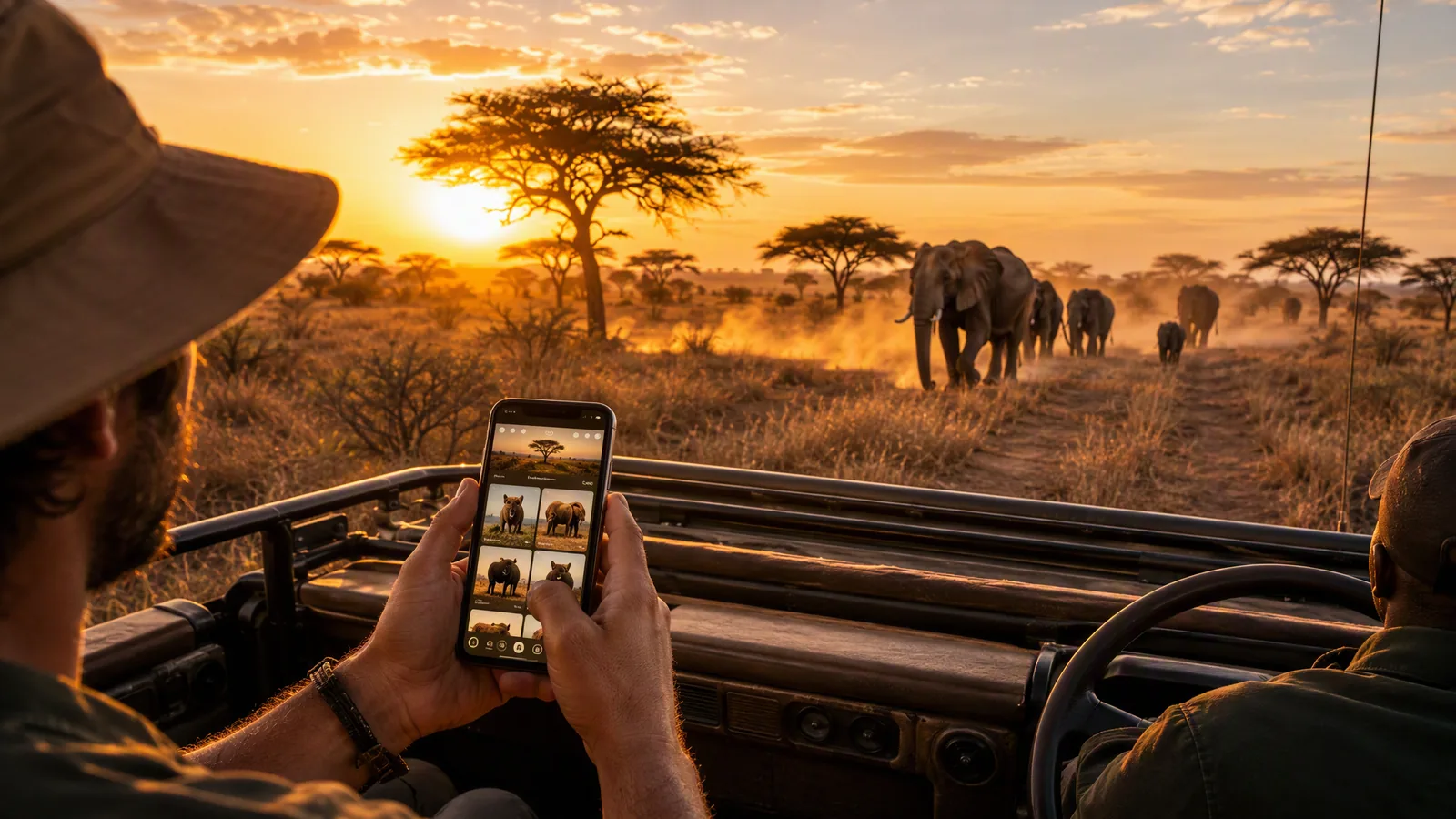
Safari conditions are unusual: dust, bumps, moving wildlife, and sometimes hours without signal. A “best safari app” is not the one with the most features on paper — it is the one you can actually use in the moment. This guide gives a simple checklist, then explains how SafariLingo is designed for offline wildlife ID, animal sounds, and sighting records.
Key things to know
- Offline-first matters when signal disappears on game drives.
- Fast filters beat long reading when an animal is moving.
- A good app helps you remember what you saw: sightings + map + stats.
- Animal sounds can be helpful — and should be used responsibly.
- SafariLingo focuses on 300+ Serengeti species, offline access, filters, animal calls, and sighting logs in 9 languages.
A simple checklist for the “best safari app”
Before comparing apps, write down your real constraints: will you have signal? will you be in a moving vehicle? do you want a personal record? A practical safari app should be quick, readable, and reliable offline.
- Offline-first content
- Fast search and filters
- Clear photos and simple ID cues
- Respectful call usage (or no calls)
- A sighting log you can review later
What SafariLingo is built for
SafariLingo is designed as a field-friendly guide for real safari moments — when you need answers quickly, without relying on a connection.
- 300+ species (mammals, birds, reptiles) focused on the Serengeti ecosystem.
- Offline access to wildlife knowledge.
- Animal sounds / calls across many species.
- Filters (type, sighting status, Big Five) and sorting (letter / rarity).
- Sighting records: quick logging of place/time/photos; EXIF location reading or manual GPS.
- A map view of encountered animals and a way to review your safari story.
- Progress stats and an achievement poster you can generate and share.
- Nine languages: en, zh, hi, es, fr, ar, de, ja, ko.
How to decide for your trip
If you only want occasional reading, any general reference might be enough. But if you care about using the guide while you are out on a game drive, prioritize offline and speed. Then add “memory” tools (sightings, map, stats) if you want a personal safari diary.
- If you expect weak signal: prioritize offline-first apps.
- If you want a personal safari story: pick an app with sighting logs + map + stats.
- If you love audio: choose an app that includes animal sounds (and use them responsibly).
- If you travel with mixed-language groups: 9-language UI can reduce friction.
References & further reading
- Sinclair, A. R. E., et al. (Eds.) (2015). Serengeti IV. Chicago: University of Chicago Press.
- Estes, R. D. (2012). The Behavior Guide to African Mammals. Berkeley: University of California Press.
- Kingdon, J. (2015). The Kingdon Field Guide to African Mammals (2nd ed.). London: Bloomsbury.
- IUCN (2024). The IUCN Red List of Threatened Species, Version 2024-1. www.iucnredlist.org.