The Okavango Delta Safari Explained
How Botswana's Okavango Delta works: the annual flood, water versus land camps, mokoro trips, big game and birding, exclusivity and cost, best months and access via Maun.
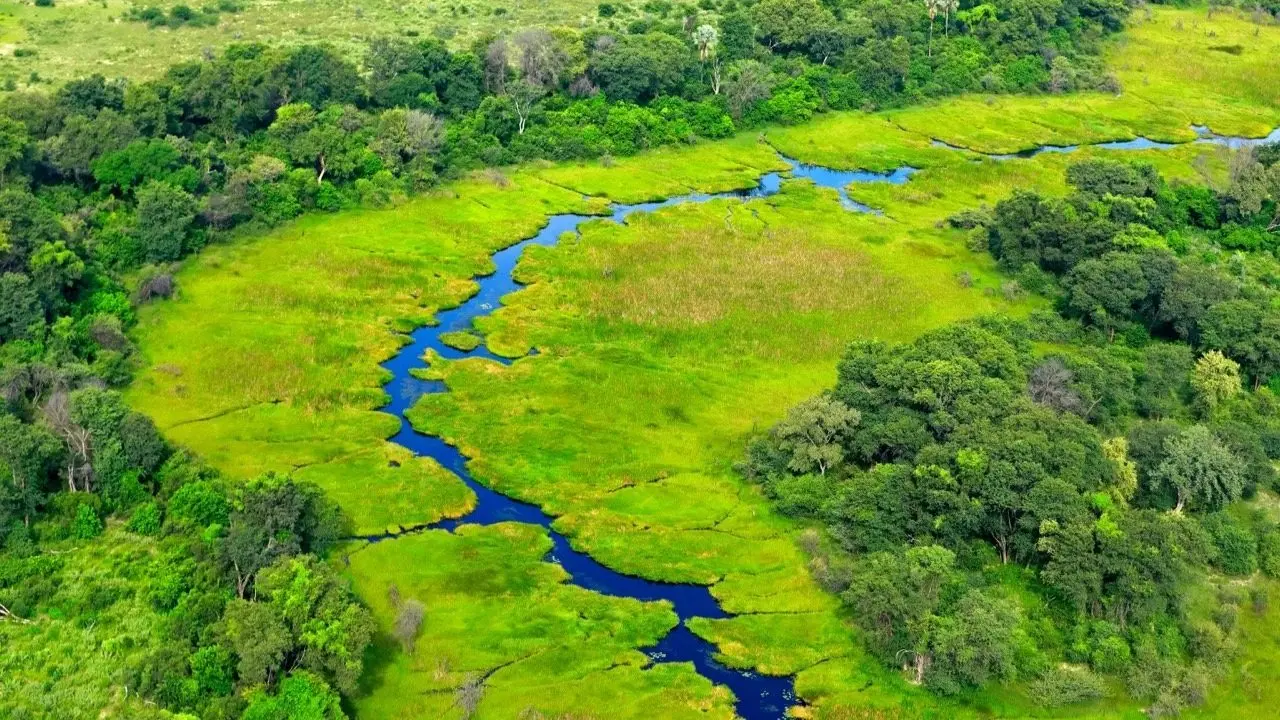
The Okavango Delta is one of the natural wonders of Africa: a vast inland delta where a river, instead of reaching the sea, spills across the Kalahari sands and simply evaporates and sinks away. The result is a shifting mosaic of channels, lagoons, reed beds and palm-studded islands that draws wildlife in extraordinary concentrations, especially as the surrounding country dries out. What makes the Delta unusual, and a bucket-list destination, is the paradox of its water. The floodwaters arrive in the dry season, months after the rains that produced them fell hundreds of kilometres away in the Angolan highlands. Understanding that rhythm is the key to planning a great Okavango safari, because it shapes where the animals are, what activities you can do and when to go. This guide explains how the Delta works, the difference between water and land camps, the classic mokoro experience, the wildlife and birding, and the practicalities of cost, timing and access through the gateway town of Maun.
Key things to know
- The Okavango is an inland delta where the river never reaches the sea
- The annual flood arrives in the dry season, months after distant rains
- Water camps offer mokoro and boating; land camps offer game drives
- The mokoro, a shallow dugout-style canoe, is the classic Delta experience
- Big game and superb birding concentrate as the surrounding land dries
- Roughly June to September is peak: high water and excellent game viewing
- Access is by light aircraft from Maun, keeping camps small and exclusive
- Exclusivity comes at a price; the Delta is among Africa's costlier safaris
How the Delta works: the annual flood
The Okavango River rises in the highlands of Angola, flows south through Namibia and fans out into northern Botswana, where it meets the flat sands of the Kalahari and spreads into a delta that never drains to an ocean. Instead the water is lost to evaporation and seepage, leaving behind a seasonal wetland whose shape changes year to year with the volume of the flood.
The counter-intuitive part is the timing. Rain falls on the Angolan catchment during the summer wet season, but the water takes months to travel down and spread across the Delta, so the flood peaks in the middle of Botswana's dry winter. That is why the Delta is at its most watery and photogenic in the dry season, exactly when the surrounding bush is parched and animals are drawn to permanent water.
- Source rains fall in the Angolan highlands
- Water flows south through the Caprivi into Botswana
- The flood peaks in the dry winter months
- No outlet to the sea; water evaporates and seeps away
- Flood extent varies from year to year
Water camps versus land camps
Camps in and around the Delta fall broadly into water camps, land camps and hybrids that offer both. Water camps sit on permanently flooded areas and specialise in mokoro trips, motorboat cruises and walking on islands, delivering an intimate, aquatic experience with superb birding and a good chance of sitatunga, otters and frogs. Land camps sit on larger islands or drier concessions and run classic game drives for big cats, elephant, buffalo and general plains game.
Many travellers combine the two for variety, and some camps flex with the flood, running boats at high water and drives when it recedes. When choosing, match the camp type to your priorities: birders and honeymooners often love the serenity of water, while first-timers keen on predators may prefer the reliability of drives. A good operator will explain which activities a given camp can offer in your chosen month.
- Water camps for mokoro, boating and walking
- Land camps for game drives and predators
- Hybrid camps that flex with the flood
- Birding and serenity favour water camps
- Big-cat priorities often favour land camps
The mokoro and getting around
The signature Okavango experience is the mokoro, a shallow canoe traditionally dug from a tree but now usually made of fibreglass to protect the trees. A poler stands at the stern and pushes the craft silently through the channels, gliding past reeds, water lilies and the tiny painted reed frogs that cling to the stems. It is a slow, meditative way to travel, low to the water and wonderfully quiet, and it reveals a miniature world you would never notice from a vehicle.
Beyond the mokoro, you may explore by motorboat where channels are deep enough, on foot with an armed guide on the islands, and by vehicle where there is dry land to drive on. This variety is part of the Delta's appeal: few destinations let you switch between water and land safaris in a single stay, and each mode shows you a different face of the same ecosystem.
Wildlife and birding
The Delta supports a full cast of African wildlife. Elephant and buffalo are abundant, lion and leopard are widespread, and the region is one of the better places to encounter African wild dogs. Red lechwe, a water-loving antelope, splash through the shallows in large numbers, and the secretive sitatunga hides in the reed beds. As the dry season deepens and outlying waterholes vanish, animals funnel toward the permanent water, concentrating the game.
For birders the Okavango is a paradise, with hundreds of species from the African fish eagle and Pel's fishing owl to jacanas, bee-eaters, storks and herons. The wet green months, when migrants arrive and many species breed, are the birding peak, though the dry season still delivers wonderful waterbird viewing along the channels. Whatever your main interest, the mix of water and land habitats packs remarkable diversity into a small area.
- Elephant and buffalo abundant, lion and leopard widespread
- One of the better regions for African wild dogs
- Water-loving red lechwe and secretive sitatunga
- Hundreds of birds, from fish eagles to Pel's fishing owl
- Green months peak for birding; dry season concentrates game
Cost, timing and exclusivity
Botswana has long pursued a high-value, low-volume tourism model, so the Delta is deliberately exclusive and among the more expensive safaris in Africa, often in the region of many hundreds to well over a thousand US dollars per person per night at the finest camps. In return you get small camps, few vehicles, private concessions and a genuine sense of wilderness, though budget-minded travellers can find more affordable options on the fringes and in the shoulder seasons.
Timing is a balance. Roughly June to September combines high flood with cool, dry weather and excellent game viewing, and is the classic peak. The green season from about November to March brings lush scenery, newborn animals and superb birding at lower prices, with the trade-off of heat, rain and thicker vegetation. Ask your operator how the flood and your chosen camp's activities line up with your travel dates.
Access via Maun
The gateway to the Delta is Maun, a busy frontier town in northern Botswana with an airport served by regional flights. From Maun almost all Delta camps are reached by light aircraft, short hops in small planes that land on bush airstrips scattered among the islands. The flight itself is part of the experience, offering a bird's-eye view of the channels, islands and herds below.
Because access is by air and concessions are private, the Delta stays uncrowded and logistics are handled by your camp or operator. Plan for luggage limits on light aircraft, usually soft bags and a modest weight allowance, and build in a night in or near Maun if your international connections are tight. A well-planned route often pairs the Delta with the Kalahari, Moremi, Chobe or the Victoria Falls for a fuller Botswana journey.
References & further reading
- Sinclair, A. R. E., et al. (Eds.) (2015). Serengeti IV. Chicago: University of Chicago Press.
- Estes, R. D. (2012). The Behavior Guide to African Mammals. Berkeley: University of California Press.
- Kingdon, J. (2015). The Kingdon Field Guide to African Mammals (2nd ed.). London: Bloomsbury.
- IUCN (2024). The IUCN Red List of Threatened Species, Version 2024-1. www.iucnredlist.org.
Do it with SafariLingo
Take SafariLingo on safari: 300+ species, real animal calls, offline maps and sighting logs — all in your language, wherever you roam.
Get the appFrequently asked questions
When is the best time to visit the Okavango Delta?
Roughly June to September is the classic peak, combining high floodwater with cool, dry weather and excellent game viewing. The green season from about November to March is cheaper and superb for birding and newborn animals, but hotter and wetter.
What is a mokoro?
A mokoro is a shallow dugout-style canoe, now usually fibreglass, poled silently through the Delta's channels by a standing poler. It is the signature Okavango experience, ideal for close-up birding and a peaceful, water-level view of the wetland.
Should I choose a water camp or a land camp?
Water camps specialise in mokoro, boating and birding; land camps run game drives for big cats and large mammals. Many travellers combine both, and some camps offer both activities depending on the flood level, so match the camp to your interests and month.
How do I get to the Delta?
Almost all camps are reached by light aircraft from Maun, the gateway town in northern Botswana. The scenic flight lands on bush airstrips among the islands, and your camp or operator arranges the transfers and luggage logistics.
Is the Okavango Delta expensive?
Yes, relatively. Botswana's high-value, low-volume policy keeps camps small and exclusive, so nightly rates at the best camps often run from many hundreds to over a thousand US dollars per person. More affordable options exist on the fringes and in the shoulder seasons.
Related guides
 Destinations
 Botswana vs South Africa for Safari
A frank comparison of two great safari countries — Botswana's exclusive, high-cost wilderness versus South Africa's accessible, malaria-free and self-drive-friendly options — to help you choose the right fit.
 Destinations
 Kruger National Park: A First-Timer's Guide
Everything a beginner needs for a first Kruger safari — self-drive versus private reserves like Sabi Sand, rest camps, the Big Five, malaria, the best months to visit and how to plan on any budget.
 Destinations
 Namibia Desert Safari Explained
Why Namibia is one of Africa's most distinctive safaris — Etosha, the Sossusvlei dunes, desert-adapted wildlife, the Skeleton Coast, self-drive travel, seasons and how to combine it with Botswana.