
Human-Wildlife Conflict Explained
Why people and wildlife collide in Africa — crop-raiding elephants, livestock predation and retaliation — and the mitigation, from fences to corridors, plus the traveller's role.
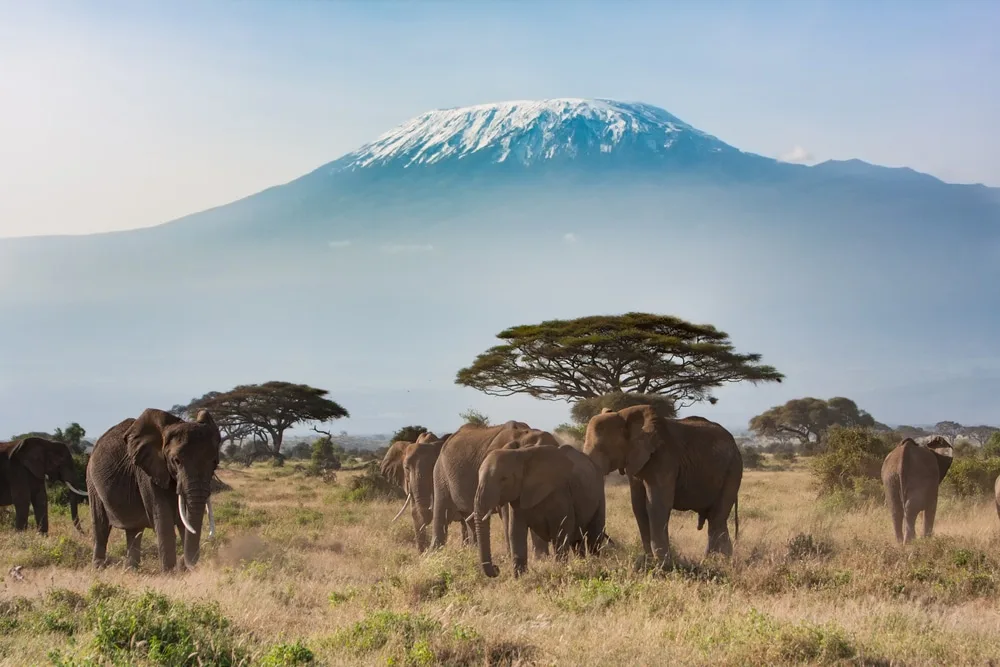
For every postcard image of an elephant at sunset, there is a farmer somewhere who has watched a herd flatten a season's maize in a single night. Human-wildlife conflict is the unglamorous, everyday reality that sits behind conservation headlines, and it is arguably the single biggest long-term threat to Africa's large animals. When wildlife costs people their crops, their livestock or occasionally their lives, tolerance erodes and retaliation follows. The conflict is not a simple story of villains and victims. It is what happens when growing human populations, expanding farmland and long-established animal movements try to share the same shrinking space. Elephants follow ancestral routes now blocked by fields; lions and hyenas find cattle easier than buffalo; baboons learn that a lodge bin is a buffet. Each is a rational animal doing what animals do, colliding with people who are equally rational in defending their livelihoods. Understanding this tension makes you a better-informed traveller and a more useful one. The solutions that work — from beehive fences to community corridors and fair compensation — depend on the same tourism economy you are part of. This guide explains why conflict happens, what actually reduces it, and how your choices on safari feed into the balance.
Key things to know
- Conflict grows where farmland, livestock and wildlife ranges overlap and space shrinks
- Crop-raiding elephants and predation on livestock are the two biggest flashpoints
- Retaliatory killing — spearing, poisoning, snaring — is a leading cause of large-carnivore decline
- Simple deterrents help: beehive and chilli fences, guarding dogs, predator-proof bomas
- Corridors and land-use planning let animals move without crossing farms
- Compensation and insurance schemes reduce the urge to retaliate when they pay fairly and fast
- Communities tolerate wildlife when they share tangible benefits from it
- Tourists help by choosing operators that fund coexistence work and respecting local realities
Why conflict happens
At its root, human-wildlife conflict is a problem of overlapping needs on finite land. Africa's human population is growing and farmland is expanding into areas that were, within living memory, wildlife range. Elephants still follow seasonal routes their grandmothers walked, but those routes now cross maize fields and villages. Predators find fenced or herded livestock an easier meal than fast, dangerous wild prey. Where a park has no buffer and fields run right to the boundary, contact is constant and friction inevitable.
Climate and season sharpen the edges. In drought, wildlife pushes further in search of water and grazing, straying onto farmland and towards livestock. Harvest time concentrates ripe crops exactly when elephants and bushpigs are most tempted. None of the animals involved is malicious; each is following instinct and opportunity. The tragedy is that the people who bear the cost are often the poorest, least able to absorb the loss of a field or a cow, and understandably the least patient with distant conservation goals.
- Farmland expanding into former wildlife range
- Blocked migration and dispersal routes
- Livestock as easy prey for lions, leopards and hyenas
- Drought pushing animals toward water and fields
- Ripe crops coinciding with elephant and primate foraging
The elephant in the field
Elephants are the emblem of crop conflict for good reason. A family herd can destroy a smallholder's entire harvest in a night, and the sheer size and intelligence of elephants makes them hard to stop. For an affected family this is not an abstraction; it can mean a year of hunger or debt. Unsurprisingly, communities that lose crops to elephants are far less enthusiastic about protecting them, which is why crop conflict quietly undermines conservation from below.
The encouraging news is that some of the most effective deterrents are cheap and ingenious. Elephants dislike bees, so fences strung with hanging beehives can turn them back while also producing honey to sell. Chilli-based deterrents, noise, watchtowers and community early-warning networks all help. None is a silver bullet, but layered together they let farmers defend fields without resorting to spears or poison, and they work best when communities own and maintain them.
- Beehive fences that deter elephants and yield honey
- Chilli fences, chilli-dung bricks and pungent smoke
- Watchtowers and community alarm networks
- Trip-wire lights and noise deterrents
- Well-planned buffer crops elephants dislike
Predators, livestock and retaliation
For lions, leopards, cheetahs, hyenas and wild dogs, the biggest threat is not poaching but the spear, gun, snare and poison of people protecting their animals. A lion that kills a cow is, to a herder, a direct financial attack, and retaliation is swift and often indiscriminate — a poisoned carcass can wipe out a whole pride and countless vultures besides. Across much of Africa, this retaliatory killing is the leading driver of large-carnivore decline, outweighing every other threat combined in some areas.
The fixes are practical and increasingly proven. Predator-proof bomas — reinforced night enclosures — dramatically cut losses, because most livestock predation happens at night in flimsy pens. Guarding dogs, better herding, and keeping animals in after dark all reduce attacks. Crucially, fast and fair compensation or livestock insurance changes the calculus: a herder repaid promptly for a lost cow has far less reason to poison the predator that took it.
- Predator-proof reinforced night bomas
- Livestock guarding dogs and attentive herding
- Keeping herds in after dark near known predator areas
- Prompt, fair compensation or insurance schemes
- Rapid-response teams to defuse specific problem animals
What actually works: coexistence in practice
Lasting solutions treat wildlife as an asset to the community rather than a threat imposed from outside. The most successful models share real revenue — from tourism, conservancy fees or carbon — directly with the people who live alongside animals, so that a living lion or standing forest pays better than a dead one or a cleared field. When benefits are tangible and fairly distributed, tolerance rises and retaliation falls.
Landscape planning matters as much as any single fence. Wildlife corridors reconnect fragmented habitats so elephants and predators can move between protected areas without funnelling through farmland. Zoning that keeps the most vulnerable crops away from known routes, combined with community rangers and quick conflict-response teams, turns a running battle into something manageable. These programmes are unglamorous and slow, but they are where conservation is genuinely won or lost.
The traveller's role
You cannot personally stop an elephant raiding a field, but your choices shape whether coexistence pays. Booking with operators and conservancies that channel money to communities means part of your trip funds the bomas, corridors and compensation schemes that reduce conflict. Community-owned camps and conservancy fees are among the most direct ways your holiday supports people who share their land with wildlife.
Beyond money, attitude counts. Respect that the beautiful predator you admire may be a genuine hardship for a nearby herder, and resist the urge to judge communities harshly for defending their livelihoods. Learn the local context, tip and buy crafts to spread benefit, and choose lodges that employ and partner with neighbouring villages. Your presence is most valuable when it visibly rewards the people who make coexistence possible.
- Book conservancies and lodges that fund coexistence programmes
- Buy local crafts and tip fairly to spread tourism benefit
- Choose camps that employ people from neighbouring communities
- Approach conflict stories with empathy, not judgement
- Support charities working on fences, corridors and compensation
References & further reading
- Sinclair, A. R. E., et al. (Eds.) (2015). Serengeti IV. Chicago: University of Chicago Press.
- Estes, R. D. (2012). The Behavior Guide to African Mammals. Berkeley: University of California Press.
- Kingdon, J. (2015). The Kingdon Field Guide to African Mammals (2nd ed.). London: Bloomsbury.
- IUCN (2024). The IUCN Red List of Threatened Species, Version 2024-1. www.iucnredlist.org.
Do it with SafariLingo
Take SafariLingo on safari: 300+ species, real animal calls, offline maps and sighting logs — all in your language, wherever you roam.
Get the appFrequently asked questions
Is human-wildlife conflict really a bigger threat than poaching?
For many large carnivores, yes — retaliatory killing after livestock losses is a leading cause of decline, and crop conflict steadily erodes the community tolerance that wildlife needs to survive. Poaching grabs headlines, but everyday conflict quietly does enormous damage.
Do compensation schemes actually reduce retaliation?
When they pay fairly and quickly, yes. A herder reimbursed promptly for a lost animal has far less reason to poison or spear the predator. Schemes fail when payments are slow, low or tangled in bureaucracy, so good design and funding are essential.
Why not just fence wildlife away from people entirely?
Fencing can help in places, but it is expensive, blocks natural migration and can trap animals in areas too small to sustain them. Most experts favour a mix of targeted fencing, corridors, deterrents and community benefits rather than sealing wildlife off completely.
Will I see human-wildlife conflict on safari?
You are unlikely to witness a dramatic incident, but you may pass villages, fences and grazing land at reserve edges. A good guide will explain the realities, which deepens your understanding of what conservation actually involves beyond the game drive.
How can my trip help reduce conflict?
Choose operators and conservancies that channel revenue to local communities and fund coexistence work like bomas, corridors and compensation. Employing locals, buying crafts and tipping fairly all help make living wildlife worth more to people than it costs them.
Related guides
 Destinations
 Tanzania's Northern Circuit Explained
How the Serengeti, Ngorongoro, Tarangire, Lake Manyara and Arusha link into one classic safari — routing, seasons, migration timing and who each park suits best.
 Destinations
 Tanzania's Southern Circuit Explained
A guide to Nyerere (Selous) and Ruaha — Tanzania's wilder, quieter south, with boat and walking safaris, thriving wild dogs, and how it compares to the famous northern parks.
 Destinations
 Serengeti vs Masai Mara: Which to Choose
A guide-level comparison of the two great migration destinations — size, seasonality, river crossings, crowds, cost, access and big cats — to help you decide or combine both.