
Reading Animal Tracks and Signs
Learn how safari guides read footprints, dung, feeding sign and other bush clues to identify species, judge freshness, and predict where animals are headed.
Long before you see an animal, the bush is already telling you a story. A crisp hoofprint across a sandy track, a line of snapped grass, a shiny beetle-rolled dung ball, or a chorus of alarm calls in the trees can all be as informative as a sighting. When you start noticing these clues, a landscape that looked empty becomes a living record of movement, feeding, conflict and rest. Tracking is also one of the core skills of great guiding. It is not magic and it is not only for professionals: you can learn the basics quickly, and that beginner’s eye will make every drive and walk richer. This article builds on the fundamentals and adds the practical decision rules guides use in real time: what sign to trust, how to judge freshness, and how to follow a trail without disturbing wildlife.
Key things to know
- Tracks and signs often reveal animals long before you ever see them
- Always read sign in context: substrate, weather, wind, and nearby cover change what it means
- Footprints can show species, direction, speed and sometimes behaviour, not just presence
- Freshness matters more than perfection: sharp edges in good substrate usually beat faint old prints
- Dung and feeding sign can confirm species and diet, and can hint at how recently an animal passed
- Bird and herbivore alarm behaviour can act like an early-warning system for predators
- Good trackers combine multiple clues and local knowledge rather than following one sign blindly
- Never turn tracking into harassment: the welfare of the animal comes before the pursuit
The main kinds of sign and what each is good for
Safari tracking is broader than footprints. Skilled guides treat the whole bush as a set of overlapping messages: physical marks on the ground and vegetation, scent and territorial signals, and behavioural cues from other animals. Each type of sign has strengths and weaknesses, so the aim is to build a consistent story rather than latch onto one clue.
As a traveller, start by asking your guide what they are noticing. On a good drive you will hear them constantly weighing clues: a fresh crossing track on the road, a kudu that suddenly stares and snorts, a line of guinea fowl running into cover, or a patch of grass still wet where a herd bedded down. When several signs point the same way, the chances of a meaningful sighting rise quickly.
- Tracks and drag marks on roads, sand and mud
- Dung, urine spray and dung middens used as markers
- Feeding sign such as browsed twigs, grazed lawns, stripped bark
- Territorial scrapes, rub marks and scent posts
- Resting places: flattened grass, body prints, warm ash in old fire sites
- Sound and posture: alarm calls, stillness, staring, bunching
Reading footprints: shape, toes, and the story of movement
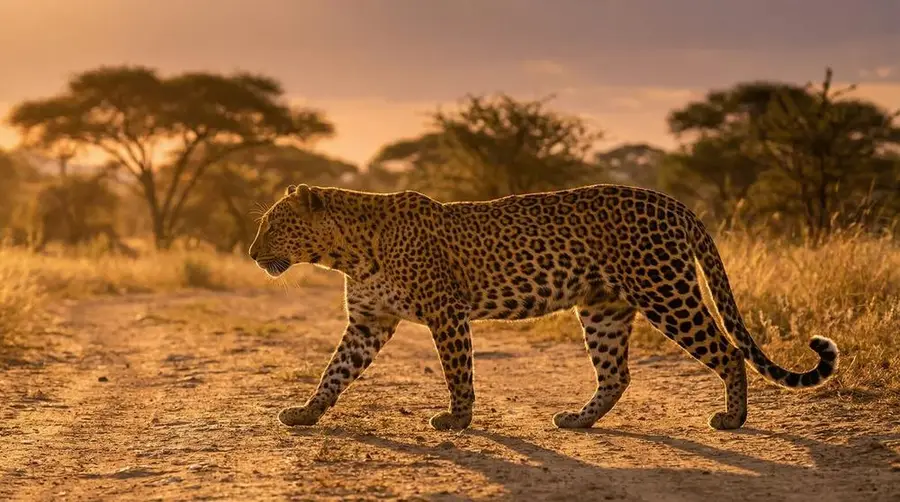
Footprints are the easiest entry point, but the trick is to look beyond the outline. Count toes, note whether claw marks show, and pay attention to the heel pad shape. Cats such as lion and leopard tend to leave rounder prints with no visible claws, while canids such as wild dog and jackal usually show claws and a more oval shape. Hoofed animals vary from the narrow, pointed prints of many antelope to the broader, heavier impressions of buffalo and hippo, and the depth of the print can hint at weight and speed.
The second layer is movement. Tracks are a sequence, not a single stamp: spacing, overstep and scuff marks help you decide whether an animal was walking, trotting, running, or stalking. Direction is normally clear from the orientation and from toe drag or sand kicked forward. In soft sand, a gentle curve in the track line can show hesitation or a change of mind; in firm soil, a sudden burst of deeper prints may suggest a short chase or alarm.
- Cats: rounded track, three-lobed heel pad, claws usually not showing
- Canids: claws commonly visible, more oval track, tighter toe grouping
- Hoofed animals: look at size, splay, dewclaw marks and stride
- Gait clues: stride length, line width, scuffs, sudden acceleration
- Use a fixed object like your hand or a coin for scale, then remove it
Freshness: how guides judge time without pretending to know the exact minute
Freshness is the difference between a nice lesson and a useful lead. Guides rarely claim an exact age because wind, humidity and substrate can change a track quickly, but they can still rank sign as very fresh, fresh, old or very old. Crisp edges in powdery dust early in the morning often mean the animal passed recently; edges softened by wind, rained-on surfaces, or prints partly filled with blown sand usually indicate older sign.
Context helps. A track that sits on top of other prints is newer than the ones beneath it, while a track that has leaf litter settled into it is likely older. Dew, drizzle and strong sun can all erase fine detail. In some habitats the best time to read tracks is just after light rain, which resets the ground and makes new sign stand out; in others, deep sand in dry months records details beautifully. Your guide is constantly matching what the ground shows with what they know about water, shade, wind direction and the day’s heat.
- Very fresh: sharp edges, loose sand still piled, no debris settled inside
- Fresh: clear shape but slight crumbling, a thin film of dust beginning to soften edges
- Older: edges rounded, sand partly blown in, small insect tracks crossing through
- Weathered: print hard to define, broken by rain splash, hoofprints collapsing
- Cross-check with behaviour: active birds, alarm calls, and wind direction
Dung and feeding sign: the underrated goldmine
Dung is one of the best cross-checks because it can confirm both species and diet. Elephant dung full of fibre tells a different story from zebra pellets, and carnivore scat often shows hair and bone fragments. Freshness cues can be surprisingly useful: moisture, smell and insect activity can suggest whether it was deposited recently, but again it is safer to think in categories rather than exact hours. Guides also read where dung is placed: some species use middens or favoured spots, which can indicate a resident animal’s core area.
Feeding sign often points you toward the right habitat at the right time. Cleanly clipped grass lawns can indicate grazing pressure, while ragged torn browse may suggest elephant or giraffe feeding style. Stripped bark, broken branches, dug-up bulbs, or freshly turned soil can be as revealing as a footprint, especially when vegetation is thick and tracks are scarce. As a visitor, treat dung with respect: do not touch it with bare hands, and remember it is part of the ecosystem, feeding beetles and returning nutrients to the soil.
- Herbivore pellets versus piles: shape, size and clustering
- Carnivore scat: hair, bone, and placement on paths or markers
- Elephant feeding: broken branches, bark stripping, uprooted shrubs
- Giraffe browse line: leaves removed at head height, thorn tips snapped
- Warthog and aardvark sign: snout marks, digging, disturbed termite mounds
How trackers actually use sign on safari, and how you can learn without getting in the way
On many classic safaris, the best tracking happens from the vehicle. A guide or tracker scans roads and sandy patches for fresh crossings, then makes a decision: follow, leapfrog to a likely destination such as water, or leave it because the animal is probably too far ahead. They also consider ethics and rules: some conservancies allow limited off-road tracking, while many national parks require staying on tracks. A good team aims for a calm, natural sighting, not a stressed animal pushed into cover.
You can be part of the process. Tell your guide you want to learn, and ask them to stop for interesting tracks even when there is no animal in view. Photograph a track with something for scale, then ask for an ID and the story behind it. A small tracks book or app can help, but the best method is repetition: notice the common species around your camp every day, compare prints near waterholes, and listen for how guides interpret alarm calls and wind. Over time you will start predicting what is around the next bend.
- Ask for a short track lesson early in the trip, when the group is fresh
- Focus on common species first: zebra, wildebeest, impala, elephant
- Learn one habitat at a time: sandy riverbeds, pan edges, woodland roads
- Photograph and compare: same species in sand, mud and firm ground
- Let the guide lead: safety and park rules always come first
References & further reading
- Sinclair, A. R. E., et al. (Eds.) (2015). Serengeti IV. Chicago: University of Chicago Press.
- Estes, R. D. (2012). The Behavior Guide to African Mammals. Berkeley: University of California Press.
- Kingdon, J. (2015). The Kingdon Field Guide to African Mammals (2nd ed.). London: Bloomsbury.
- IUCN (2024). The IUCN Red List of Threatened Species, Version 2024-1. www.iucnredlist.org.
Do it with SafariLingo
Take SafariLingo on safari: 500+ species, real animal calls, offline maps and sighting logs — all in your language, wherever you roam.
Get the appFrequently asked questions
How can you tell a cat track from a dog track?
Start with claws: cats like lion and leopard usually do not show claw marks, while canids often do. Then look at the heel pad: cats typically have a broader pad with a more lobed rear edge, while canids have a tighter, more symmetrical look. Size, stride and the surrounding habitat help narrow it further.
How do guides estimate how fresh a track is?
They read the condition of the track and the story around it rather than claiming an exact timestamp. Sharp edges, loose sand piled at the front, and no debris settled inside often suggest very fresh sign, while rounded edges, wind-blown sand, leaf litter or rain damage point to older sign. They also compare it with weather, dew, sun and other tracks crossing over it.
Is it safe or allowed to follow tracks on foot?
In many areas it is only done with a trained armed guide or ranger, and in some parks it is not permitted at all. Even experienced trackers treat it cautiously because animals like buffalo, elephant and hippo can be dangerous at close range. If you want to try it, book a guided walk with a reputable operator and follow safety instructions closely.
Where are the easiest places to practise reading tracks?
Soft substrates make learning faster. Sandy tracks, dry riverbeds, pan edges and the margins of waterholes often hold clear prints, especially early in the morning. After a light rain, new tracks can stand out sharply against a clean surface.
Do field guides and apps help, or is tracking only learned from people?
Books and apps are useful for comparing shapes and learning the common prints, but a human guide adds the crucial context: behaviour, habitat, season and local species variation. The best approach is to use reference material as a memory aid, then confirm your guesses with your guide whenever possible.
Related guides
 Planning & Tips
 Cultural Etiquette in East Africa
Travel more respectfully in East Africa by understanding greetings, dress, photography, markets, religion and everyday social cues. This guide explains the habits that help safari travellers connect well and avoid common mistakes.
 Planning & Tips
 Shoulder Season Safari Value
Why the shoulder season can be the smartest value window for safari travel, combining strong wildlife, softer rates, easier availability and a calmer wilderness atmosphere.
 Planning & Tips
 How to Plan Your First African Safari
A practical, step-by-step guide to planning your first African safari — how to choose a country, time your trip to the wildlife calendar, set a realistic budget and book with confidence.