
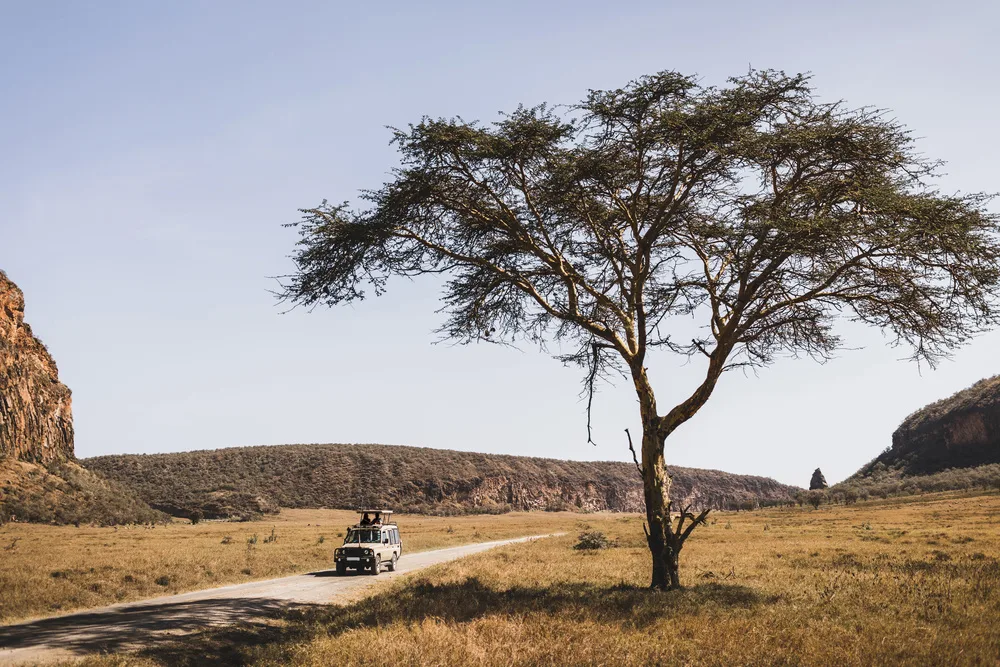
How Many Parks Should You Visit on Safari?
The depth-versus-breadth decision at the heart of safari planning: how many nights to spend per park, the real cost of moving, transfer fatigue, and simple rules of thumb for matching the number of parks to the length of your trip.
One of the first big decisions in planning a safari is also one of the most misunderstood: how many parks or reserves to visit. Faced with a long wish list of famous names, many first-timers try to cram in as many as possible, imagining that more parks means more wildlife and better value. In practice the opposite is usually true. Every move between areas costs time, money and energy, and the trip that looks impressive on paper can leave you exhausted, over-packed and strangely unsatisfied. The heart of the matter is a trade-off between depth and breadth. Spend longer in fewer places and you settle into the rhythm of an area, your guide learns what you want, you revisit productive sightings, and you witness behaviour that only patience reveals. Rush through many places and you spend your prime hours in transit, arriving somewhere new just as you were beginning to understand the last. Neither approach is wrong, but the balance you strike shapes the entire character of your trip. This guide lays out how to think about the decision: how many nights a park really deserves, the true cost of every transfer, how fatigue accumulates, and clear rules of thumb for matching park count to trip length. Get this right and your safari will feel spacious and rewarding rather than a breathless checklist.
Key things to know
- Fewer parks with more nights each almost always beats a rushed multi-park itinerary.
- Aim for a minimum of three nights per park; two is the absolute floor and one is rarely worth it.
- Every transfer costs a half or full day, plus money and energy — moves are never free.
- Depth lets your guide learn your interests and lets you revisit and understand sightings.
- Match park count to trip length: roughly one park per three to four nights.
- Combine parks that are genuinely different in habitat rather than similar ones.
- Transfer fatigue is real — packing, driving and airport time erode the safari experience.
- A week is ideal for two parks; ten days to two weeks for three; more than that risks diminishing returns.
Depth versus breadth: the core trade-off
The single most important idea in safari planning is that depth usually beats breadth. Wildlife viewing rewards patience and familiarity in ways that are easy to underestimate. When you stay several nights in one area, your guide comes to understand exactly what you hope to see and adjusts each drive accordingly; you can return to a leopard's territory day after day until she reveals herself, follow a lion pride as its dynamics unfold, and learn the landscape well enough to anticipate where animals will be. This slow accumulation of knowledge is where the deepest sightings come from.
Breadth has its place — seeing contrasting ecosystems is genuinely enriching — but it comes at a steep cost when overdone. A traveller who visits five parks in ten days spends most of the trip arriving and leaving, never staying long enough to move beyond the obvious. The animals do not perform on cue for a one-night visitor. Given a fixed number of days, adding another park almost always means subtracting quality from the parks you already have. The art of planning is knowing when an extra destination genuinely adds something new, and when it merely dilutes what you have.
How many nights does a park deserve?
As a working rule, three nights per park is the sweet spot for most destinations. Three nights gives you two full days and up to four or five game drives, enough to explore different areas, recover from a poor drive, and give a sighting time to develop. Two nights is the practical minimum — one full day feels rushed but can work for a small or single-focus reserve. A single night is almost always a waste: you arrive tired in the afternoon, do one drive, and leave after breakfast, having barely scratched the surface while paying a full transfer's worth of time and money.
Some places justify far longer stays. A large, wildlife-rich ecosystem like the Serengeti or a private conservancy with outstanding predator viewing can easily absorb four, five or more nights without ever feeling repetitive, because the sightings keep changing. Conversely, a small, compact reserve may deliver its highlights in two or three nights. The key is to match nights to the richness and size of the area, and to resist the temptation to trade a satisfying stay in a great park for a token night somewhere else.
- One night: almost always too short — mostly transit, little reward.
- Two nights: the practical minimum, workable for small reserves.
- Three nights: the sweet spot for most parks.
- Four-plus nights: ideal for large, wildlife-rich ecosystems.
The true cost of moving
Every transfer between parks carries a hidden bill that travellers routinely underestimate. A road transfer can consume half a day or more of prime time, often during the middle of the day when game viewing is quiet anyway, but sometimes eating into precious early morning or late afternoon hours. A fly-in transfer is faster but still involves packing, checking out, a drive to the airstrip, waiting, the flight, and a drive to the new camp — realistically a half-day gone, plus the not-inconsiderable cost of light aircraft seats.
Beyond time and money, there is the simple friction of moving: repacking bags, saying goodbye to a guide who had just learned your preferences, and starting again with a new team who do not yet know you. Each move resets that relationship. This is why a well-planned safari treats transfers as a real cost to be minimised, not a free bonus. When you do move, make it count by choosing a genuinely different habitat, so the change of scene justifies the day you spend getting there.
- Road transfers can eat half a day or more of your trip.
- Fly-in transfers are faster but still cost time and significant money.
- Each move means repacking and restarting with a new guide and camp.
- Only move when the new area is genuinely different enough to justify it.
Transfer fatigue and the rhythm of a trip
Safaris are more tiring than people expect. Early starts for morning drives, long hours in a vehicle on rough tracks, dust, heat and the sheer stimulation of constant wildlife all add up. Layer frequent moves on top — packing the night before, an early checkout, hours in transit, settling into a new room, learning a new camp's routine — and fatigue accumulates fast. Tired travellers enjoy their sightings less, lose enthusiasm for the fifth early start, and can end a whirlwind trip feeling they need a holiday to recover.
Staying put for several nights creates a restorative rhythm. You unpack once, fall into the easy cadence of drives and meals and rest, and build a rapport with your guide and camp. There is time for a leisurely brunch, a siesta through the midday heat, a swim, or simply sitting on your deck watching animals come to water. This downtime is not wasted safari; it is part of what makes the experience restful and immersive rather than frantic. A trip with fewer bases and longer stays almost always feels richer and more relaxed than a hectic tour of many parks.
Rules of thumb by trip length
Translating all this into a plan is straightforward once you accept the roughly one-park-per-three-to-four-nights guideline. For a short trip of four to five nights, choose a single excellent park and go deep; you will see more there than by splitting your time. For a classic week (six to seven nights), two parks is ideal — perhaps four nights in one and three in another — giving contrast without constant movement. For ten days to two weeks, three parks works beautifully, allowing a genuinely varied journey through different habitats while still spending enough time in each.
Beyond three parks in a two-week trip, returns diminish sharply: you spend more of your holiday in transit and less actually watching wildlife. If you have longer, resist adding ever more destinations and instead lengthen your stays, add a rest day, or build in a non-safari element such as a beach or city. Above all, choose parks that genuinely differ — a big-cat plains reserve, a riverine or wetland area, a desert or mountain park — so each leg brings something new. Plan for depth, and let breadth serve depth rather than replace it.
References & further reading
- Sinclair, A. R. E., et al. (Eds.) (2015). Serengeti IV. Chicago: University of Chicago Press.
- Estes, R. D. (2012). The Behavior Guide to African Mammals. Berkeley: University of California Press.
- Kingdon, J. (2015). The Kingdon Field Guide to African Mammals (2nd ed.). London: Bloomsbury.
- IUCN (2024). The IUCN Red List of Threatened Species, Version 2024-1. www.iucnredlist.org.
Do it with SafariLingo
Take SafariLingo on safari: 300+ species, real animal calls, offline maps and sighting logs — all in your language, wherever you roam.
Get the appFrequently asked questions
Is it better to visit one park for longer or several parks briefly?
For almost everyone, longer stays in fewer parks produce a better safari. Wildlife viewing rewards patience: staying several nights lets your guide learn your interests, lets you revisit productive sightings, and gives animals time to reveal natural behaviour. Rushing through many parks means spending your best hours in transit and never getting beyond the obvious in any one place. Visit multiple parks only when they are genuinely different habitats and you have enough days to give each a fair stay.
How many nights should I spend in each park?
Three nights per park is the sweet spot for most destinations, giving two full days and several drives — enough to explore, absorb a poor drive and let sightings develop. Two nights is the practical minimum and works for small reserves. A single night is almost always a waste, as you spend most of it in transit. Large, wildlife-rich ecosystems like the Serengeti easily justify four or more nights because the sightings keep changing.
How many parks can I fit into a one-week safari?
For a week (six to seven nights), two parks is ideal — for example four nights in one and three in another. This gives you a genuine change of scene and habitat without spending your days constantly packing and transferring. Trying to squeeze in three parks in a week usually means only two nights in each, so you lose a large share of your prime time to transfers and never settle anywhere. If you only have four or five nights, a single excellent park is the strongest choice.
Why not just see as many parks as possible?
Because every move costs time, money and energy that come straight out of your wildlife viewing. A road transfer can consume half a day; a fly-in still means packing, an airstrip run and a flight. Each move also resets your relationship with a guide who had just learned your preferences. Beyond about three parks in two weeks, you spend more of the trip in transit than watching animals, and transfer fatigue erodes your enjoyment. More parks rarely means more or better wildlife — usually the reverse.
How do I choose which parks to combine?
Choose parks that genuinely differ in habitat and wildlife, so each leg of the trip brings something new rather than repeating the last. A classic combination pairs an open-plains, big-cat reserve with a riverine or wetland area, or adds a desert or mountain park for contrast. Also consider logistics: parks that are easy to connect by a single short flight or drive minimise transfer time. Avoid stringing together several similar reserves, which dilutes your time without adding real variety.
Related guides
 Planning & Tips
 Fly-In vs Driving Safari: Which Is Right for You?
A practical comparison of fly-in and road (driving) safaris — cost, time saved, luggage limits, scenery, remoteness and comfort — to help you choose the right style for your trip.
 Planning & Tips
 How to Avoid Safari Burnout
Practical strategies to stay fresh and enthusiastic on a multi-day safari: pacing your itinerary, embracing early starts and midday rest, balancing activities, taking downtime at camp, and managing expectations.
 Planning & Tips
 Understanding Safari Seasons
How the dry season, green season and shoulder months shape wildlife viewing, prices and photography — and how to pick the right time for the safari you want.