
15 Essential Swahili Phrases for Safari
Fifteen essential Swahili phrases for safari, from greetings and courtesies to animal names, numbers and market talk, with pronunciation tips to help you connect with local people.
You don't need to be fluent to make a real difference on safari. A handful of Swahili words, offered with a smile, opens doors and delights the people you meet. Swahili (Kiswahili) is the common language across much of East Africa, from Kenya and Tanzania to parts of Uganda, Rwanda and the DRC, and locals genuinely appreciate visitors who make the effort, however imperfect the accent. It is one of the easiest and cheapest ways to turn a transaction into a connection. Swahili is also a beautifully logical language for beginners. It is written in the Latin alphabet, spelled the way it sounds, and built from tidy word roots, so a little study goes a surprisingly long way. You are not trying to hold a debate; you are trying to greet a ranger warmly, thank a cook properly and follow along when your guide names a bird. This guide gives you fifteen essential phrases grouped so they are easy to learn, plus animal names, numbers, a few market words and a short note on pronunciation. Master even a few and you will find warmth and smiles wherever you go, and you will understand a little more of what your guide and the wider bush are telling you.
Key things to know
- A few Swahili words go a long way with local people
- Greetings come first socially and matter most of all
- 'Asante' (thank you) and 'Karibu' (welcome) are daily essentials
- 'Jambo' and 'Habari' are the friendly ways to say hello
- 'Shikamoo' is the respectful greeting for an elder
- 'Hakuna matata' and 'pole pole' really are used every day
- Learning animal names like 'simba' and 'tembo' delights your guide
- Pronunciation is phonetic, with stress on the second-to-last syllable
Greetings and courtesies
Greetings come first in Swahili culture, and skipping them can feel abrupt, so these are the most valuable words to learn. 'Jambo' (hello) is the friendly, tourist-friendly greeting, while 'Habari?' (how are you? / what news?) is answered with 'Nzuri' (good/fine). Among younger people you will also hear the casual 'Mambo?' answered with 'Poa' (cool). To greet an elder respectfully you use 'Shikamoo', answered by 'Marahaba', a small courtesy that earns big smiles. 'Karibu' means welcome, which you will hear constantly, and 'Karibuni' welcomes a group.
The courtesies matter just as much: 'Asante' (thank you), strengthened to 'Asante sana' (thank you very much), 'Tafadhali' (please) and 'Samahani' (excuse me / sorry). 'Ndiyo' means yes and 'Hapana' means no. Used warmly, these simple words cover the vast majority of friendly everyday exchanges and are met with genuine pleasure. A greeting is not a formality here; it is a small act of respect, so never launch straight into a request without one.
- Jambo — hello (friendly, tourist greeting)
- Habari? — how are you? (reply: Nzuri — good)
- Shikamoo — respectful greeting to an elder (reply: Marahaba)
- Karibu — welcome (Karibuni to a group)
- Asante (sana) — thank you (very much)
- Tafadhali — please; Samahani — excuse me / sorry
Useful everyday safari words
A few practical words smooth your days and let you engage with your guide. 'Hakuna matata', genuinely used and not just a film lyric, means 'no worries' or 'no problem'. 'Pole pole' means 'slowly, slowly', a wonderful phrase that captures the unhurried pace of the bush and is useful on a walking safari or a climb up Kilimanjaro. 'Twende!' means 'let's go!' and you will hear it as a game drive sets off. 'Pole' on its own expresses sympathy, the thing you say when someone stumbles or has a rough morning.
Other handy words include 'maji' (water), 'chakula' (food), 'choo' (toilet), 'ngoja' (wait) and 'sawa' (okay / fine), which doubles as a cheerful all-purpose confirmation. If you want to compliment a meal, 'nzuri sana' (very good) works well. None of this is essential, since your guide will speak English, but sprinkling a few words through the day changes the texture of the trip and shows you are paying attention to the culture, not just the animals.
- Hakuna matata — no worries / no problem
- Pole pole — slowly, slowly; Pole — sorry / sympathy
- Twende! — let's go!
- Maji — water; Chakula — food; Choo — toilet
- Sawa — okay / fine; Ngoja — wait
Animal names in Swahili
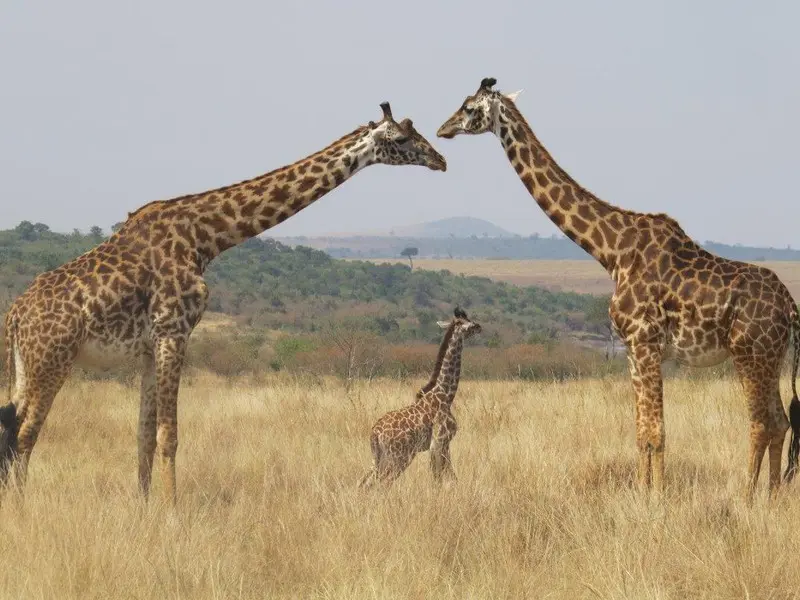
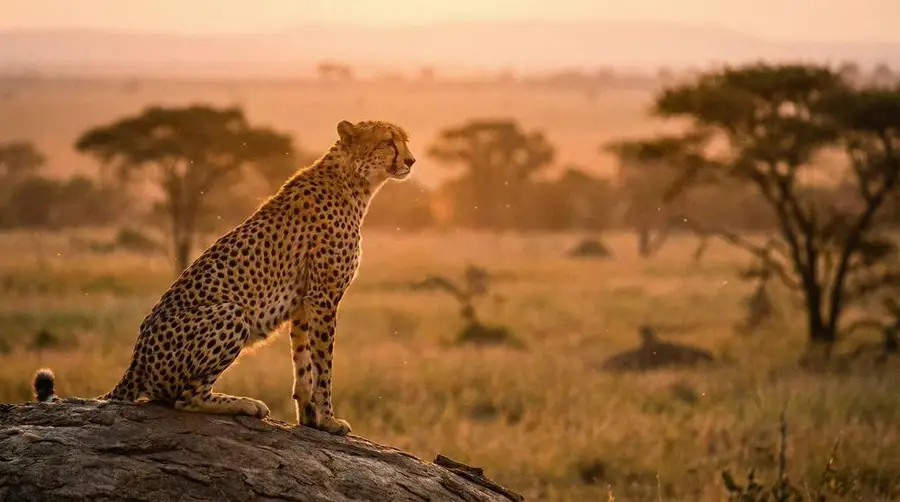
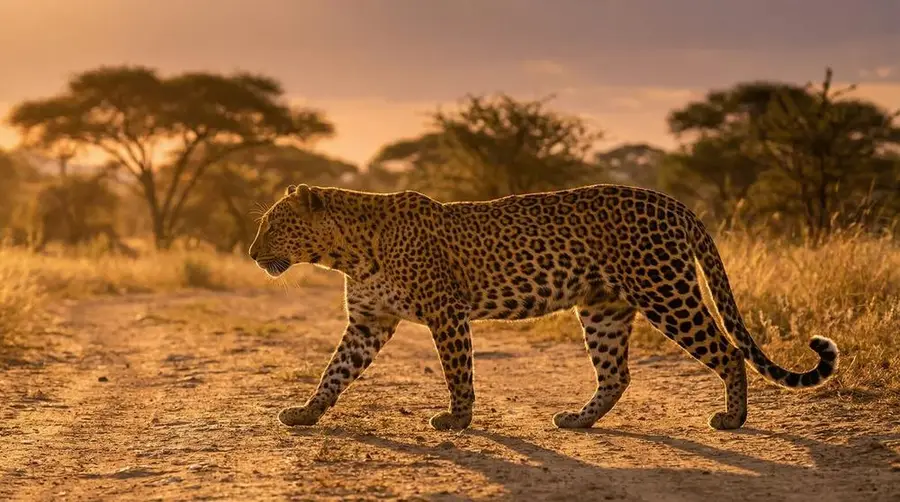
Learning the Swahili names for wildlife is a real delight and helps you follow your guide, who often uses them by instinct. The headline species are easy and fun: 'simba' (lion), 'tembo' or 'ndovu' (elephant), 'twiga' (giraffe), 'kiboko' (hippo), 'nyati' (buffalo), 'chui' (leopard), 'duma' (cheetah) and 'faru' (rhino). Say 'simba' out loud and you will realise how many Swahili words you already half-know from popular culture.
Beyond the celebrities, a few more names sharpen your eye: 'punda milia' (zebra, literally 'striped donkey'), 'nyani' (baboon), 'kima' (monkey), 'mamba' (crocodile) and 'ndege' (bird, which also means aeroplane). Ask your guide to teach you more, because they love sharing them, and each name is a small window into the culture and the landscape. A field-guide app such as SafariLingo also lists the Swahili name for every species, so you can quietly learn as you go.
- Simba — lion; Chui — leopard; Duma — cheetah
- Tembo / Ndovu — elephant; Faru — rhino; Nyati — buffalo
- Twiga — giraffe; Kiboko — hippo
- Punda milia — zebra (literally 'striped donkey')
- Nyani — baboon; Kima — monkey; Ndege — bird
Numbers, money and the market
A little counting goes a long way at a craft market or roadside stall, where bartering is expected and good-humoured. The numbers one to ten are 'moja, mbili, tatu, nne, tano, sita, saba, nane, tisa, kumi'. 'Pesa' is money, 'bei gani?' means 'what price?' and 'ghali sana' means 'very expensive', a phrase that, said with a smile, is the polite opening move of any negotiation.
Keep it friendly rather than sharp. Ask the price, offer 'ghali sana' with a grin, suggest a lower number and settle somewhere in the middle; the goal is a fair deal both sides feel good about, not a victory. 'Ngapi?' means 'how many / how much?' and 'nataka' means 'I want'. Carry small notes, agree the price before you take the item, and remember that a warm exchange in Swahili often gets you a better price than hard bargaining in English ever will.
- Moja, mbili, tatu, nne, tano — one to five
- Sita, saba, nane, tisa, kumi — six to ten
- Bei gani? — what price?; Ngapi? — how much / how many?
- Ghali sana — very expensive (a friendly opening line)
- Pesa — money; Nataka — I want
A note on pronunciation
Swahili is a gift for English speakers because it is largely phonetic: words are pronounced as they are written and the spelling is consistent. The vowels are pure and clear: 'a' as in 'father', 'e' as in 'bed', 'i' as in 'machine', 'o' as in 'or' and 'u' as in 'flute'. Every vowel is sounded, so 'Asante' is 'ah-SAHN-teh' and never swallowed the way English endings often are.
Stress almost always falls on the second-to-last syllable, which makes the rhythm easy to pick up: 'ka-RI-bu', 'a-SAN-te', 'ha-KU-na ma-TA-ta'. Don't worry about getting it perfect, because locals are forgiving and encouraging, and the effort itself is what is appreciated. Practise a few phrases before you travel, then use them freely and cheerfully on the ground, and you will be rewarded with smiles and a warmer welcome everywhere you go.
Using your Swahili with grace
The point of these phrases is connection, not performance, so use them with a light touch and read the response. Lead with a greeting before any question, use 'Shikamoo' with older people and 'Karibu' when you are welcomed, and accept the smiles and gentle corrections as part of the fun. If someone answers in rapid Swahili you cannot follow, 'samahani, sielewi' (sorry, I don't understand) or a cheerful 'kidogo tu' (just a little) keeps things warm.
A few habits make a big difference. Learn the names of the people looking after you and use them; thank your cook and camp team directly, not just your guide; and remember that 'asante' at the end of the day means more than any phrase practised for show. You are a guest in someone's home region, and a handful of words offered with genuine respect is one of the kindest, most memorable things you can carry into the bush.
- Always greet before you ask a question
- Use 'Shikamoo' for elders and 'Karibu' when welcomed
- 'Samahani, sielewi' — sorry, I don't understand
- Learn and use the names of the people looking after you
References & further reading
- Sinclair, A. R. E., et al. (Eds.) (2015). Serengeti IV. Chicago: University of Chicago Press.
- Estes, R. D. (2012). The Behavior Guide to African Mammals. Berkeley: University of California Press.
- Kingdon, J. (2015). The Kingdon Field Guide to African Mammals (2nd ed.). London: Bloomsbury.
- IUCN (2024). The IUCN Red List of Threatened Species, Version 2024-1. www.iucnredlist.org.
Do it with SafariLingo
Take SafariLingo on safari: 500+ species, real animal calls, offline maps and sighting logs — all in your language, wherever you roam.
Get the appFrequently asked questions
Do I need to speak Swahili on safari?
No. English is widely used in the safari industry and your guide will speak it well. But learning a few Swahili words is warmly appreciated by locals, enriches your trip and helps you connect. Even a handful of greetings makes a noticeable difference to how you are received.
How do you say thank you in Swahili?
'Asante', or 'Asante sana' for thank you very much. It is one of the most useful words to know and is met with genuine warmth. Pair it with 'Karibu' (welcome) and 'Tafadhali' (please) for the essential everyday courtesies.
Is 'Hakuna matata' really used?
Yes. It is a genuine Swahili phrase meaning 'no worries' or 'no problem', and you will hear it across East Africa. Along with 'Pole pole' (slowly, slowly), it nicely captures the relaxed pace of the bush, though locals use plenty of other everyday expressions too.
Is Swahili hard to pronounce?
Not at all. It is largely phonetic, with pure, consistent vowels and stress usually on the second-to-last syllable. Words are said as they are written, so it is one of the easier languages for English speakers to attempt with confidence.
What is a respectful way to greet an older person?
Use 'Shikamoo', a respectful greeting for elders, which is answered with 'Marahaba'. Showing that small courtesy signals real cultural awareness and is almost always met with delight. For everyone else, 'Jambo' or 'Habari?' is friendly and appropriate.
Related guides
Planning & Tips Combining a Safari with a Beach Holiday
Plan a safari and beach trip in Africa with the right order, coast, season and transfer strategy. This guide covers practical pairings, weather traps, baggage limits and how long the beach stay should be.
 Planning & Tips
 Sundowners and Bush Traditions
A practical, atmospheric guide to safari sundowners, bush breakfasts, boma evenings, night skies and the etiquette that makes these rituals feel effortless and respectful.
 Planning & Tips
 Avoiding Crowds on Safari
How to avoid crowds on safari: choosing quieter parks, conservancies and seasons, timing your drives, respecting sighting etiquette, and enjoying wildlife away from the vehicles.