
Zimbabwe Safari Highlights
A guide to the best of a Zimbabwe safari — Hwange's great elephant herds, walking and canoeing in Mana Pools, the thunder of Victoria Falls, and why its superb guides and honest value make it a connoisseur's choice.
Zimbabwe is the safari that seasoned travellers quietly recommend to each other. It has the classic African cast — big elephant herds, lion, leopard, wild dog and the great Zambezi — but it delivers them with fewer vehicles, lower prices than its glossier neighbours, and a guiding culture widely regarded as the most rigorous on the continent. For a first safari it rewards; for a second or third it can become a lasting favourite. The country's appeal rests on three pillars and one intangible. The pillars are Hwange, with its enormous dry-season elephant gatherings; Mana Pools, the UNESCO-listed Zambezi floodplain famous for walking and canoeing among wildlife; and Victoria Falls, one of the natural wonders of the world. The intangible is the professional guide — Zimbabwe's licensing exam is legendarily demanding, and it shows in the depth and safety of every activity. This guide walks through those highlights, explains the seasons and the value proposition, and sets out the itineraries that combine them well, so you can see why so many old Africa hands keep coming back to Zimbabwe.
Key things to know
- Hwange National Park hosts some of Africa's largest dry-season elephant concentrations at its waterholes.
- Mana Pools is a premier destination for guided walking and canoeing safaris along the Zambezi.
- Victoria Falls, shared with Zambia, is a spectacular start or finish to any Zimbabwe trip.
- Zimbabwe's professional guides are among the best-trained and most rigorously examined in Africa.
- Compared with some neighbours, Zimbabwe offers strong value and notably uncrowded sightings.
- The dry season, roughly May to October, is prime for game viewing and Falls-and-bush combinations.
- A classic trip pairs Hwange, Mana Pools and Victoria Falls over about ten days to two weeks.
- Walking and canoeing here are serious, well-run activities, not gimmicks — a genuine highlight.
Why choose Zimbabwe
Zimbabwe rewards travellers who care about the quality of the experience as much as the checklist of species. Its parks are generally quieter than the busiest reserves in East Africa, so a good sighting is often yours alone rather than shared with a ring of vehicles. Prices tend to be gentler than in the most fashionable neighbours, which means a given budget buys more nights, better camps or a longer trip. And the guiding is exceptional: becoming a licensed professional guide here involves years of apprenticeship and a famously tough examination covering ecology, tracking, firearms and first aid.
That guiding culture unlocks the activities Zimbabwe does best. Because guides are trained and licensed to lead walking and canoeing safaris in big-game country, you can step out of the vehicle and experience the bush on foot or from the water with genuine confidence. It is this combination — expert people, uncrowded wilderness and fair value — rather than any single animal, that makes the country such a favourite among repeat safari-goers.
- Uncrowded parks where good sightings are often yours alone.
- Strong value for money versus the most fashionable neighbouring destinations.
- A rigorous professional-guide system underpinning every activity.
- Genuine walking and canoeing safaris, not just game drives.
- A satisfying mix of iconic wildlife, wilderness and a world wonder.
Hwange: the elephant park
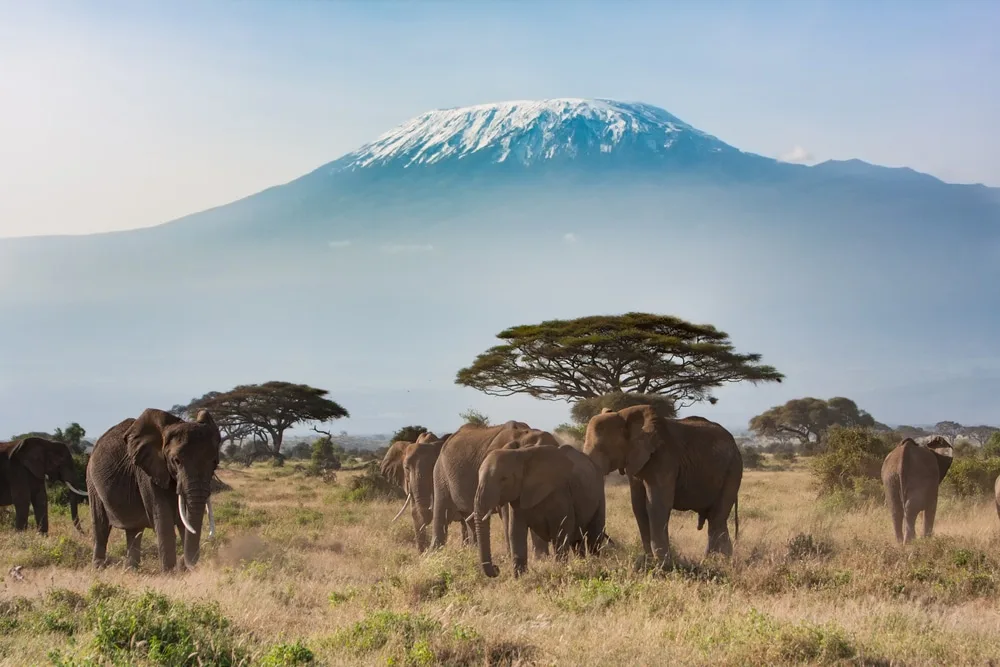
Hwange is Zimbabwe's largest national park and its wildlife heartland, a vast expanse of Kalahari sand, teak woodland and open grassland on the edge of the Kalahari system. Its signature is elephant: in the dry season, when natural water dries up, thousands gather at the park's waterholes, many of them pumped, and the sight of herd after herd coming to drink in the golden evening light is one of the great spectacles of African travel. Buffalo, giraffe, zebra and antelope follow the same water, and where prey concentrates the predators follow — Hwange holds strong populations of lion, spotted hyena and the endangered African wild dog.
Game viewing here is built around those waterholes, and many camps overlook one so that the wildlife comes to you. Days combine morning and afternoon drives with waterhole-side sundowners, and the better camps also offer walking with their guides. Hwange is easily reached from Victoria Falls, which makes it the natural bush anchor of most Zimbabwe itineraries.
- Massive dry-season elephant gatherings at pumped and natural waterholes.
- Strong predator populations including lion, hyena and wild dog.
- Camps that overlook waterholes so wildlife comes to the lodge.
- A mix of game drives, night drives (in private areas) and guided walks.
- Easy access from Victoria Falls, ideal as a trip's main bush stop.
Mana Pools: on foot and by canoe
Mana Pools, a UNESCO World Heritage Site on the banks of the lower Zambezi, is where Zimbabwe's guiding tradition shines brightest. The floodplain's open forests of winterthorn and mahogany, dotted with pools left by the receding river, create a stage for extraordinarily intimate encounters. This is one of the few places where experienced guides will walk you toward elephants, and where famous individual bulls have been seen rearing up to feed on high pods — always observed at a careful, guide-led distance.
The other signature experience is canoeing the Zambezi itself, drifting past pods of hippo, basking crocodiles and elephants crossing between islands, with the escarpment of the Rift as a backdrop. Whether on foot, by canoe or from a vehicle, Mana Pools rewards those who want to feel the wilderness rather than simply drive through it. It is more remote and seasonal than Hwange, generally accessed in the dry months, and pairs beautifully with it for contrast.
- Guided walking safaris among elephants and big game on the floodplain.
- Canoe trips along the Zambezi past hippos, crocodiles and crossing elephants.
- Iconic winterthorn woodland and river pools with dramatic light.
- A remote, low-vehicle wilderness feel for a more adventurous traveller.
- Best in the dry season; many camps close during the green-season rains.
Victoria Falls: the smoke that thunders
No Zimbabwe trip is complete without Victoria Falls, called Mosi-oa-Tunya, 'the smoke that thunders', by the local Tonga people. Where the Zambezi plunges over a mile-wide basalt lip into a narrow gorge, it creates one of the largest sheets of falling water on Earth, its spray visible from far off. The Zimbabwean side offers the widest and most face-on views of the main falls, reached by an easy network of paths through the rainforest that the spray keeps green.
The town of Victoria Falls is also the region's adventure and gateway hub. Beyond the viewpoints you can take a sunset cruise on the upper Zambezi, fly over the falls in a helicopter, and — for the bold — try white-water rafting or the bridge activities in the gorge below. Because it sits at the doorstep of Hwange and is well connected by air, the Falls make an ideal start or finish to a safari, bookending the wilderness with a genuine natural wonder.
When to go and what it costs
Zimbabwe has a clear dry season, roughly May to October, and this is the classic time for safari. As the bush dries and water disappears, animals concentrate at rivers and waterholes, vegetation thins for easier viewing, and Hwange's elephant gatherings build toward their peak in September and October. This is also when walking and canoeing in Mana Pools are at their best and most camps are open. The trade-off is that late dry season can be hot and dusty, and Victoria Falls is lower in flow, revealing more rock face.
The green season, roughly November to April, brings dramatic skies, lush scenery, superb birding and newborn animals, along with lower prices and fewer visitors, though some remote camps close and roads can be tricky. On value, Zimbabwe generally sits below the priciest neighbouring destinations for comparable quality, and its uncrowded parks stretch a budget further. As always, treat quoted prices as ranges and confirm current rates, and check official sources for entry and health requirements.
- Dry season (May–October): peak game viewing, best walking and canoeing.
- September–October: Hwange elephant numbers at their spectacular height.
- Green season (November–April): lush, birdy, cheaper and quiet, some camps closed.
- Victoria Falls flow is highest after the rains and lower late in the dry season.
- Confirm current prices, park fees and entry requirements before booking.
Putting a trip together
The classic Zimbabwe itinerary strings together the three highlights over about ten days to two weeks, and the country's compact air network makes this straightforward. A common and satisfying route starts at Victoria Falls for the wonder itself and a day or two of activities, flies to Hwange for elephants and predators around the waterholes, and finishes in Mana Pools for walking and canoeing in true wilderness — a deliberate build from spectacle to wildlife to deep bush.
Zimbabwe also combines naturally with its neighbours. Because Victoria Falls straddles the border, it is easy to pair with Zambia's parks, while Botswana's Chobe and Okavango are a short hop away, making a two-country trip simple to arrange. For a first visit, a week to ten days focused on the Falls and one or two parks is plenty; for a returning traveller, adding Mana Pools or a remote camp turns a good trip into a memorable one.
- A classic loop: Victoria Falls, then Hwange, then Mana Pools over 10–14 days.
- Build from world wonder to game-rich waterholes to on-foot wilderness.
- Easy to combine with Zambia across the Falls, or Botswana nearby.
- First-timers: the Falls plus one or two parks in a week to ten days.
- Returning travellers: add remote Mana Pools camps or private concessions.
References & further reading
- Sinclair, A. R. E., et al. (Eds.) (2015). Serengeti IV. Chicago: University of Chicago Press.
- Estes, R. D. (2012). The Behavior Guide to African Mammals. Berkeley: University of California Press.
- Kingdon, J. (2015). The Kingdon Field Guide to African Mammals (2nd ed.). London: Bloomsbury.
- IUCN (2024). The IUCN Red List of Threatened Species, Version 2024-1. www.iucnredlist.org.
Do it with SafariLingo
Take SafariLingo on safari: 300+ species, real animal calls, offline maps and sighting logs — all in your language, wherever you roam.
Get the appFrequently asked questions
Is Zimbabwe a good and safe choice for a safari?
Yes. The main safari areas and Victoria Falls are well set up for tourism, with experienced operators and outstanding guides, and safari-goers generally have trouble-free trips. As anywhere, use reputable operators, follow local advice and check your government's current travel guidance before you go.
When is the best time to visit Zimbabwe for safari?
The dry season, roughly May to October, is prime: animals concentrate at water, viewing is easier and Hwange's elephant gatherings peak in September and October, which is also the best window for Mana Pools walking and canoeing. The green season, November to April, is lush, quieter and cheaper but wetter, with some remote camps closed.
Why are Zimbabwean guides so highly regarded?
Zimbabwe's professional guide qualification is one of the toughest in Africa, requiring years of apprenticeship and a rigorous examination in ecology, tracking, firearms and first aid. This training is what allows guides to lead walking and canoeing safaris safely in big-game country, and it shows in the depth of interpretation on every activity.
Can you really walk and canoe among wildlife in Mana Pools?
Yes, and it is a genuine highlight rather than a gimmick. Licensed guides lead walking safaris that approach elephants and other game at a careful distance, and canoe trips drift the Zambezi past hippos and crocodiles. These activities are serious and well run; always follow your guide's instructions to the letter.
How long should a Zimbabwe safari be, and what pairs well with it?
Around ten days to two weeks lets you combine Victoria Falls, Hwange and Mana Pools comfortably, while a week suits the Falls plus one park. Zimbabwe pairs naturally with Zambia across the Falls and with Botswana's Chobe and Okavango nearby, making a two-country trip easy to arrange.
Related guides
 Destinations
 Zambia: The Home of Walking Safaris
Why Zambia — and especially the South Luangwa — invented the modern walking safari, and what a week on foot with a Zambian guide really looks like.
 Destinations
 Gorilla Trekking: Rwanda vs Uganda
How to choose between Rwanda's Volcanoes National Park and Uganda's Bwindi Impenetrable Forest — cost, difficulty, logistics, photography and combining with the rest of a safari.
 Destinations
 Best Safari Destinations for First-Timers
Where to go on your first safari: the parks and reserves that deliver reliable sightings, easy logistics, good value and iconic scenery — from the Masai Mara and Serengeti to Kruger and Etosha — matched to your priorities.