
Planning a Safari Around the Migration
How to time and position a safari for the great wildebeest migration: month-by-month herd movements, booking windows, camp placement, river-crossing luck and how to avoid disappointment.
The great migration, the year-round movement of well over a million wildebeest, plus zebra and gazelle, around the Serengeti-Mara ecosystem, is one of the greatest wildlife spectacles on earth. But it is also widely misunderstood. It is not a single event on a fixed date; it is a continuous, weather-driven circuit, and planning a trip around it means understanding roughly where the herds are likely to be in a given month, then positioning yourself accordingly. The herds follow the rains and the fresh grass they bring, moving through Tanzania's Serengeti and up into Kenya's Masai Mara and back over the course of a year. Because rain is variable, the timing shifts from year to year, so no itinerary can promise a specific scene on a specific day. What good planning can do is put you in the right region at the right time and maximise your chances of the experience you most want. This guide walks through the rough month-by-month rhythm, when to book, how camp placement matters, the truth about river crossings, and how to set expectations so you come home thrilled rather than disappointed.
Key things to know
- The migration is a continuous year-round circuit, not a single dated event
- Herds follow the rains and fresh grazing around the Serengeti-Mara ecosystem
- Calving season in the southern Serengeti falls roughly around January to March
- Dramatic river crossings are most associated with roughly July to October
- Exact timing shifts yearly because it depends on unpredictable rainfall
- Book well ahead, as the best camps in peak season fill a year or more out
- Camp placement within the ecosystem matters more than the country on the map
- Set realistic expectations: crossings involve luck, patience and flexibility
How the migration actually works
The migration is best understood as a giant, roughly circular journey driven by rainfall and grazing rather than a calendar. More than a million wildebeest, accompanied by large numbers of zebra and gazelle, move continuously in search of fresh grass and water, tracking the seasonal rains around the Serengeti in Tanzania and the Masai Mara in Kenya. There is no start or finish line; the herds are always somewhere in the cycle.
Because the whole system is driven by rain, and rain varies from year to year, the timing is never fixed. A wet or dry season that arrives early or late can shift the herds' position by weeks. This is the single most important thing to grasp when planning: you are betting on probabilities, not certainties, and the goal is to be in the right general region when the herds are most likely to be there.
- Over a million wildebeest plus zebra and gazelle
- A continuous circuit, not a fixed-date event
- Driven by seasonal rains and fresh grazing
- Spans Tanzania's Serengeti and Kenya's Masai Mara
- Exact timing varies with unpredictable rainfall
The month-by-month rhythm
As a rough guide, the calving season falls in the southern Serengeti and Ndutu area around January to March, when hundreds of thousands of wildebeest give birth over a few weeks, drawing intense predator action. Around April and May the herds generally begin moving north and west with the longer rains, a quieter, greener, lower-season time. Through roughly June the herds push toward the western and northern Serengeti.
From around July to October the herds are typically in the northern Serengeti and the Masai Mara, the period most associated with dramatic river crossings. Around November, short rains usually draw the herds back south toward the Serengeti's short-grass plains, completing the loop by the new year. Treat these windows as approximate: they shift annually, so always confirm current patterns with a specialist before committing to dates.
- January to March: calving in the southern Serengeti
- April to May: herds move north with the rains
- June: herds push toward western and northern Serengeti
- July to October: northern Serengeti and Masai Mara, crossings
- November to December: short rains draw herds back south
Booking windows and camp placement
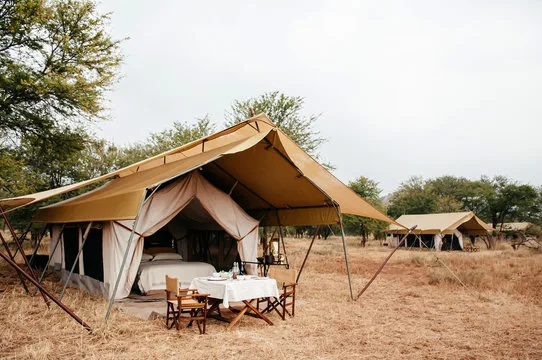
The best camps in prime migration positions are limited in number and book up far in advance, often a year or more ahead for peak crossing season. If your trip depends on being in a specific area at a specific time, reserve early; leaving it late often means compromising on location, price or quality. Mobile camps, which relocate seasonally to follow the herds, are a particularly good way to stay close to the action.
Just as important as the country is exactly where your camp sits within the ecosystem. A camp well placed near the herds' likely position, or near key crossing points in season, can mean the difference between driving for hours to reach the action and stepping out into it each morning. When you book, ask specifically how your camp's location relates to the expected herd movements for your dates, rather than relying on a famous park name alone.
The truth about river crossings
River crossings, when thousands of wildebeest plunge across crocodile-filled rivers, are the migration's most iconic image, but they are also its least predictable. Crossings happen when and where the herds decide, often after long build-ups where animals gather, hesitate, turn back and try again. You may wait hours at a river and see nothing, or witness a chaotic crossing with little warning.
The realistic approach is to give yourself time and stay flexible. Spending several nights in a crossing region during the right season, with an experienced guide who reads the herds' behaviour, dramatically improves your odds, but nothing guarantees a crossing on a particular day. Travellers who arrive expecting a crossing on cue are often disappointed; those who come to enjoy the whole spectacle, with a crossing as a thrilling bonus, almost always leave happy.
Setting expectations and avoiding disappointment
The surest way to enjoy a migration safari is to plan around probabilities and embrace what the day brings. Even at peak times the herds can be spread over vast distances, weather can disrupt movements, and the single scene you pictured may not materialise on schedule. Building in enough nights, staying mobile or well-positioned, and trusting your guide all help enormously.
It also helps to remember that the migration is only part of the picture. The Serengeti-Mara ecosystem offers superb resident wildlife, big cats, elephants and extraordinary birdlife year-round, so even a quieter migration moment sits within one of Africa's richest safari regions. Go with flexible expectations, a good operator and enough time, and you tilt the odds firmly toward an unforgettable trip.
References & further reading
- Sinclair, A. R. E., et al. (Eds.) (2015). Serengeti IV. Chicago: University of Chicago Press.
- Estes, R. D. (2012). The Behavior Guide to African Mammals. Berkeley: University of California Press.
- Kingdon, J. (2015). The Kingdon Field Guide to African Mammals (2nd ed.). London: Bloomsbury.
- IUCN (2024). The IUCN Red List of Threatened Species, Version 2024-1. www.iucnredlist.org.
Do it with SafariLingo
Take SafariLingo on safari: 300+ species, real animal calls, offline maps and sighting logs — all in your language, wherever you roam.
Get the appFrequently asked questions
When is the best time to see the migration?
It depends on what you want. Roughly January to March offers calving in the southern Serengeti; about July to October is most associated with river crossings in the northern Serengeti and Masai Mara. Timing shifts yearly with the rains, so confirm current patterns before booking.
Can I guarantee seeing a river crossing?
No. Crossings happen when and where the herds decide and are inherently unpredictable. You improve your odds greatly by spending several nights in a crossing region during the right season with an experienced guide, but no itinerary can promise a crossing on a specific day.
How far in advance should I book?
For peak crossing season, book well ahead, often a year or more, because the best-placed camps are limited and fill early. Booking late usually means compromising on location, price or quality, which can directly affect how close you are to the herds.
Does it matter which camp I choose?
Very much. Exactly where a camp sits within the ecosystem, and how that relates to the herds' expected position for your dates, often matters more than the park's name. Well-placed or mobile camps can put you into the action instead of hours away from it.
Is the migration worth it if I miss a crossing?
Absolutely. The Serengeti-Mara ecosystem offers outstanding resident wildlife, big cats, elephants and rich birdlife year-round. Travellers who come to enjoy the whole spectacle, treating a crossing as a bonus rather than a guarantee, almost always leave delighted.
Related guides
 Planning & Tips
 Planning a Multi-Generational Safari
How to plan one safari that works for toddlers, teenagers, parents and grandparents at once — pacing, private guides, family suites, activity choices and health, so every generation has the trip of a lifetime.
 Planning & Tips
 Private vs Group Safari Tours: Which Is Right for You?
A clear comparison of private and group safaris — the real cost differences, flexibility, social dynamics and photographic advantages of each — to help you decide which style suits your travel priorities and budget.
 Planning & Tips
 How to Plan a Photographic Safari
A practical guide to planning a photographic safari: private vehicles, hides, chasing the light, longer stays, specialist guides, choosing gear and picking the right destinations for wildlife photography.