
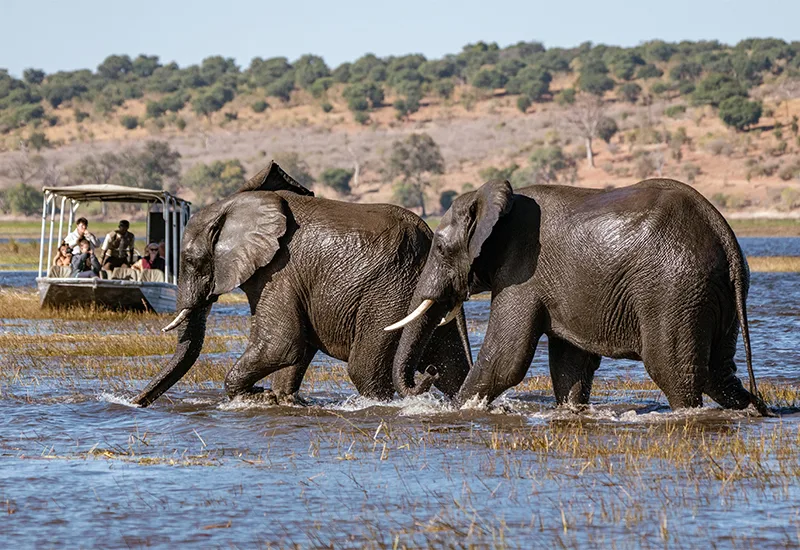
Malaria-Free Safari Destinations
A practical guide to low- and no-malaria safari options for families and cautious travellers, from South Africa's Eastern Cape, Madikwe and Waterberg to Namibia's Etosha and highland regions — and the trade-offs versus the classic parks.
For many travellers, especially families with young children, pregnant women, or anyone who prefers not to take antimalarial medication, the risk of malaria is a genuine concern when planning a safari. The good news is that Africa offers a growing number of excellent safari destinations that are either entirely malaria-free or carry only a very low, seasonal risk — and several of them still deliver Big Five game viewing and superb wilderness. Malaria is transmitted by certain mosquitoes that thrive in warm, wet, low-lying areas, so the safest destinations tend to be those at higher altitude, in drier climates, or well south of the tropical belt. This does not mean you must compromise on the safari experience: reserves such as South Africa's Eastern Cape and Madikwe, and much of Namibia's Etosha, combine genuinely low malaria risk with rewarding wildlife. This guide explains what malaria-free really means, walks through the leading low- and no-risk destinations, considers the trade-offs against the classic parks of East Africa and the lowveld, and offers practical advice for families and cautious travellers. As always, malaria risk and prevention are medical matters — confirm current advice with a travel clinic or doctor before you go.
Key things to know
- Malaria-free and low-risk safaris suit families, pregnant travellers and the medication-averse.
- Higher-altitude, drier and more southerly areas generally carry the lowest malaria risk.
- South Africa's Eastern Cape offers malaria-free Big Five reserves near Gqeberha (Port Elizabeth).
- Madikwe and the Waterberg in northern South Africa are widely considered malaria-free or very low risk.
- Namibia's Etosha carries low risk, lowest in the dry season, though the far north is higher.
- Trade-offs include smaller reserves and, in places, no Great Migration or vast open plains.
- Risk is seasonal and area-specific, so always verify current advice before travel.
- Even in low-risk areas, simple bite-prevention measures remain sensible.
What does malaria-free really mean?
It helps to distinguish between truly malaria-free areas, where the disease is essentially absent, and low-risk areas, where transmission is possible but uncommon, often only in the wet season. Malaria is spread by night-biting Anopheles mosquitoes, which need warmth and standing water to breed, so risk is highest in hot, humid, low-lying regions during and just after the rains, and lowest in cool, dry, high-altitude or far-southern areas. This is why parts of South Africa and Namibia can be marketed as malaria-free while classic East African and lowveld parks are malaria zones.
Because risk varies by season, altitude and exact location, and because the situation can change, malaria prevention is firmly a medical decision. Reputable operators will describe reserves honestly as either malaria-free or low-risk, but you should always confirm the current picture with a travel health clinic or your doctor, who can advise on whether prophylaxis is recommended for your specific itinerary, health and travel dates. Treat any destination described as low-risk as still warranting sensible precautions.
- Malaria-free: the disease is essentially absent year-round.
- Low-risk: transmission is possible but uncommon, often only in the wet season.
- Risk rises in hot, humid, low-lying areas during and after rains.
- Risk falls in cool, dry, high-altitude or far-southern regions.
- Always confirm current advice with a travel clinic or doctor.
South Africa's Eastern Cape
The Eastern Cape, centred on the city of Gqeberha (formerly Port Elizabeth), is one of the most popular malaria-free safari regions in Africa, and a firm favourite with families. A cluster of private reserves here offers genuine Big Five game viewing — lion, leopard, elephant, buffalo and rhino — in a malaria-free environment, making it an ideal choice for travellers with young children or anyone reluctant to take antimalarials.
The region's mosaic of vegetation types, from thicket to grassland, supports a good diversity of wildlife, and the reserves are generally compact and well managed, so game viewing can be productive without long transfers. The Eastern Cape also combines beautifully with South Africa's famous Garden Route and the beaches and culture of Cape Town, allowing families to build a varied, low-stress holiday around a malaria-free safari. Wildlife density and wilderness scale may not match the greatest East African parks, but for peace of mind it is hard to beat.
- Malaria-free Big Five reserves near Gqeberha (Port Elizabeth).
- Ideal for families with young children and medication-averse travellers.
- Compact, well-managed reserves mean productive game viewing.
- Combines easily with the Garden Route and Cape Town.
- Reassurance and convenience over vast-wilderness scale.
Madikwe and the Waterberg
In the north of South Africa, the Madikwe Game Reserve and the wider Waterberg region are widely regarded as malaria-free or very low risk, and they offer a genuinely wild, big-country safari. Madikwe is a large reserve on the Botswana border, known for excellent Big Five sightings and one of Africa's better chances of seeing endangered African wild dogs, all without the malaria concern of parks further north and east.
The Waterberg, a rugged highland massif, is a malaria-free biosphere of bushveld, mountains and private reserves, offering a quieter, more scenic safari that pairs well with a relaxed pace. Both areas are readily accessible from Johannesburg, making them practical for a first African safari or a family trip. As with all destinations described as very low risk, it remains wise to confirm the current situation and to take simple bite-prevention steps, but these areas let you enjoy substantial wilderness with real peace of mind.
Namibia's Etosha and arid regions
Namibia is one of Africa's driest countries, and much of it carries low malaria risk, particularly in the dry season. Etosha National Park, built around a vast shimmering salt pan, is a superb safari destination where wildlife congregates around waterholes, offering some of the most reliable and dramatic game viewing anywhere — elephants, lions, rhinos and huge herds of plains game. Malaria risk in Etosha is generally low and lowest in the dry winter months, though the far north of the country, especially the wetter Zambezi Region, carries higher risk.
Beyond Etosha, Namibia's arid landscapes — from the desert-adapted wildlife of Damaraland to the dunes of the Namib — are largely low-risk and spectacularly scenic. Namibia is also famously easy and safe for self-drive travel, making it a favourite for independent-minded families. As always, risk is seasonal and area-specific, so the far north and the rainy months warrant particular care and up-to-date medical advice, but the classic Etosha-and-desert circuit is a strong choice for lower-risk safari.
- Etosha offers dramatic waterhole game viewing with generally low malaria risk.
- Risk is lowest in the dry winter months.
- The far north, especially the Zambezi Region, carries higher risk.
- Desert regions like Damaraland and the Namib are largely low-risk.
- Namibia is exceptionally well suited to safe self-drive travel.
Highland and other lower-risk options
Beyond these headline destinations, altitude and climate open up further lower-risk possibilities across the continent. High-altitude areas are generally cooler and carry reduced malaria risk, which is one reason certain highland reserves and elevated parts of the interior can be safer than hot, low-lying river valleys. The Cape region of South Africa, while not a Big Five safari destination in itself, is malaria-free and pairs beautifully with an Eastern Cape or northern reserve for a combined trip.
Elsewhere, some cooler, higher or more arid areas within otherwise higher-risk countries carry lower seasonal risk, but here the picture becomes genuinely nuanced and location-dependent. This is precisely where generic advice reaches its limit: whether a specific lodge, at a specific time of year, is low enough risk for your family is a question for a travel-health professional. Use altitude and aridity as a rough guide to lower risk, but always verify the specifics rather than assuming.
- Higher altitude generally means cooler temperatures and lower malaria risk.
- The malaria-free Cape region pairs well with a low-risk reserve.
- Some arid or elevated areas in higher-risk countries have lower seasonal risk.
- The picture is nuanced and highly location- and season-specific.
- Use altitude and aridity as a guide, but always verify specifics.
Trade-offs and tips for families
Choosing a low- or no-malaria destination inevitably involves trade-offs. Many malaria-free reserves are smaller and more managed than the vast open ecosystems of East Africa, and you will not find the Great Migration or the boundless plains of the Serengeti in a malaria-free zone. Wildlife density can still be excellent, but the sense of limitless wilderness may be more contained, and some iconic experiences remain the preserve of higher-risk regions. For many families, that trade is well worth the peace of mind.
For a family safari, look for reserves that welcome children, offer flexible or shorter game drives, and have family-friendly accommodation and pools for downtime. Even in low-risk areas, simple bite-prevention — covering up at dawn and dusk, using repellent, and sleeping in screened or air-conditioned rooms — remains sensible and reinforces good habits. Above all, treat malaria prevention as a medical decision: consult a travel clinic well before departure, and choose the destination that lets everyone relax and enjoy the wildlife.
- Malaria-free reserves are often smaller than East Africa's vast ecosystems.
- No Great Migration or boundless plains in malaria-free zones.
- Look for child-friendly reserves with flexible drives and pools.
- Practise simple bite-prevention even in low-risk areas.
- Consult a travel clinic and treat prevention as a medical decision.
References & further reading
- Sinclair, A. R. E., et al. (Eds.) (2015). Serengeti IV. Chicago: University of Chicago Press.
- Estes, R. D. (2012). The Behavior Guide to African Mammals. Berkeley: University of California Press.
- Kingdon, J. (2015). The Kingdon Field Guide to African Mammals (2nd ed.). London: Bloomsbury.
- IUCN (2024). The IUCN Red List of Threatened Species, Version 2024-1. www.iucnredlist.org.
Do it with SafariLingo
Take SafariLingo on safari: 300+ species, real animal calls, offline maps and sighting logs — all in your language, wherever you roam.
Get the appFrequently asked questions
Are any safari destinations completely malaria-free?
Yes. Several reserves, notably in South Africa's Eastern Cape and parts of the northern interior, are widely described as malaria-free, and many offer Big Five game viewing. Because the situation can vary, always confirm the current position with a travel-health clinic before you travel.
Can I see the Big Five without going to a malaria area?
Yes. Malaria-free reserves in South Africa's Eastern Cape, and low-risk areas such as Madikwe and Namibia's Etosha, offer genuine Big Five opportunities. You may trade some wilderness scale and the Great Migration for peace of mind, but the core safari experience is very much available.
Is a safari safe for young children or during pregnancy?
Low- and no-malaria destinations are popular precisely for this reason, but suitability depends on the individual, the destination and the season. Malaria prevention and travel during pregnancy are medical questions, so always consult a doctor or travel clinic before booking or departing.
Does low-risk mean I can skip all precautions?
No. Low-risk means transmission is uncommon, not impossible, and it can vary by season and exact location. Simple bite-prevention measures remain sensible, and you should confirm with a travel-health professional whether any further precautions are advised for your specific trip.
When is malaria risk lowest?
Risk is generally lowest in the cooler, drier months, as the mosquitoes that transmit malaria need warmth and standing water. In many southern African areas the dry winter carries the least risk. However, this varies by region, so seek current, location-specific advice before travelling.
Related guides
 Destinations
 East Africa vs Southern Africa for Safari
A big-picture comparison of Africa's two great safari regions — landscapes, the migration versus the deltas, vehicles, water activities, seasons and cost — to help you choose or combine.
 Destinations
 The Best Countries for Big Cats
Where to prioritise lions, leopards and cheetahs on safari: the Masai Mara, Serengeti, Sabi Sand and South Luangwa, plus densities, habituation, night drives and photography.
 Destinations
 Best Green-Season Safari Destinations
Where Africa's green (wet) season shines — the southern Serengeti calving, world-class birding, a transformed Kalahari, dramatic skies and genuine low-season value — plus how to handle rain, mud and access.