
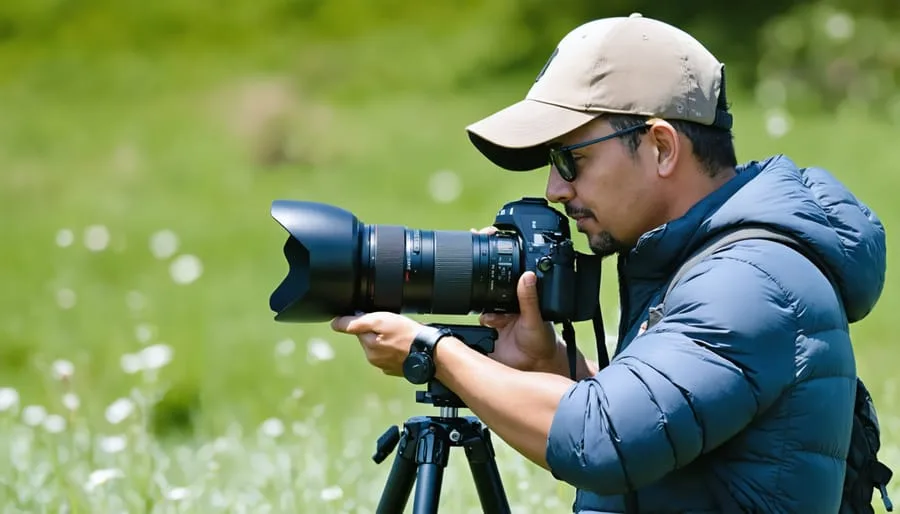
How to Photograph Elephants and Big Mammals
A field guide to photographing elephants, rhinos and buffalo: conveying scale, capturing texture and family life, using backlight and dust, and keeping a respectful, safe distance.
Elephants are among the most rewarding and forgiving subjects on safari. They are large, slow-moving and expressive, giving you time to compose rather than snatch. Yet the very qualities that make them easy to find, size and stillness, are what most photographers fail to translate into a powerful image. The great elephant photograph is rarely a tight face filling the frame. It is about scale, the animal set against a vast sky or dwarfing the acacia beside it; about texture, the deep folds of cracked grey skin; and about relationship, a calf tucked beneath its mother, a matriarch leading her family to water. Big mammals also demand respect. Elephants, rhinos and buffalo are powerful and can be dangerous, so the best images come from patience and distance, not from pushing closer. Read the animal, let it relax, and the pictures that matter will come to you.
Key things to know
- Show scale by including the landscape or a smaller animal for reference
- Get low when it is safe, so the animal looms and dominates the frame
- Use side and back light to reveal skin texture and rim the subject
- Watch for family interaction: calves, greetings, mud and dust baths
- Shoot into dust and low sun for atmosphere and drama
- Keep a respectful distance and never crowd or corner the animals
- Focus on the eye and the long lashes for intimate portraits
- Be patient at waterholes, where behaviour unfolds predictably
Convey scale and environment
The single thing that separates a striking elephant image from a snapshot is scale. Because our eyes already know an elephant is huge, filling the frame with grey can actually shrink the animal in the picture. Instead, pull back and place the elephant in its world: beneath a towering thundercloud, beside a lone acacia, or with a distant mountain behind it.
Environmental context also tells a story. A herd strung across a golden floodplain, a bull mirrored in a waterhole, or elephants moving beneath Kilimanjaro all say something a tight portrait cannot. Look for reference points, a small bird on the back, a person or vehicle far off, that let the viewer feel the true, staggering size.
- Include sky, trees or mountains to give a sense of size
- Place a smaller animal or bird in frame for scale
- Shoot wide when the whole herd is on the move
- Use reflections in water for symmetry and drama
- Frame the animal small within a grand landscape
Texture, detail and the eye
Up close, elephants are a gift of texture. The deep cracks of the skin, the frayed edges of the ears, the dust caked into every fold and the coarse hairs on a calf all reward a longer lens and good light. Side lighting in the early morning rakes across the skin and makes that texture leap out of the frame.
Do not neglect the eye. An elephant's eye, fringed by long lashes and set in a wrinkled face, carries enormous emotional weight, and a sharp catchlight brings a portrait alive. Focus carefully on the eye, wait for the ears to spread or the trunk to curl, and you capture not just an animal but a character.
Family life and behaviour
Elephants live in tight matriarchal families, and their interactions are where the best storytelling lies. A calf stumbling to keep up, youngsters sparring, trunks entwined in greeting, or the whole herd bunching protectively around the young all make images with heart. These moments reward patience far more than chasing a single trophy pose.
Water and mud are magnets for behaviour. At a waterhole or river, elephants drink, spray, wallow and play, throwing up dust and water that catch the light beautifully. Settle in, watch the group's rhythm, and anticipate the splash or the raised trunk rather than reacting a beat too late.
- Calves nursing, playing or sheltering under adults
- Greeting rituals with entwined trunks
- Dust and mud baths that throw up dramatic spray
- Youngsters testing strength by sparring
- The herd bunching to protect the young
Light, dust and drama
Big grey animals can look flat in harsh midday light, so the golden hours are your friend. Low, warm sun sculpts the body and glows through the fanned ears. Better still, position so the sun is behind or to the side of the elephant: backlight rims the animal in gold and turns kicked-up dust into a luminous halo.
Dust is not a problem to avoid but a gift to use. As elephants walk, feed or bathe, they raise clouds that, lit from behind, become atmospheric and cinematic. Expose for the highlights so the dust glows and the animal reads as a strong shape, and do not be afraid of a moody, low-key result.
Respect, distance and safety
Elephants deserve respect from behind the lens. They are intelligent and can be dangerous, especially cows with calves or bulls in musth. Signs of unease, spread ears, a raised trunk testing the air, a head shake or a mock charge, mean you are too close, and the right response is to back off quietly, never to push for a better frame.
Good images come from calm animals. Let your guide position the vehicle side-on and switch off the engine, keep your voice and movements low, and give the herd room to behave naturally. A relaxed elephant that ignores you will always yield better, more intimate photographs than one you have crowded into agitation.
- Never position between a mother and her calf
- Watch for spread ears, head shakes and raised trunks
- Let the guide choose the distance and angle
- Keep still and quiet so the herd relaxes
- Back off calmly if an animal shows stress
References & further reading
- Sinclair, A. R. E., et al. (Eds.) (2015). Serengeti IV. Chicago: University of Chicago Press.
- Estes, R. D. (2012). The Behavior Guide to African Mammals. Berkeley: University of California Press.
- Kingdon, J. (2015). The Kingdon Field Guide to African Mammals (2nd ed.). London: Bloomsbury.
- IUCN (2024). The IUCN Red List of Threatened Species, Version 2024-1. www.iucnredlist.org.
Do it with SafariLingo
Take SafariLingo on safari: 300+ species, real animal calls, offline maps and sighting logs — all in your language, wherever you roam.
Get the appFrequently asked questions
What lens is best for photographing elephants?
A flexible telephoto zoom, such as a 100-400mm, is ideal because it lets you shoot both tight detail and wider herd scenes. A wide lens is also useful for scale and landscape context. Since elephants often approach the vehicle, you rarely need extreme focal lengths.
How do I show how big an elephant really is?
Include reference in the frame: a smaller animal, a distant vehicle, a bird on its back, or a lone tree. Shooting from a low angle and placing the elephant against sky or mountains also emphasises its bulk far more than a tight crop of grey skin.
How close can I safely get to elephants?
Let your guide decide, and stay in the vehicle. Watch for warning signs like spread ears, a raised trunk or a head shake, which mean you are too close. Never come between a mother and calf, and back off quietly if an animal shows stress. Calm animals also make better photos.
What is the best time of day to photograph elephants?
The golden hours around dawn and dusk give warm, sculpting light and the chance of dramatic backlight through dust. Waterholes in the late afternoon are especially productive, as elephants gather to drink and bathe, offering both good light and rich behaviour.
Related guides
 Wildlife
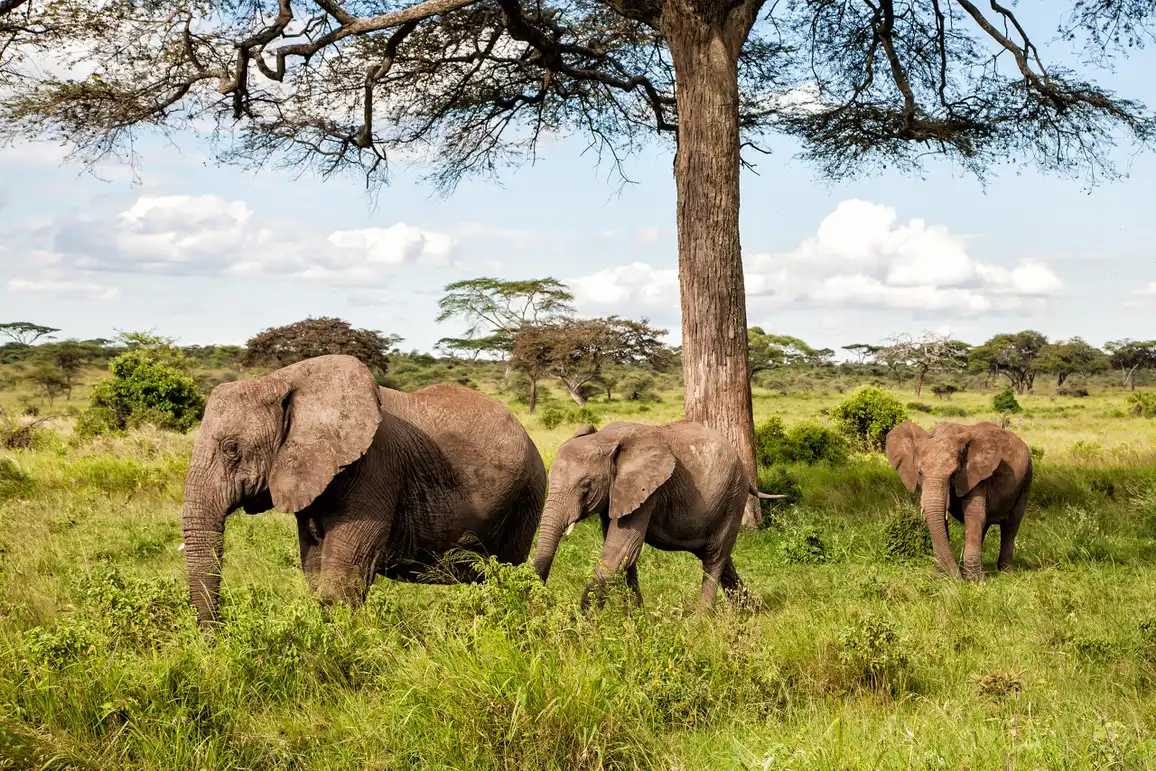
 Black-and-White Wildlife Photography on Safari
When and how to shoot wildlife in monochrome: using harsh light, texture and mood, dust and rain, elephants and rhinos, learning to think in tones, and balancing in-camera choices with post-processing.
 Wildlife
 How to Be a Responsible Safari Photographer
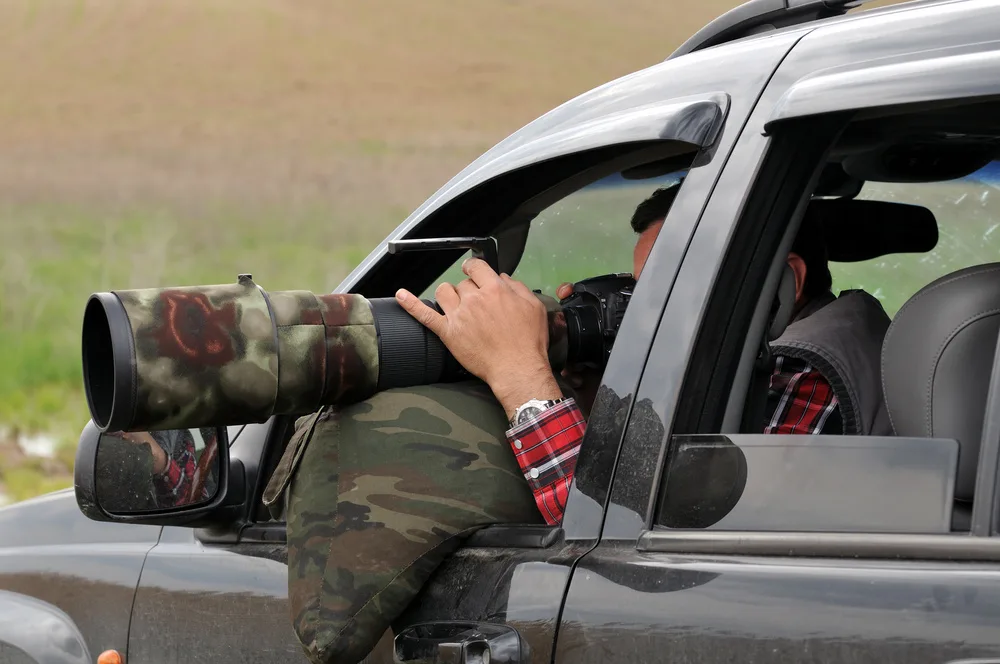
The ethics behind the lens on safari — distance, no baiting or calling, off-road rules, not blocking animals, respecting other guests and honesty in captions.
 Wildlife
 Cheetah vs Leopard: How to Tell Them Apart
A guide's field-ID guide to separating cheetah, leopard and serval at a glance — body shape, spot patterns, tear-marks, tail and behaviour, plus where to look for each on a game drive.