
Dry Season vs Green Season Safari
A practical, guide-level comparison of dry season and green season safaris, covering wildlife visibility, scenery, birding, prices, crowds, photography and regional timing.
Choosing between a dry season and a green season safari is really a choice between two different versions of the African bush. The dry months usually give the most straightforward big-game viewing: animals gather around permanent water, grass is shorter, tracks are easier to read, and guides can predict movement with greater confidence. It is the classic first-safari window in many destinations, especially where travellers have limited time and want the best chance of seeing cats, elephants and large plains-game herds. The green season is not a lesser safari; it is a more nuanced one. Rain spreads water across the landscape, vegetation thickens and some animals become harder to find, but the bush becomes vivid, birds explode into colour, many antelope and wildebeest calves are born, and crowds often drop sharply. The right answer depends on your destination, tolerance for weather, budget, photography style and whether you value easy sightings or a more atmospheric, spacious wilderness experience.
Key things to know
- Dry season is usually easiest for general wildlife viewing because animals concentrate near reliable water and cover is thinner.
- Green season brings lush landscapes, dramatic skies, newborn animals, peak birding and often excellent value.
- Predator sightings can be strong in either season, but their patterns change with prey, water and vegetation.
- Dry months often mean higher rates, fuller camps and more vehicles at famous sightings in popular parks.
- Green season may involve afternoon storms, muddy tracks and thicker grass, so flexibility and a good guide matter more.
- Photography differs rather than simply improves: dry season gives dust, silhouettes and action at water; green season gives colour, clouds and clean air.
- Regional calendars vary widely between East Africa, Southern Africa and desert areas, so never apply one country’s season to the whole continent.
- For many travellers, shoulder months offer the best compromise between visibility, value, scenery and lower crowds.
Wildlife viewing and animal movement
In many savanna and woodland systems, the dry season makes wildlife easier to locate because water becomes the organising principle of the day. Elephants, buffalo, zebra, antelope and predators all adjust their routes around permanent rivers, pans, springs and pumped waterholes. Grass is cropped or dried down, leaves fall from some trees, and a guide can scan farther through the bush. This is why areas such as Chobe, Hwange, Ruaha, South Luangwa and parts of the Serengeti can feel intensely productive in the dry months.
Green season disperses animals because water and fresh grazing appear in many places at once. That can make a drive feel quieter if you are expecting every bend to produce a lion, yet it also creates behaviour you rarely see in the dry: calving herds, territorial birds displaying, insects hatching, predators working through nursery herds, and small species feeding in the open after rain. The best green-season guides read fresh growth, tracks in damp soil, alarm calls and recent storm patterns rather than relying only on known water points.
- Dry season advantages include thinner cover, predictable water points and easier long-distance scanning.
- Green season advantages include births, breeding displays, active birds and fresh tracks in damp ground.
- Predators follow prey in both seasons, but the hunting grounds can shift dramatically.
- Dense grass can hide leopards, cheetahs and smaller antelope, making guide skill especially important.
- River systems and permanent wetlands can remain excellent in both seasons.
Scenery, weather and comfort
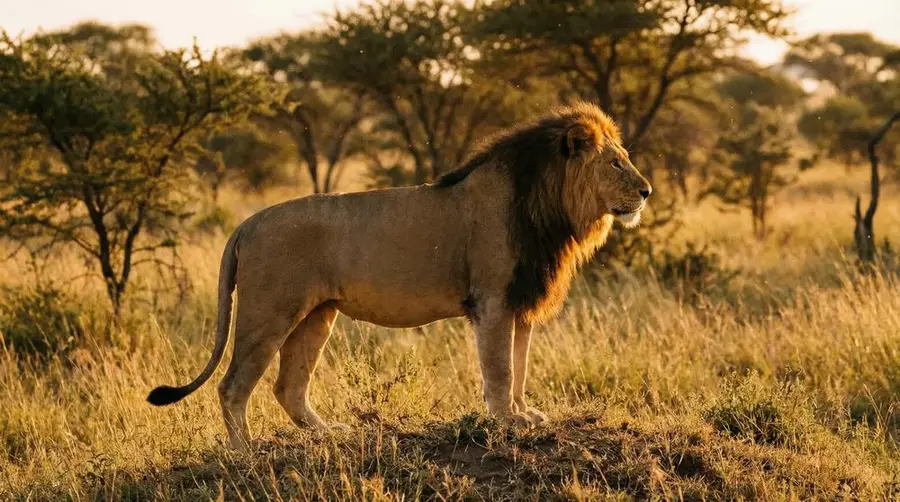
Dry season landscapes are often golden, dusty and open. Mornings can be cold in highland and desert-edge regions, afternoons warm up quickly, and the air may carry haze or dust from dry tracks and bare soil. Many travellers love this look because it feels elemental: elephants crossing pale floodplains, lions backlit in amber grass, and vultures circling against a hard blue sky. The trade-off is that some places can look brown and severe late in the season.
Green season changes the emotional tone of a safari. Storm clouds build into huge skies, rain washes dust from leaves, flowers appear, pans refill and the bush smells alive. Drives may be interrupted by showers, some roads can become slippery, and a few remote camps close where access is unreliable. In well-run areas, however, rain often comes in bursts rather than all day, leaving soft light, cooler temperatures and spectacular skies for the next outing.
- Dry season can be chilly at dawn and hot by afternoon, so layers still matter.
- Green season rain is often episodic, but road conditions can change quickly.
- Late dry season may be dusty, especially on busy tracks and open plains.
- After rain, colours, reflections and cloudscapes can be exceptional for photography.
Birding, babies and specialist interests
If birds matter to you, green season is often the richer choice. Migrants arrive from within Africa and from the Palearctic, many resident species show breeding plumage, and courtship displays become more visible. Bee-eaters, rollers, bishops, widowbirds, cuckoos, storks and raptors can transform a drive that might otherwise seem slow to a mammal-focused traveller. Wetlands, floodplains and temporary pans become particularly rewarding.
Green season also overlaps with calving or lambing periods in several ecosystems, though exact timing varies by species and region. The southern Serengeti short-grass plains are famous for wildebeest calving when conditions align; impala, springbok and other antelope often have synchronized births in suitable habitats; and predators pay close attention to vulnerable young. This is not a guarantee of constant action, but it is a different, intimate layer of safari life.
- Choose green season for migrants, breeding plumage and busy wetlands.
- Ask whether your chosen area has a known calving window or only scattered births.
- Newborn animals attract predators, but sightings still depend on guides, terrain and luck.
- Macro subjects such as flowers, insects, frogs and reptiles are better after rain.
- Dry season is usually simpler for large mammals, while green season rewards curiosity.
Costs, crowds and availability
Dry season is peak season in many of the best-known safari areas, so the most desirable camps can book out early and rates may sit at their highest levels. This is especially true where the dry months coincide with school holidays, the Great Migration river-crossing period, or limited-bed private concessions. Popular sightings can also attract more vehicles, particularly in public-access areas with many lodges using the same road network.
Green season and the shoulder weeks around it often bring lower nightly rates, long-stay offers, better room availability and a more private feel in the bush. The saving is not only financial; it can change the quality of the experience when you spend twenty minutes with wild dogs, a leopard or a herd of elephants without another vehicle arriving. The risk is that some seasonal camps may be closed, certain roads may be inaccessible, and light-aircraft schedules can be less frequent in remote regions.
Photography and guiding strategy
Neither season is automatically better for photography. Dry season gives clean sight lines, dust trails, animals queuing at water, dramatic silhouettes and high chances of repeated sightings. The colour palette is restrained, but that can make strong compositions, especially with backlight, low sun and behaviour around rivers or waterholes. Dust is a nuisance for equipment, so changing lenses in the vehicle needs care.
Green season gives saturated colour, reflections, flowers, black skies before a storm, rain curtains and bright birds. It also creates exposure challenges, with dark clouds behind sunlit animals, and autofocus can struggle through grass. A guide who understands photography will position for backgrounds, avoid rushing after rain when tracks are fragile, and use the season’s unpredictability as an advantage rather than treating it as an obstacle.
- Dry look: dust, warm grass, open views, waterhole drama and silhouettes.
- Green look: saturated colour, storm light, reflections, flowers and clean air.
- Carry rain protection for cameras in green season and dust protection in dry season.
- Ask for patient positioning rather than only rushing to the next sighting.
How to choose your season
Start with your main goal, not a generic idea of the best month. If you are on a first safari, have only a few nights, or are focused on large mammals in a classic dry-country destination, the dry season or early shoulder period is usually the safer recommendation. If you have travelled before, love birds and landscapes, dislike crowds, or want a stronger value proposition, the green season can be deeply rewarding.
Then check the exact destination calendar. Southern Africa’s dry season often falls around the middle of the year, while parts of East Africa have more complex long-rain, short-rain and dry-period patterns, and deserts, wetlands and highlands all behave differently. A good operator should explain not only when rain usually falls, but what that means for roads, camp closures, mosquitoes, migration routes, guiding quality and the style of safari you will actually experience.
References & further reading
- Sinclair, A. R. E., et al. (Eds.) (2015). Serengeti IV. Chicago: University of Chicago Press.
- Estes, R. D. (2012). The Behavior Guide to African Mammals. Berkeley: University of California Press.
- Kingdon, J. (2015). The Kingdon Field Guide to African Mammals (2nd ed.). London: Bloomsbury.
- IUCN (2024). The IUCN Red List of Threatened Species, Version 2024-1. www.iucnredlist.org.
Do it with SafariLingo
Take SafariLingo on safari: 500+ species, real animal calls, offline maps and sighting logs — all in your language, wherever you roam.
Get the appFrequently asked questions
Is dry season or green season better for a first safari?
For most first-time travellers with limited nights, dry season is usually the safer choice because wildlife is easier to find and visibility is better. Green season can still be excellent if you value birds, scenery, fewer people and lower rates, especially with a strong guide and a flexible attitude.
Does green season mean it rains all day?
Usually not, though patterns vary by region and year. In many safari areas rain comes as afternoon or evening storms with clear periods between, but some roads can become muddy and a few remote camps may close during the wettest weeks.
Will I see predators in the green season?
Yes, but you may work harder for them because prey is more dispersed and grass is higher. Predator activity can be fascinating around calving herds, wetlands and fresh grazing, and damp ground can make tracks easier for a skilled guide to read.
Why is dry season often more expensive?
Demand is higher because wildlife viewing is predictable, access is easier and many travellers plan around school holidays or famous migration events. Camps with few beds in prime private areas can sell out early, so rates and availability reflect that demand.
What are shoulder months and why consider them?
Shoulder months sit between the clearest dry and wet periods. They can offer a useful balance: some green colour, reasonable visibility, fewer crowds and better value, although the exact benefits depend entirely on the destination and the year’s rainfall.
Related guides
 Planning & Tips
 The Best Time of Day for Game Drives
When to go on game drives for the best wildlife viewing: why dawn and dusk win, what midday and night offer, and how to plan your safari day around the light and the animals.
 Planning & Tips
 Responsible Safari: Dos and Don'ts
Practical, field-tested guidelines for behaving responsibly on safari around wildlife, communities and the environment—so sightings stay calm, animals stay wild, and your trip supports conservation.
 Planning & Tips
 Private Reserves vs National Parks
Private reserves versus national parks on safari: how rules, activities, crowding, guiding and cost differ, and a clear framework to choose or combine them.