Big Five vs Big Seven: what’s the difference?
Big Five vs Big Seven explained: origins, common definitions, and why tour operators mean different things by ‘Big Seven’.
The Big Five is a classic safari bucket list, but you will also hear ‘Big Seven’ in brochures and on lodge websites. The tricky part is that Big Seven is not a single official list: different regions and operators use it in different ways. This guide explains the most common definitions, how the lists evolved, and how to use them as a practical planning tool rather than a rigid checklist.
Key things to know
- Big Five is widely standard: lion, leopard, elephant, buffalo, rhino.
- Big Seven is a marketing term with multiple definitions depending on region.
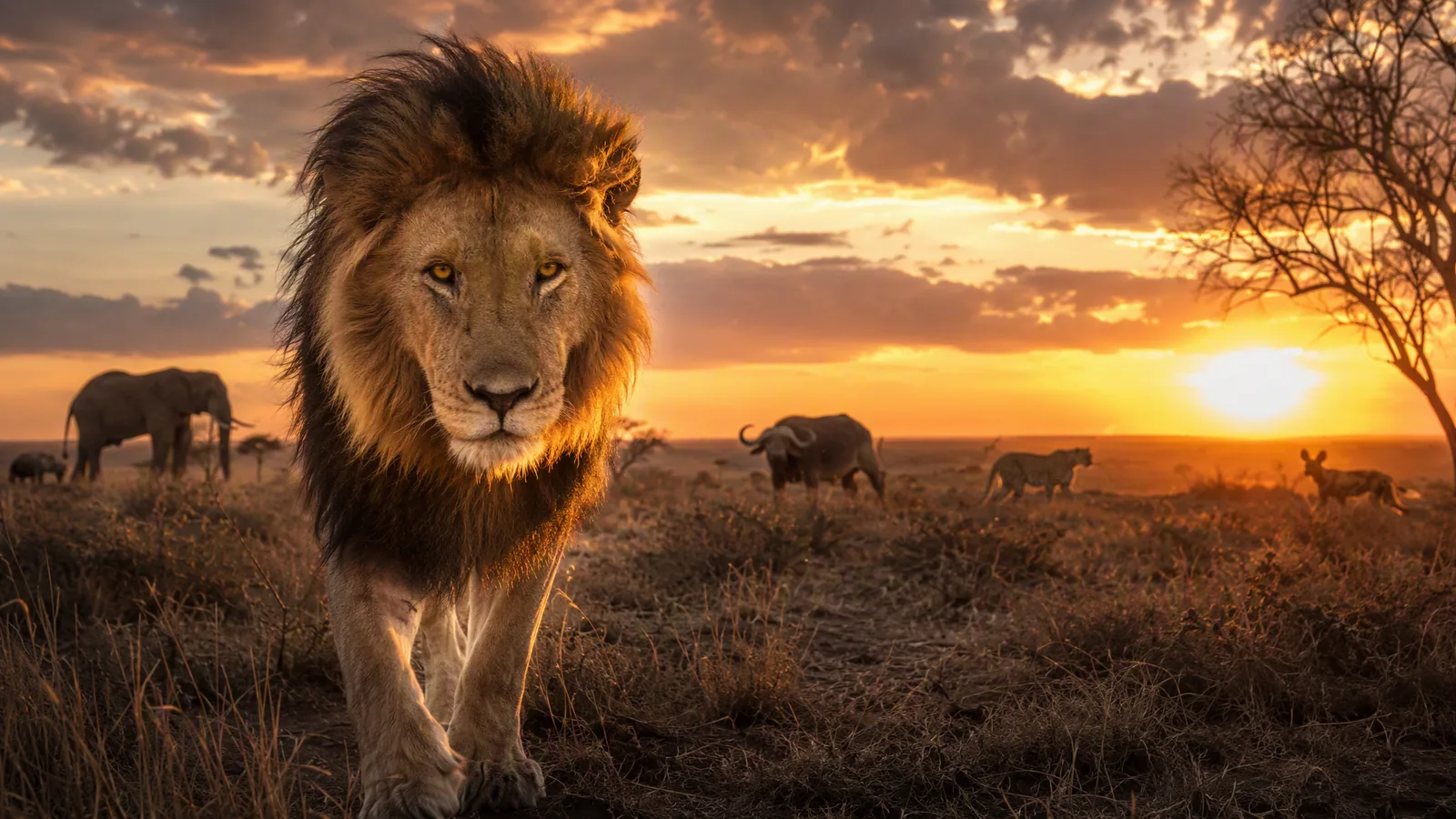
- In many East Africa itineraries, ‘Big Seven’ often means Big Five + cheetah + African wild dog.
- In some South Africa contexts, ‘Big Seven’ can add iconic marine species instead.
- Use the list to set priorities, but let habitat and season decide your real odds.
Where the ‘Big Five’ came from
The term Big Five originally came from the hunting era: the five animals considered the most difficult and dangerous to hunt on foot. Modern safari travel has flipped the meaning into a conservation-first checklist, but the roster has stayed the same. That is why Big Five is consistent across countries, guides and tour operators — it has a stable historical origin.
Today, seeing the Big Five is still a useful shorthand for ‘a well-rounded wildlife trip’, because the animals live in different habitats and behave differently. It nudges you to include at least one strong savanna area, a good predator ecosystem, and a place with reliable elephant and buffalo sightings.
- Lion — social predators of open savanna and woodland edges.
- Leopard — solitary and elusive; often the hardest Big Five tick.
- Elephant — widespread in many parks; behaviour varies by habitat.
- Buffalo — herds near grass and water; unpredictable at close range.
- Rhinoceros — highly protected; sightings depend on local conservation success.
What people mean by ‘Big Seven’ (and why it varies)
Unlike Big Five, Big Seven is a modern tourism phrase. Many operators use it to expand the story: once travellers have heard of the Big Five, adding two more ‘iconic’ species feels like an upgrade.
The most common East Africa-style definition is Big Five plus cheetah and African wild dog — two predators that are famous, photogenic, and not guaranteed. In other regions, the extra two may differ (for example, giraffe is sometimes used as a signature species). In some South Africa marketing, Big Seven can include marine wildlife to highlight trips that combine land and ocean viewing.
Because definitions differ, the best practice is simple: ask your operator which seven they mean, and whether the itinerary truly covers the habitats needed for each.
- Practical tip: treat Big Seven as a conversation starter, not a promise.
- Ask for context: which parks, which months, and which species are realistic there.
- If ‘Big Seven’ includes rhino, confirm whether sightings are possible in that area.
- If it includes wild dog, ask about recent pack locations and drive style (long distances are common).
A better way to plan than chasing a list
A safari is ultimately a habitat experience. The odds of seeing a species depend on where you go, when you go, and how you game drive. Instead of asking ‘Will I see the Big Seven?’, ask ‘Which habitats will I spend time in?’ and ‘Which behaviours do I want to witness?’
A simple planning framework is to choose one strong predator ecosystem (lions, leopards, cheetahs), one elephant-rich landscape, and one area known for seasonal highlights (migration river crossings, flamingo lakes, calving season, or birding). Then layer in realistic goals. SafariLingo helps by keeping a reliable offline species guide in your pocket, so every sighting becomes a learning moment rather than a scramble for reception.
- Set two ‘musts’ and five ‘would love to’ species.
- Prioritise time in the right habitat over driving longer distances.
- Use dawn and late afternoon for predators; midday for birds and learning.
- Keep an eye on conservation ethics: avoid off-road harassment and overcrowded sightings.
References & further reading
- Sinclair, A. R. E., et al. (Eds.) (2015). Serengeti IV. Chicago: University of Chicago Press.
- Estes, R. D. (2012). The Behavior Guide to African Mammals. Berkeley: University of California Press.
- Kingdon, J. (2015). The Kingdon Field Guide to African Mammals (2nd ed.). London: Bloomsbury.
- IUCN (2024). The IUCN Red List of Threatened Species, Version 2024-1. www.iucnredlist.org.
Do it with SafariLingo
Take SafariLingo on safari: 300+ species, real animal calls, offline maps and sighting logs — all in your language, wherever you roam.
Get the appFrequently asked questions
Is Big Seven an official wildlife list?
No. Big Seven is a tourism term, and different operators use it differently. Always ask which two animals they add to the Big Five.
What is the most common ‘Big Seven’ in East Africa?
A common definition is Big Five plus cheetah and African wild dog, but it is not universal. Some itineraries swap in other signature species.
Which Big Five animal is hardest to see?
For many travellers it is the leopard, because it is solitary, often nocturnal, and spends time in thick cover. Sightings depend heavily on habitat and luck.
Does ‘Big Seven’ guarantee you will see all seven?
No. Wildlife is never guaranteed. A responsible operator should frame the term as an aspiration and explain the realistic odds by season and location.
How can SafariLingo help with Big Five/Seven goals?
SafariLingo works fully offline and turns each sighting into a quick identification + deeper field guide moment, helping you learn faster and keep a clean log of what you have seen.