
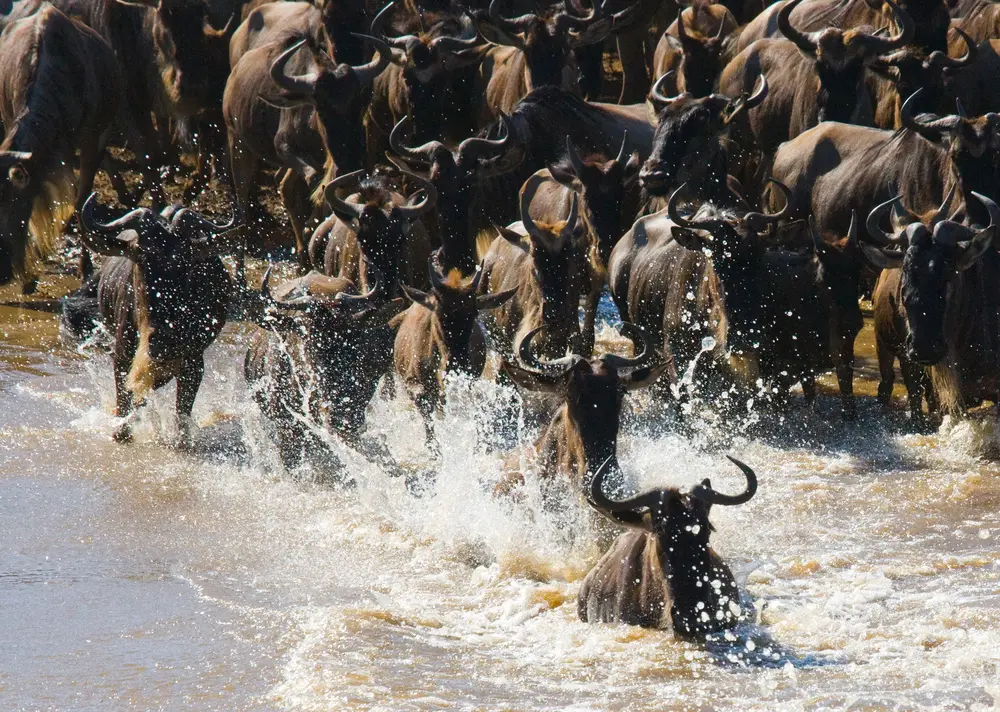
Waterhole Watching: A Complete Guide
How to watch an African waterhole productively — timing, the daily procession of animals, predator tension, hides and etiquette, plus iconic waterholes to try.
Some of the finest safari experiences do not involve driving anywhere at all. Park beside a waterhole, switch off the engine and wait, and the bush comes to you. In the dry season especially, water is the stage on which the whole drama of the savanna plays out, hour by hour. Waterhole watching rewards patience and observation over the thrill of the chase. It teaches you the rhythms of animal behaviour, the pecking order between species, and the constant undercurrent of tension between the drinkers and the predators that know exactly where they must come. This guide explains how to read a waterhole through the day, what to look and listen for, the etiquette of sitting quietly, and where in Africa the classic waterhole experiences can be found.
Key things to know
- Dry season concentrates wildlife at water, making it prime viewing
- Different species drink at different, fairly predictable times of day
- Predators often lie in wait near water, creating palpable tension
- Patience beats mileage — staying put can outperform driving around
- Hides and stilted platforms allow eye-level, undisturbed viewing
- Arrive early, stay quiet and let the animals settle
- Watch body language for the moment a herd senses danger
- Etosha, Hwange and Kruger have famous, reliable waterholes
Why water rules the dry season
As seasonal pans and rivers dry out, animals become increasingly tied to the few permanent water sources that remain. This concentration is what makes the dry season the classic time for game viewing: where in the wet season animals scatter across a green landscape, in the dry season they must funnel to water, and you can simply wait for them to arrive.
The effect builds through the season. By the height of the dry months, a good waterhole can host a near-constant procession of elephants, zebra, giraffe, antelope and their attendant predators, all crowding into a small, watchable arena.
- Seasonal pans dry up, forcing animals to permanent water
- Concentration peaks in the late dry season
- Elephants may travel long distances daily to drink
- Green season disperses animals and makes water less central
The daily procession
A waterhole is not busy all at once; it has a timetable. Many antelope and zebra prefer to drink in the cooler hours of morning and late afternoon, while elephants and buffalo may come at any time, and some shy species slip in around dusk and after dark. Learning this rhythm lets you predict the best hours to sit.
There is also an order of precedence. Nervous prey species approach cautiously, drink quickly and leave, while a herd of elephants can dominate the water and send everything else waiting in the wings. Watching who yields to whom is a lesson in savanna hierarchy.
Reading tension and danger
The great subtext of any waterhole is risk. Every animal that lowers its head to drink is momentarily vulnerable, and predators know it. Lions, leopards and even crocodiles may lie in ambush nearby, and the herd's collective nervousness — heads up, ears forward, sudden freezes — often betrays a predator long before you see one.
Learn to read these signals and a still waterhole becomes gripping. A sudden stampede away from the water, a chorus of alarm snorts, or the refusal of a thirsty herd to commit are all clues that something dangerous is watching too.
Hides, platforms and how to sit
Many lodges and camps have built hides or sunken bunkers at their waterholes, letting you watch at eye level without disturbing the animals. Some parks have floodlit waterholes you can watch late into the night from a safe platform, revealing nocturnal visitors you would otherwise miss.
Whether from a hide or a parked vehicle, the etiquette is the same: arrive before the action, keep noise and movement to a minimum, and resist the urge to reposition constantly. The animals relax only when the scene is quiet, and the best sightings come to those who become part of the furniture.
- Arrive early, before animals begin to gather
- Keep voices low and movements slow and minimal
- Switch off the engine and settle in for the long haul
- Use a floodlit hide for nocturnal species where available
- Let animals approach on their own terms
Iconic waterholes to try
Some waterholes are famous in their own right. Etosha National Park in Namibia is the spiritual home of waterhole watching, with floodlit pans like Okaukuejo where rhino, elephant and lion appear after dark. Hwange in Zimbabwe and the pans of Kruger and its private reserves also offer superb, reliable sittings.
Even where no single waterhole is legendary, almost every dry-season park rewards the traveller who is willing to stop and wait. Ask your guide which water sources are productive that week, and build an afternoon around simply being still.
- Etosha (Namibia): floodlit pans, night viewing, rhino and lion
- Hwange (Zimbabwe): elephants in huge numbers in the dry season
- Kruger and private reserves (South Africa): accessible, reliable
- Ask guides for the currently productive water each visit
References & further reading
- Sinclair, A. R. E., et al. (Eds.) (2015). Serengeti IV. Chicago: University of Chicago Press.
- Estes, R. D. (2012). The Behavior Guide to African Mammals. Berkeley: University of California Press.
- Kingdon, J. (2015). The Kingdon Field Guide to African Mammals (2nd ed.). London: Bloomsbury.
- IUCN (2024). The IUCN Red List of Threatened Species, Version 2024-1. www.iucnredlist.org.
Do it with SafariLingo
Take SafariLingo on safari: 300+ species, real animal calls, offline maps and sighting logs — all in your language, wherever you roam.
Get the appFrequently asked questions
When is the best time of year for waterhole watching?
The dry season is best, because seasonal water dries up and animals concentrate at the few permanent sources. The later in the dry season, the more intense the activity tends to be.
What time of day should I watch a waterhole?
Early morning and late afternoon are reliably busy for antelope and zebra, while elephants and buffalo may come at any time. Floodlit waterholes can be excellent after dark.
Is it better to wait at a waterhole or drive around?
In the dry season, patience at a good waterhole often outperforms covering miles. Water brings the animals to you, including predators that come to hunt the drinkers.
Where are the most famous waterholes in Africa?
Etosha in Namibia is renowned for its floodlit pans and night viewing. Hwange in Zimbabwe and Kruger in South Africa also offer excellent, reliable waterhole watching.
Related guides
 Wildlife
 How to Spot Camouflaged Animals
Train your safari eye: scanning technique, looking for shapes, movement and parts rather than whole animals, and letting your guide teach you a search image.
 Wildlife
 Understanding the Savanna Food Chain
How the African savanna fits together — from grasses and acacias to grazers, browsers, predators, scavengers and decomposers — plus the keystone species and cascades that make the whole ecosystem work.
 Wildlife
 Nocturnal Wildlife and What Comes Out at Night
The savanna's night shift — aardvark, pangolin, genet, civet, bushbaby, porcupine, owls and nocturnal cats. How eyeshine works, spotlight etiquette and where night drives are allowed.