
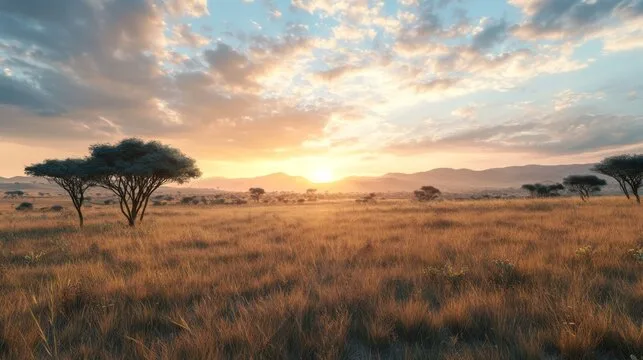
How to Spot Camouflaged Animals
Train your safari eye: scanning technique, looking for shapes, movement and parts rather than whole animals, and letting your guide teach you a search image.
Newcomers to safari are often astonished when a guide stops the vehicle and points out a leopard draped in a tree that they simply cannot see. The animal is right there, but the untrained eye slides straight past it. Spotting camouflaged wildlife is a skill, not a gift, and it can be learned faster than most people expect. The bush is designed to hide its inhabitants. Dappled light, tall grass, broken colour and stillness all conspire to dissolve an animal into its background. Learning to see past that illusion transforms every game drive. This guide explains how experienced spotters actually scan the landscape, what visual clues betray a hidden animal, and how to build the mental 'search image' that lets your brain pick a predator out of the clutter.
Key things to know
- Spotting is a learnable skill, not luck or sharp eyes alone
- Scan slowly and systematically rather than sweeping randomly
- Look for parts — an ear, a horizontal line, a tail flick — not whole animals
- Movement and asymmetry betray animals more than colour
- Use binoculars to confirm, not to search
- Watch other animals' alarm behaviour for hidden predators
- Learn each species' typical hiding places and posture
- Let your guide narrate what they see to build your search image
Why animals disappear
Camouflage works because the eye expects to see a whole, recognisable animal, and instead the bush offers only fragments. A lion lying in golden grass presents no clean outline; a leopard's rosettes break up its shape against dappled shade; a stationary antelope in thicket is just another set of vertical lines. The brain, seeking a familiar silhouette, simply does not register these broken forms.
Stillness compounds the effect. A predator that freezes becomes almost invisible, because our visual system is far more sensitive to motion than to static detail. Understanding that you are fighting your own perceptual habits is the first step to overcoming them.
How to scan
Effective spotters do not sweep their eyes rapidly across the scene; they divide it into bands and work through them methodically — the base of the trees, the grass line, the shade under bushes, the branches above. They pause on anything that seems slightly out of place and let their eyes settle rather than moving on.
Distance matters too. Scan the middle and far ground with your naked eyes first, because binoculars have too narrow a field of view to search efficiently. Only when something catches your attention do you raise the binoculars to confirm what it is.
- Divide the scene into horizontal bands and search each
- Scan slowly; pause on anything that looks 'wrong'
- Search with the naked eye, confirm with binoculars
- Recheck shade under trees and thickets, where cats rest
Look for parts, not wholes
The single most useful trick is to stop looking for a whole animal and start looking for pieces of one. A horizontal line in a world of vertical grass. A pair of rounded ears above a log. The flick of a tail, the twitch of an ear, the glint of an eye. Predators in particular are given away by these small, isolated signals long before their full shape becomes obvious.
Colour is less reliable than most beginners assume, because camouflage is designed to defeat it. Shape-breaking patterns, shadow and posture matter more, so train yourself to notice geometry and movement rather than hunting for a tawny patch.
Let other animals tell you
Some of the best spotting is not visual at all. Prey animals are exquisitely tuned to danger, and their behaviour will often reveal a predator you would never have found yourself. A herd of impala all staring rigidly in one direction, alarm calls rippling through the bush, or monkeys barking from the treetops are all signposts pointing at something hidden.
Learn to read this 'bush telegraph' and you effectively borrow the eyes of every animal around you. When the whole landscape is watching one spot, look there.
Building a search image
Experienced guides carry a mental 'search image' for each species — a compressed sense of the shape, colour and context in which that animal typically appears. This is why a guide can glance at a hillside and instantly register a rhino that guests stare at for minutes without seeing. The image is built through thousands of repetitions.
You can accelerate the process by asking your guide to describe not just what they found but how they found it: what caught their eye, what the clue was. Over a few days, your own search images sharpen, and animals that were invisible on day one start leaping out at you.
- Ask the guide what specific clue gave the animal away
- Study each species' typical resting posture and habitat
- Review your own sightings to reinforce the pattern
- Be patient — search images build over days, not minutes
References & further reading
- Sinclair, A. R. E., et al. (Eds.) (2015). Serengeti IV. Chicago: University of Chicago Press.
- Estes, R. D. (2012). The Behavior Guide to African Mammals. Berkeley: University of California Press.
- Kingdon, J. (2015). The Kingdon Field Guide to African Mammals (2nd ed.). London: Bloomsbury.
- IUCN (2024). The IUCN Red List of Threatened Species, Version 2024-1. www.iucnredlist.org.
Do it with SafariLingo
Take SafariLingo on safari: 300+ species, real animal calls, offline maps and sighting logs — all in your language, wherever you roam.
Get the appFrequently asked questions
Do you need exceptionally good eyesight to spot wildlife?
No. Spotting is mostly technique and experience, not visual acuity. Systematic scanning and knowing where and how animals hide matter far more than raw eyesight.
Should I search with binoculars or my eyes?
Search with the naked eye, which has a wide field of view, and use binoculars only to confirm and identify something once it has caught your attention.
Why can guides see animals I can't?
Guides carry a mental search image built from thousands of sightings, so they instantly recognise the broken shapes and small clues that beginners' brains ignore.
What is the easiest clue to look for?
Movement and out-of-place shapes — a flicking tail, rounded ears, or a horizontal line in vertical grass — betray animals far more reliably than colour.
Related guides
 Wildlife
 Understanding the Savanna Food Chain
How the African savanna fits together — from grasses and acacias to grazers, browsers, predators, scavengers and decomposers — plus the keystone species and cascades that make the whole ecosystem work.
 Wildlife
 Nocturnal Wildlife and What Comes Out at Night
The savanna's night shift — aardvark, pangolin, genet, civet, bushbaby, porcupine, owls and nocturnal cats. How eyeshine works, spotlight etiquette and where night drives are allowed.
 Wildlife
 How to Watch a Great Migration River Crossing
Fieldcraft for the Mara and Grumeti crossings — when and where they happen, how to read the herd build-up, the crocodile ambush, vehicle etiquette, and the patience it really takes.