
Red Hartebeest: Facts, Habitat and Conservation
Key facts about the Red Hartebeest (Alcelaphus buselaphus caama): its habitat, diet, behaviour, size, identification and IUCN conservation status, explained clearly for safari travellers by people who watch wildlife for a living.
The Red Hartebeest (Alcelaphus buselaphus caama) is a distinctive part of Africa's living landscape, and understanding it adds depth to every sighting. This guide gathers the facts that matter most to travellers — where it lives, what it eats, how to tell it apart from similar species, and how it is coping in a changing world. Think of it as the background a good guide would share before you meet the animal in the field.
| Scientific name | Alcelaphus buselaphus caama |
|---|---|
| Conservation status | Least Concern |
| Category | Mammals |
| Habitat | Open savanna with scattered trees, open grasslands, and shrublands |
Habitat and diet
The Red Hartebeest is typically found in Open savanna with scattered trees, open grasslands, and shrublands, where the vegetation, water and cover match its needs through the seasons. Its diet is built around Herbivorous, primarily feeding on various grasses, and those food sources shape where it spends its time and how far it must travel each day. Watching what and where an animal feeds is often the quickest way to predict where you will find it next.
Behaviour and identification
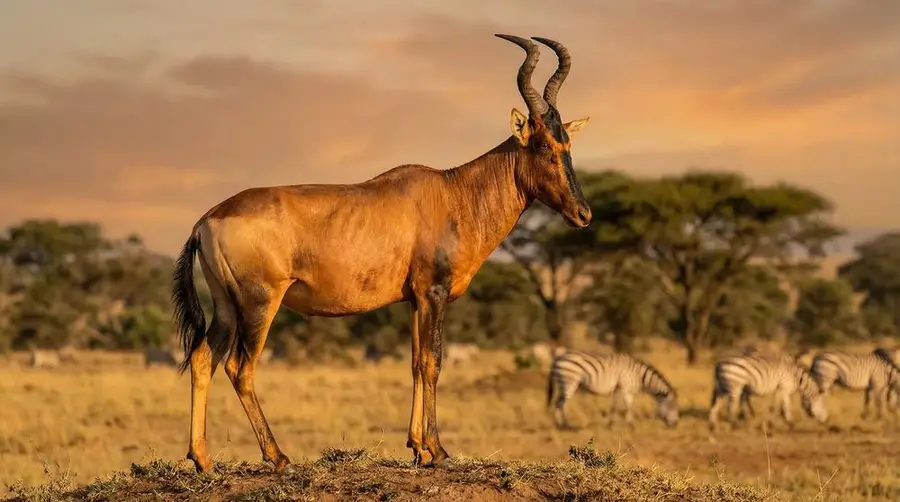
The Red Hartebeest is most active Diurnal, mainly active during early morning and late afternoon, a rhythm tied to temperature, predators and the habits of its prey or grazing. In the field you can pick it out by these features: 体型高大,肩高约120-135厘米;毛色鲜明的红棕色至姜黄色,臀部、腹部和四肢下部为明显的浅黄白色;面部长而窄,带深色纵纹;双角粗壮,基部并拢向上,先向外再向后弯曲,呈紧凑的心形或竖琴状;肩部高于臀部. Learning one or two reliable field marks lets you name it with confidence even at a distance or in poor light.
Conservation status
On the IUCN Red List the Red Hartebeest is currently assessed as Least Concern, a status that reflects both its numbers and the pressures on its range. The main threats it faces are Habitat loss and fragmentation; resource competition due to overgrazing; illegal hunting, and these rarely act alone — habitat loss, human conflict and climate shifts tend to compound one another. Choosing responsible operators and well-managed reserves is one practical way visitors help fund its protection.
Diet and feeding
The Red Hartebeest is built around a diet of Herbivorous, primarily feeding on various grasses, and that food supply governs almost everything else about its life — where it lives, how far it ranges each day, and when it is active. Follow the food and you understand the animal.
Diet also shifts with the seasons. As the dry months bite, food and water shrink to a few reliable pockets and animals crowd around them; when the rains return, they disperse across a green landscape. Watching what and where the Red Hartebeest feeds is often the quickest way to predict where you will find it next, and it explains why the same species can seem abundant one month and scarce the next.
Social life and behaviour
The Red Hartebeest keeps to a daily rhythm shaped by temperature, predators and the habits of whatever it eats or hunts; it is most active Diurnal, mainly active during early morning and late afternoon. Understanding that pattern turns a random sighting into a predictable one.
Social structure varies enormously across Africa's wildlife — some species are solitary and territorial, others live in tight family groups or loose herds that swell and split with the seasons. Watch for the small signals: scent-marking, vocal contact, grooming, threat displays and the pecking order at a carcass or waterhole. These behaviours are the real story of a sighting, far more rewarding than a quick photograph and a drive on.
- Most active Diurnal, mainly active during early morning and late afternoon — plan encounters around those hours
- Watch for scent-marking, calls and body language, not just movement
- Note group size and composition; it often signals the season and status
Conservation and threats
On the IUCN Red List the Red Hartebeest is currently assessed as Least Concern, a snapshot of how the species is faring across its range. The principal pressures it faces are Habitat loss and fragmentation; resource competition due to overgrazing; illegal hunting, and these rarely act alone — habitat loss, human-wildlife conflict, poaching and a shifting climate tend to compound one another.
Conservation status is not fixed. Well-managed reserves, community conservancies and responsible tourism can and do turn declines around, while neglect and encroachment do the opposite. As a visitor you are part of that equation: choosing reputable operators, respecting distance and supporting parks with your fees channels money directly into keeping the Red Hartebeest on the landscape.
References & further reading
- Kingdon, J. (2015). The Kingdon Field Guide to African Mammals (2nd ed.). London: Bloomsbury.
- IUCN (2024). The IUCN Red List of Threatened Species, Version 2024-1. www.iucnredlist.org.
- Estes, R. D. (2012). The Behavior Guide to African Mammals. Berkeley: University of California Press.
- Stuart, C., & Stuart, M. (2015). Stuarts' Field Guide to Larger Mammals of Africa. Cape Town: Struik Nature.
Do it with SafariLingo
Identify the Red Hartebeest instantly in the field — SafariLingo plays its call, shows full facts and works completely offline, even with no signal.
Get the appFrequently asked questions
What does the Red Hartebeest eat?
The Red Hartebeest feeds mainly on Herbivorous, primarily feeding on various grasses. Its diet can shift with the seasons as water and food availability change, which in turn drives where and how far it moves. Observing feeding behaviour is one of the best ways to understand and anticipate a sighting.
Is the Red Hartebeest endangered?
On the IUCN Red List the Red Hartebeest is currently classified as Least Concern. Its principal threats are Habitat loss and fragmentation; resource competition due to overgrazing; illegal hunting. Conservation status can change over time, so support for protected areas and responsible tourism directly affects the species' outlook.
How can I tell the Red Hartebeest apart from similar species?
Focus on the reliable field marks: 体型高大,肩高约120-135厘米;毛色鲜明的红棕色至姜黄色,臀部、腹部和四肢下部为明显的浅黄白色;面部长而窄,带深色纵纹;双角粗壮,基部并拢向上,先向外再向后弯曲,呈紧凑的心形或竖琴状;肩部高于臀部. Size, silhouette and the company it keeps are useful supporting clues. A good field guide or the SafariLingo app lets you compare look-alikes side by side until the identification is certain.
Related guides
 Wildlife
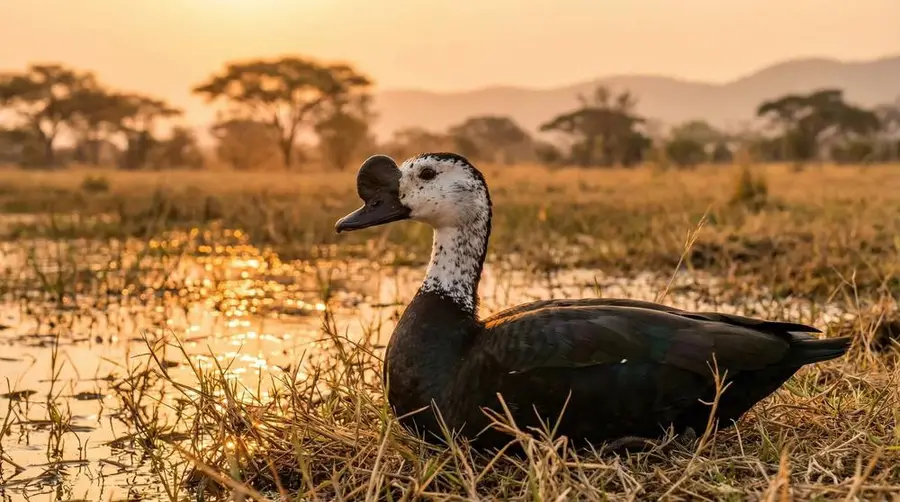
 How to Spot the Comb Duck on an African Safari
A field guide to finding the Comb Duck (Sarkidiornis melanotos) on safari: the habitats it favours, the hours it is most active, the field marks that give it away, and the tracking craft experienced guides use to locate it.
 Wildlife
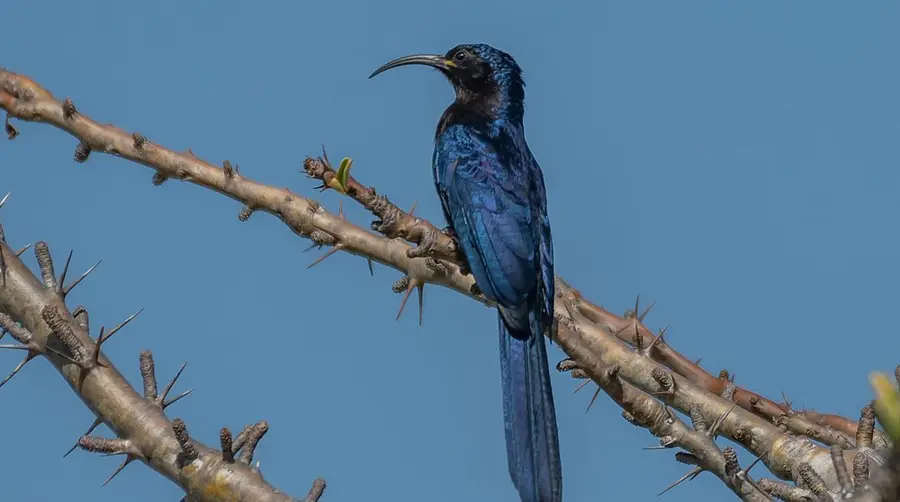
 How to Spot the Common Scimitarbill on an African Safari
A field guide to finding the Common Scimitarbill (Rhinopomastus cyanomelas) on safari: the habitats it favours, the hours it is most active, the field marks that give it away, and the tracking craft experienced guides use to locate it.
 Wildlife
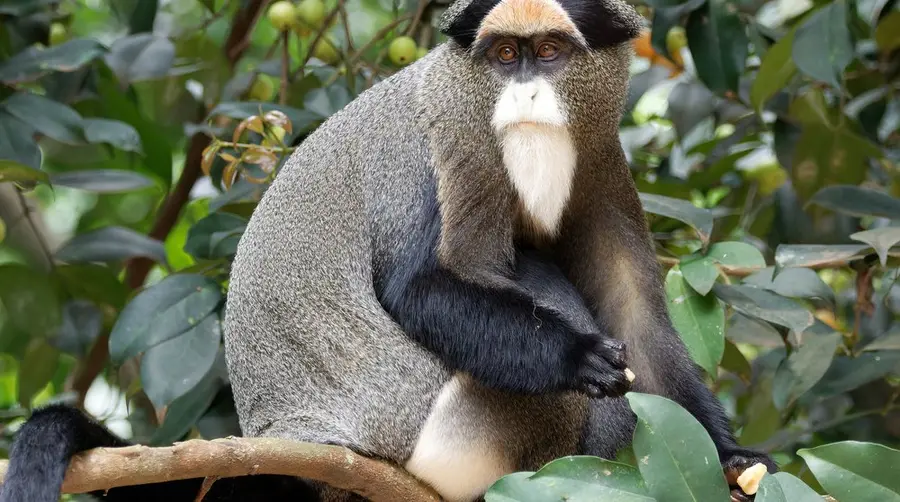
 How to Spot the De Brazza's Monkey on an African Safari
A field guide to finding the De Brazza's Monkey (Cercopithecus neglectus) on safari: the habitats it favours, the hours it is most active, the field marks that give it away, and the tracking craft experienced guides use to locate it.