
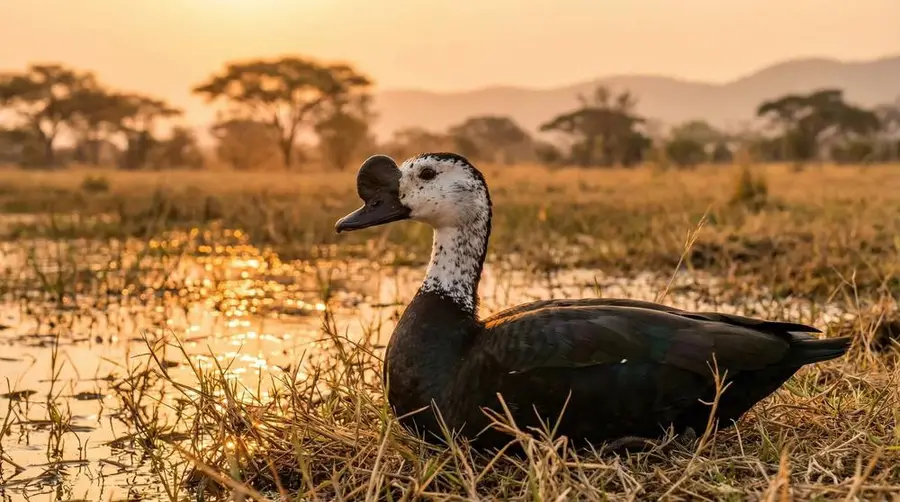
How to Spot the Comb Duck on an African Safari
A field guide to finding the Comb Duck (Sarkidiornis melanotos) on safari: the habitats it favours, the hours it is most active, the field marks that give it away, and the tracking craft experienced guides use to locate it.
The Comb Duck is one of the most sought-after species to track on an African safari, and knowing its habits turns a hopeful search into a confident one. This field guide breaks down how to recognise the Comb Duck at a glance, the habitats and times of day that reward patient searching, and the practical tracking craft guides rely on. Read it before you set out and you will spend less time scanning empty bush and more time watching the animal itself.
| Scientific name | Sarkidiornis melanotos |
|---|---|
| Conservation status | Least Concern |
| Category | Birds |
| Habitat | Freshwater lakes, swamps, rivers, and wetlands; commonly found in water bodies near sparsely wooded savannas |
How to identify the Comb Duck
Distinct knob-like protuberance on the crown and base of the bill (especially prominent in males); body plumage white with black spots and stripes; large body size with a relatively short and thick neck; bill broad and flat; in flight, wide wingspan with conspicuous white markings under the wings
Where and when to look
Concentrate your search for the Comb Duck in Freshwater lakes, swamps, rivers, and wetlands; commonly found in water bodies near sparsely wooded savannas, the habitat where it feels most secure and finds its food. It is most active Diurnal, frequently active during the day, especially at dawn and dusk, so plan your game drives around those hours rather than the heat of midday. Across the continent the species ranges through Widely distributed across tropical Africa including Kenya and Maasai Mara National Reserve; also found in parts of South Asia, and within that range the richest sightings come where prime habitat meets low human disturbance.
Field tips for spotting the Comb Duck
- Work the edges and transitions of Freshwater lakes, swamps, rivers, and wetlands; commonly found in water bodies near sparsely wooded savannas with binoculars — shy species and predators cling to cover far more than the open middle.
- Be in the field for the first and last light of day, when temperatures are cool and most animals are moving, feeding or hunting.
- Use your ears as much as your eyes: alarm calls from birds, monkeys and antelope frequently betray the Comb Duck long before you see it.
- Ask your guide to cut the engine near likely spots and simply wait — stillness and patience out-perform constant driving.
- Learn the fresh signs — tracks, droppings, drag marks and flattened grass — that show the Comb Duck passed recently and may still be close.
- Scan at different heights: check the ground, the low branches and the skyline, because the same animal may be resting, climbing or silhouetted on a ridge.
Reading the habitat for the Comb Duck
Finding the Comb Duck starts long before you see it. Learn the habitat it depends on — Freshwater lakes, swamps, rivers, and wetlands; commonly found in water bodies near sparsely wooded savannas — and you narrow the search from an entire landscape to a handful of promising corners. Animals are not scattered at random; they sit where food, water, cover and safety overlap, and the Comb Duck is no exception.
Ask your guide to work the transitions: the fringe where woodland meets grassland, the shady lip of a drainage line, the shoulder of a rocky rise. These edges concentrate life because they offer both food and escape cover within a few strides. Spend your patience there rather than grinding across open ground, and you turn a hopeful drive into a deliberate one.
- Focus on Freshwater lakes, swamps, rivers, and wetlands; commonly found in water bodies near sparsely wooded savannas and its edges rather than open, featureless country
- Check shade, water and cover — the three things almost every animal needs daily
- Note where you saw fresh signs yesterday; animals are creatures of routine
- Let the guide cut the engine and glass slowly rather than driving fast
Timing your search around its active hours
The Comb Duck is most active Diurnal, frequently active during the day, especially at dawn and dusk, and matching your game-drive hours to that rhythm is the single biggest thing you control. In the cool of first light and the last hour before dusk, animals move, feed and hunt; through the midday heat many simply lie up in shade and become almost invisible.
Be in the field before sunrise and stay out late. If your target rests through the middle of the day, use those hours for lunch, birding and scouting, then return to the productive edges as the temperature drops. Working with the day's rhythm, rather than against it, consistently out-performs sheer time spent driving.
- Be out for first and last light, when the Comb Duck is most likely moving
- Treat the midday heat as rest and scouting time, not prime searching
- Return to water and shade lines as temperatures fall in the afternoon
Signs, sounds and fieldcraft
Experienced guides find animals with their ears and the ground as much as their eyes. Alarm calls from birds, monkeys and antelope ripple outward from a predator and can betray the Comb Duck long before it steps into view. A sudden hush, heads all turned one way, a francolin shrieking — these are the bush telling you something.
Fresh tracks, droppings, feeding sign and flattened grass show that the Comb Duck passed recently and may still be near. Slow down, stop often, and give a promising spot time. Stillness is a tool: sit quietly at a likely place and let the landscape reveal what constant driving would push away.
References & further reading
- Kingdon, J. (2015). The Kingdon Field Guide to African Mammals (2nd ed.). London: Bloomsbury.
- IUCN (2024). The IUCN Red List of Threatened Species, Version 2024-1. www.iucnredlist.org.
- Estes, R. D. (2012). The Behavior Guide to African Mammals. Berkeley: University of California Press.
- Stuart, C., & Stuart, M. (2015). Stuarts' Field Guide to Larger Mammals of Africa. Cape Town: Struik Nature.
Do it with SafariLingo
Identify the Comb Duck instantly in the field — SafariLingo plays its call, shows full facts and works completely offline, even with no signal.
Get the appFrequently asked questions
Where is the best place to see a Comb Duck?
The Comb Duck ranges across Widely distributed across tropical Africa including Kenya and Maasai Mara National Reserve; also found in parts of South Asia, but distribution alone is only half the story. Your best odds come inside well-managed protected areas within that range where its preferred habitat — Freshwater lakes, swamps, rivers, and wetlands; commonly found in water bodies near sparsely wooded savannas — is extensive and healthy. Reserves with low vehicle traffic and experienced guiding teams consistently deliver the closest, calmest sightings.
Is the Comb Duck easy to see on safari?
That depends on how secretive the species is and how well you time your search. Because the Comb Duck is most active Diurnal, frequently active during the day, especially at dawn and dusk, aligning your game drives with those hours dramatically improves your chances. Travelling with a guide who knows the local individuals and their movements matters more than luck.
What should I take to help me find the Comb Duck?
A decent pair of binoculars is the single most useful tool, ideally 8x42 or 10x42 for a bright, steady image. A field guide or the SafariLingo app helps you confirm the identification and rule out look-alike species. Neutral clothing, patience and a willingness to sit quietly do the rest.
Related guides
 Wildlife
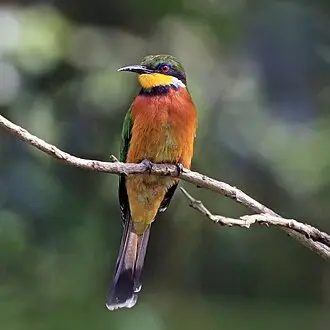
 How to Spot the Cinnamon-chested Bee-eater on an African Safari
A field guide to finding the Cinnamon-chested Bee-eater (Merops oreobates) on safari: the habitats it favours, the hours it is most active, the field marks that give it away, and the tracking craft experienced guides use to locate it.
 Wildlife
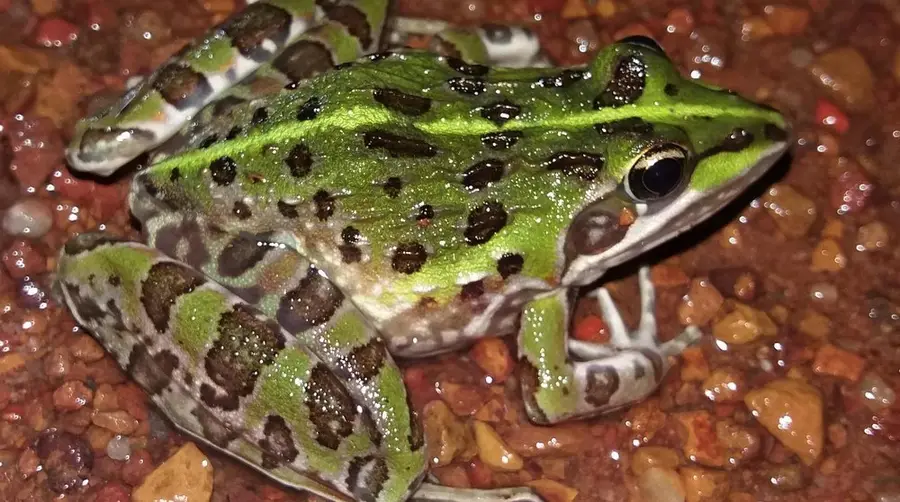
 How to Spot the Common River Frog on an African Safari
A field guide to finding the Common River Frog (Amietia delalandii) on safari: the habitats it favours, the hours it is most active, the field marks that give it away, and the tracking craft experienced guides use to locate it.
 Wildlife
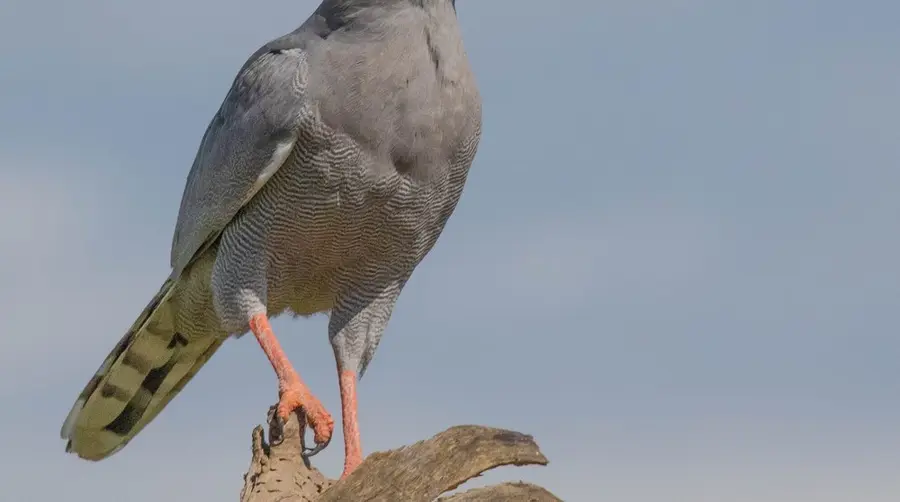
 How to Spot the Dark Chanting Goshawk on an African Safari
A field guide to finding the Dark Chanting Goshawk (Melierax metabates) on safari: the habitats it favours, the hours it is most active, the field marks that give it away, and the tracking craft experienced guides use to locate it.