
How to Keep Children Engaged on Safari
Practical ways to keep kids interested on safari — junior ranger programmes, checklists and bingo, binoculars, tracks and dung, short drives, rest, stories and a sense of involvement.
A safari is a slow, quiet activity in a landscape where the best moments must be waited for, and that is exactly what makes it magical for adults and challenging for children. A child who is bored in the back of a vehicle is not just missing the experience; they can make the drive harder for everyone and turn a wildlife encounter into a struggle. The good news is that engagement is a skill you can plan for, and with the right tools and rhythm, children often become the most enthusiastic spotters in the vehicle. The secret is to turn a child from a passive passenger into an active participant. Watching an animal through an adult's eyes is passive; hunting for it yourself, ticking it off a list, peering through your own binoculars and learning to read tracks is active. When a child feels they have a job to do and a stake in the outcome, the same long drive that would have produced whining becomes a treasure hunt, and the quiet stretches between sightings fill with curiosity rather than complaint. This guide gathers the practical, field-tested ways families and guides keep children engaged, from junior ranger programmes and spotting games to the small mechanics of comfort — short drives, rest, snacks and stories. None of it requires special talent, only a little preparation and a willingness to run the trip at a child's pace. Do that, and the safari becomes something a child helps create rather than merely endures.
Key things to know
- Turn children from passive passengers into active participants with a real job to do
- Junior ranger programmes and guide involvement give kids purpose and pride
- Checklists, bingo cards and spotting games make every drive a treasure hunt
- Give each child their own binoculars to transform how they see the bush
- Focus on tracks, dung and small creatures, not just big cat sightings
- Keep drives short, build in rest, snacks and downtime to avoid burnout
- Use stories, questions and the guide's knowledge to feed curiosity
- Let children help spot, record and share, giving them a stake in the day
From passenger to participant: give them a job
The single most powerful principle for engaging children is to give them a role. A child who is simply told to look at animals will tire quickly, but a child who is the official spotter, the keeper of the checklist or the one in charge of the binoculars has a reason to stay alert. This shift from passive to active transforms the whole experience: instead of waiting to be entertained, the child is working towards something, and the long quiet stretches become part of the challenge rather than dead time.
Guides are your greatest ally here. A good guide will happily deputise a child as an assistant, asking them to watch a particular thicket, count zebra, or listen for alarm calls. Many will teach a child hand signals, let them use the radio, or explain what they are looking for and why. When the expert in the vehicle treats a child as a fellow tracker, the child rises to it. Talk to your guide in advance about your children so they can pitch the day at the right level and hand out real responsibilities.
- Appoint each child an official role: spotter, list-keeper or binocular chief
- Ask the guide to involve children as assistant trackers
- Give children specific tasks: watch that bush, count the herd, listen for calls
- Rotate jobs between siblings to keep everyone invested
- Praise contributions so children feel their help genuinely matters
Junior ranger programmes and structured learning
Many lodges and reserves, especially family-oriented ones, run junior ranger or young explorer programmes designed precisely to keep children engaged. These typically combine short bush walks, tracking lessons, activities around camp and a sense of earning a badge or certificate. The structure gives children goals and a feeling of achievement that a plain game drive cannot, and the hands-on elements suit young attention spans far better than hours of sitting.
Even where no formal programme exists, you can borrow the idea. Set your own missions: learn to identify five birds, make a plaster cast of a track, keep a nature journal, or earn a homemade certificate for spotting all the animals on a list. The principle is the same — children thrive on structure, progress and reward. Ask when booking whether a camp offers child-focused activities, because a lodge that actively caters to families can be the difference between a magical trip and a miserable one.
- Choose camps that offer junior ranger or young explorer programmes
- Look for short bush walks, tracking lessons and camp-based activities
- Use badges, certificates or journals to give a sense of achievement
- Invent your own missions where no formal programme exists
- Ask about child activities when booking, as family lodges vary widely
Spotting games, checklists and binoculars
Simple games turn watching into doing. A checklist or bingo card of animals, birds and features to find gives children a concrete goal and a rush of satisfaction with every tick. You can grade these by age — big five for the youngest, tricky birds or specific behaviours for older children — and turn them into gentle competitions between siblings. Spotting games work because they convert the passive act of looking into an active hunt with a clear reward.
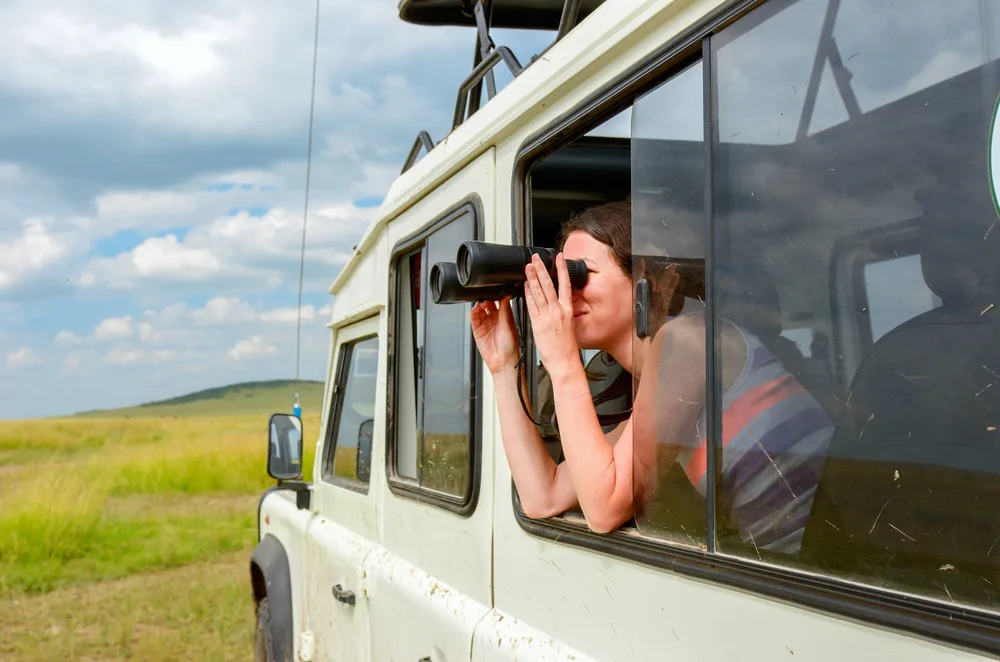
The other transformative tool is a child's own pair of binoculars. Sharing an adult's pair is fiddly and frustrating; having their own instantly makes a child feel like a real explorer and dramatically changes how they see the bush. Choose a lightweight, child-friendly pair and let them practise before the trip so they can actually use them in the field. Combined with a checklist, binoculars turn a child from someone waiting to be shown things into someone actively searching for them.
- Bring checklists or bingo cards graded to each child's age
- Turn spotting into friendly competitions between siblings
- Give each child their own lightweight, child-friendly binoculars
- Let children practise with binoculars before the trip
- Celebrate every find to keep motivation high through quiet stretches
The small stuff: tracks, dung and little creatures
Children do not need a lion kill to be enthralled; they are often more captivated by the small, tangible and slightly gross than by distant big cats. Tracks in the sand, a pile of elephant dung, a dung beetle rolling its prize, a lizard, a colourful bird or a spider's web can hold a child's attention completely. Leaning into this is one of the best ways to fill the long gaps between marquee sightings, and it teaches genuine bushcraft in the process.
Encourage a detective mindset. Ask children whose track that is, which way the animal was going, what it ate, how old the dung is. Let them touch, smell and examine where it is safe to do so, guided by the ranger. This hands-on curiosity is not a consolation prize for missing the big animals; it is real safari skill, and it often produces the moments children remember most vividly. A guide who can make dung fascinating is worth their weight in gold on a family trip.
Comfort and rhythm: short drives, rest and stories
Even the most engaged child has limits, and pushing past them ruins the day for everyone. Young children do far better with shorter drives, plenty of snacks and water, and built-in downtime than with marathon game drives designed for adults. Plan the day around the child's stamina: a shorter morning drive, a proper rest in the heat of the day, and flexibility to head back when attention fades. Private reserves that allow flexible drive lengths are ideal for this.
Fill the vehicle time with more than just watching. Stories about the animals, questions and guessing games, and the guide's own tales feed a child's imagination and keep the mood buoyant. Snacks are a legitimate engagement tool, and a well-timed treat can reset a flagging child. Above all, read your children honestly and stop while they are still enjoying it — ending a drive on a high note leaves them eager for the next one, while pushing to exhaustion sours the whole experience.
- Keep drives shorter and match them to children's stamina, not adult ambition
- Build in rest during the heat of the day and flexibility to return early
- Pack plenty of snacks and water and use treats to reset flagging moods
- Fill quiet time with stories, questions and guessing games
- End drives on a high note so children stay eager for the next outing
References & further reading
- Sinclair, A. R. E., et al. (Eds.) (2015). Serengeti IV. Chicago: University of Chicago Press.
- Estes, R. D. (2012). The Behavior Guide to African Mammals. Berkeley: University of California Press.
- Kingdon, J. (2015). The Kingdon Field Guide to African Mammals (2nd ed.). London: Bloomsbury.
- IUCN (2024). The IUCN Red List of Threatened Species, Version 2024-1. www.iucnredlist.org.
Do it with SafariLingo
Take SafariLingo on safari: 300+ species, real animal calls, offline maps and sighting logs — all in your language, wherever you roam.
Get the appFrequently asked questions
How do I stop my child getting bored on long game drives?
Give them an active role and tools: a checklist or bingo card, their own binoculars, and a job such as official spotter. Keep drives shorter than adult ones, pack snacks, and lean on the guide to involve them. Boredom usually comes from being a passive passenger, so make them a participant.
Are junior ranger programmes worth seeking out?
Yes, for many families they are transformative. They give children structure, hands-on activities, short bush walks and a sense of earning a badge, which suits young attention spans far better than sitting for hours. Ask when booking whether a camp offers child-focused programmes, as family lodges vary a lot.
Should each child have their own binoculars?
Ideally yes. Sharing an adult's pair is frustrating and puts children off, while their own lightweight pair makes them feel like real explorers and changes how they engage with the bush. Choose a child-friendly model and let them practise before the trip so they can use it well in the field.
What if we don't see the big animals?
Lean into the small stuff. Tracks, dung, dung beetles, lizards, birds and spiders often fascinate children more than distant big cats, and examining them teaches real bushcraft. Encourage a detective mindset — whose track is that, which way did it go — and the quiet stretches become some of the most memorable.
How long should a game drive be with young kids?
Shorter than a typical adult drive, matched to your child's stamina, with rest and snacks built in. Many families do better with a shorter morning outing and downtime in the heat of the day. Private reserves with flexible drive lengths help, and ending while the child is still enjoying it keeps them keen.
Related guides
 Planning & Tips
 The Essential Family Safari Packing List
A practical, expert family safari packing list covering clothing, health and safety, entertainment, gear and baggage strategy for children, so parents can travel light while keeping everyone comfortable, protected and happy in the bush.
 Planning & Tips
 How to Choose a Family Safari Destination
Not every safari suits children. A practical guide to choosing a family safari destination — weighing malaria risk, travel time, activities, minimum ages, budget and camp facilities to match the right place to your family.
 Planning & Tips
 Self-Drive Safari vs Guided Tour: Which Is Right for You?
Self-drive safari or guided tour? Compare cost, freedom, wildlife expertise, safety, logistics and destination fit so you can choose the safari style that matches your budget and confidence.