
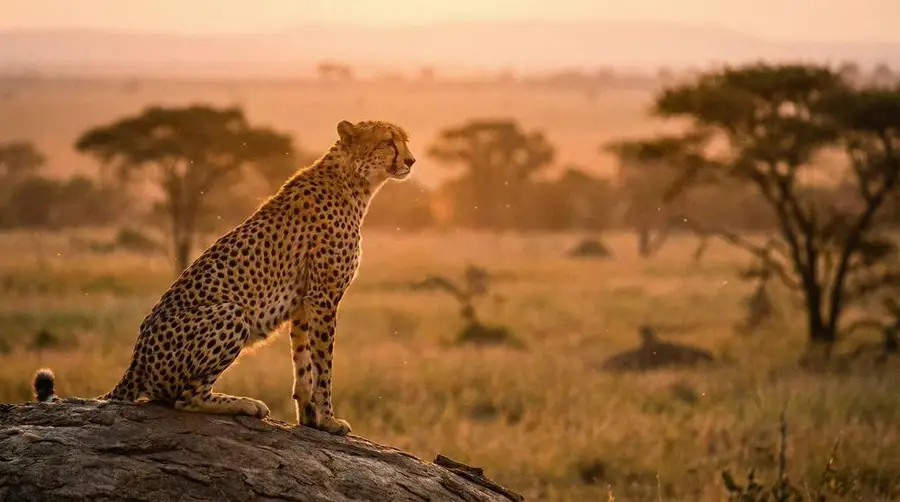
Binoculars vs Camera Zoom on Safari
Binoculars or a camera zoom on safari? Why you need both, what each does best, how to choose binoculars in 8x42 or 10x42, and how to use your optics well in the field.
First-time safari-goers often assume a big camera zoom can double as binoculars, and skip the binos to save weight. It is a false economy. Binoculars and a camera lens do fundamentally different jobs, and trying to watch wildlife through a viewfinder means you spend the whole trip photographing animals rather than actually seeing them. This guide explains what each tool is really for, why experienced travellers consider binoculars the more important of the two for watching, how to choose a pair that will genuinely transform what you see, and how to use both well once you are in the vehicle. It is written for the traveller who wants to understand animals, not just fill a memory card. The short version is simple: a camera captures the trip, but binoculars are how you actually live it. If your budget and luggage allow, carry both. If you must choose only one for watching and you are not primarily a photographer, choose good binoculars every time.
Key things to know
- Binoculars are for watching; a camera zoom is for capturing.
- You will see far more, and far more comfortably, through binoculars.
- 8x42 or 10x42 is the ideal all-round safari specification.
- The first number is magnification; the second is lens size and brightness.
- A camera zoom is tiring and narrow for sustained observation.
- Ideally bring both, since they complement rather than replace each other.
- Good binoculars are among the best-value investments you can make.
- Each traveller having their own pair avoids missed sightings and squabbles.
Different tools for different jobs
Binoculars let you watch wildlife with both eyes, in comfort, for as long as you like. They give a wide, bright, immersive view that reveals behaviour, detail and colour: the leopard's expression, the bird's plumage, the tension rippling through a herd before it bolts. Everyone in the vehicle can look at once, and this shared, unhurried watching is the very heart of the safari experience.
A camera zoom, by contrast, is built to record a moment rather than to sustain observation. Holding a heavy lens to your eye for minutes on end is tiring, the viewfinder shows a narrow one-eyed slice of the scene, and the temptation is always to shoot rather than watch. Both tools are valuable, but they answer different questions: what is happening here, versus how do I keep this image forever.
- Binoculars: wide, bright, two-eyed and comfortable for long watching
- Camera zoom: narrow, tiring to hold, built to capture a single moment
- Binoculars reveal behaviour, detail and colour in real time
- A camera constantly pulls you toward shooting instead of seeing
- Everyone can share a sighting through binoculars at once
How to choose safari binoculars
For general safari use, 8x42 or 10x42 is the sweet spot. The 8x is a touch easier to hold steady and offers a wider field of view, which helps you find and follow animals from a moving or idling vehicle; the 10x gives a little more reach for distant or small subjects. Both have large enough front lenses to deliver a bright image in the low light of dawn and dusk, when so much happens.
Resist the pull of very high magnification. Twelve times and above are harder to hold steady, show a narrower and dimmer view, and make finding animals frustrating from a vibrating vehicle. Choose a comfortable, robust, ideally waterproof pair with good low-light performance. You need not spend a fortune, but decent optics make a real difference, and a comfortable strap or harness saves your neck over long days in the field.
- 8x42 for a wider, steadier view; 10x42 for a little more reach
- Avoid 12x and above: shakier, narrower and dimmer
- Look for waterproof, fog-proof and rubber-armoured builds
- A comfortable strap or harness for all-day wear
- Try before you buy for eye relief and comfort, especially with glasses
Understanding the specifications
The specification is written as two numbers, such as 8x42. The first is the magnification: 8x makes an animal appear eight times closer than with the naked eye. The second is the diameter of the front, or objective, lenses in millimetres, which governs how much light they gather and therefore how bright the image looks in dim conditions.
Beyond those two numbers, several features matter. Field of view tells you how wide a scene you see, which affects how easily you locate animals; close focus is useful for birds and insects near the vehicle; eye relief matters greatly for spectacle wearers; and weight affects comfort over a long day. Roof-prism designs are compact and rugged, and a smooth, quick focus wheel matters more than you might expect when a subject is on the move.
- Magnification, the first number: 8x or 10x for safari
- Objective size, the second number: 42mm balances brightness and weight
- A wide field of view helps you locate and track animals
- Eye relief matters if you wear glasses
- Close focus is a bonus for birds and insects near the vehicle
What a camera zoom does best, and its limits
None of this diminishes the camera. A long zoom is unmatched for capturing a moment you can keep and share: the elephant flaring its ears, the leopard flowing down a tree, the first light breaking over a herd at water. For that job nothing else will do, and a good telephoto in capable hands is a genuine joy.
But a camera is a poor substitute for watching. The single-eyed viewfinder is narrow and tiring, you cannot comfortably follow subtle behaviour for long, and time spent staring at the rear screen is time not spent seeing the animal in front of you. The sensible approach is to raise the camera when there is a shot truly worth taking, and to let the binoculars carry the watching the rest of the time.
The verdict: bring both, prioritise binoculars
If you can, bring both, because they genuinely complement each other. Use the binoculars to find, watch and understand what is happening, then raise the camera when there is a frame worth keeping. Many seasoned travellers keep binoculars around the neck on a harness and the camera resting on a beanbag, ready but never glued to the eye.
If you truly must choose only one for watching, and you are not primarily a photographer, binoculars win without contest. They let you experience the safari with your own eyes, share sightings with everyone in the vehicle, and pick out the distant and the tiny that a camera would never tempt you to look at. Buy the best pair you can comfortably afford; good binoculars will outlast many trips and quietly improve every one of them.
Getting the most from your optics in the field
Set your binoculars up properly before the first drive. Adjust the barrels to the spacing of your eyes, set the diopter so both eyes focus together, and learn the focus wheel by feel so you are quick when a bird flits up or a cat suddenly stands. Keep them on a harness so they ride comfortably on your chest and are always instantly to hand.
In the vehicle, find the animal with your naked eye first and then raise the binoculars to the spot, because sweeping blindly at magnification wastes precious seconds. Brace your elbows on your knees or the seat back for a steadier view, keep the lenses clean of the ever-present dust, and resist swapping constantly between binoculars and camera. In each moment, simply decide whether you are watching or shooting.
- Set the eye spacing and diopter before your first drive
- Find the animal with the naked eye, then raise the binoculars
- Brace elbows on knees or the seat for a steadier view
- Wear a harness so optics ride comfortably and stay handy
- Keep lenses clean and decide: watch or shoot, not both at once
References & further reading
- Sinclair, A. R. E., et al. (Eds.) (2015). Serengeti IV. Chicago: University of Chicago Press.
- Estes, R. D. (2012). The Behavior Guide to African Mammals. Berkeley: University of California Press.
- Kingdon, J. (2015). The Kingdon Field Guide to African Mammals (2nd ed.). London: Bloomsbury.
- IUCN (2024). The IUCN Red List of Threatened Species, Version 2024-1. www.iucnredlist.org.
Do it with SafariLingo
Take SafariLingo on safari: 500+ species, real animal calls, offline maps and sighting logs — all in your language, wherever you roam.
Get the appFrequently asked questions
What magnification binoculars are best for safari?
8x42 or 10x42. The 8x is easier to hold steady and offers a wider view for finding animals, while the 10x gives a little more reach for distant subjects. Both deliver a bright image in low light, which matters greatly at dawn and dusk when much of the action happens.
Can a camera zoom replace binoculars?
Not really. A camera is tiring to hold for watching, offers a narrow one-eyed view, and constantly pulls you into shooting rather than observing. For sustained, comfortable wildlife watching, binoculars are far superior, which is why experienced guides always have a pair to hand.
Do I need expensive binoculars?
No. Decent mid-range binoculars in 8x42 or 10x42 serve most travellers very well. Better optics do give a brighter, sharper image and cope better in low light, but even a modest pair vastly outperforms watching with the naked eye, so any good binoculars beat none.
Should each person have their own binoculars?
Ideally yes. Sharing a single pair means taking turns and missing sightings, and it breeds mild frustration in the vehicle. If budget is tight, at least ensure two or three pairs are available so no one is left watching a distant speck unaided while others enjoy the detail.
What do the numbers like 8x42 mean?
The first number is the magnification, so 8x makes things look eight times closer. The second is the diameter of the front lenses in millimetres, which controls brightness: a larger objective gathers more light for a clearer image in the dim conditions of dawn and dusk.
Related guides
 Planning & Tips
 Mokoro and Boat Safaris
A guide to water-based safaris: mokoro dugout canoes, motorboat cruises and the wildlife you can see from the water.
 Planning & Tips
 What to Wear on Safari
A practical safari clothing guide: colours, fabrics and layers that work on game drives and walks, plus the common mistakes that make people cold, sunburnt or miserable.
 Planning & Tips
 The Best Time of Day for Game Drives
When to go on game drives for the best wildlife viewing: why dawn and dusk win, what midday and night offer, and how to plan your safari day around the light and the animals.