
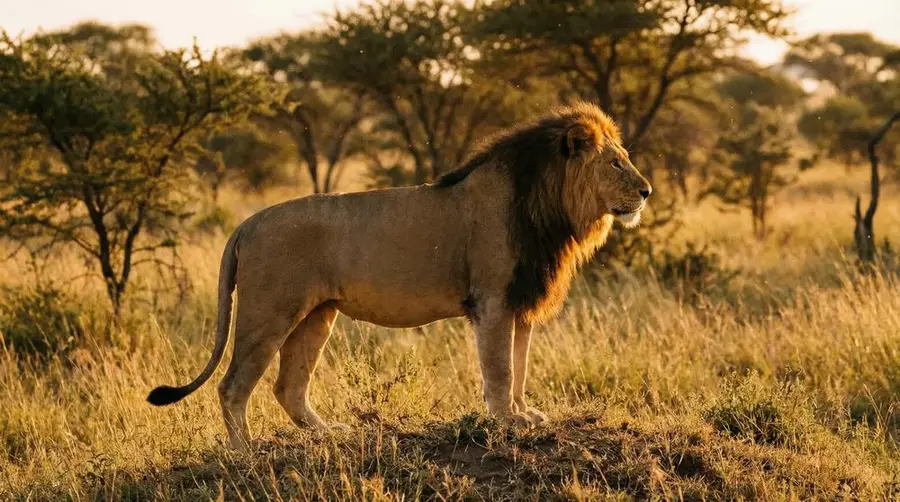
Wildlife You Can See in Kenya
The wildlife of Kenya: the mammals, birds and predators you can hope to see on safari, and the best parks to find each of them.
Kenya is home to a remarkable range of wildlife, from iconic big game to a wealth of birds and smaller creatures that reward a closer look. Knowing what lives where helps you plan an itinerary that delivers the sightings you most want. Here is an overview of the wildlife and the parks that showcase it best.
| Capital | Nairobi |
|---|---|
| Currency | Kenyan Shilling (KES) |
| Region | East Africa |
| Main gateway airport | Jomo Kenyatta International Airport (NBO), Nairobi |
| Malaria risk | Yes |
Wildlife highlights
Across parks such as Masai Mara National Reserve, Amboseli National Park, Tsavo East National Park, Tsavo West National Park, Samburu National Reserve, Lake Nakuru National Park, Laikipia Plateau Conservancies, and Meru National Park, safari-goers seek out Africa's iconic mammals, predators and birds against a backdrop of varied landscapes. Different reserves specialise in different species, so a well-planned route can string together big cats, elephants, plains game and rich birdlife. Ask your guide which animals each area is currently best for.
The signature species of Kenya
Wildlife is the reason most travellers come to Kenya, and while the classic big game features strongly, each country has its own particular draws — the species and spectacles it does better than anywhere else. Its parks, Masai Mara National Reserve, Amboseli National Park, Tsavo East National Park, Tsavo West National Park, Samburu National Reserve, Lake Nakuru National Park, Laikipia Plateau Conservancies, and Meru National Park, are where these come together.
Read up a little before you travel. Knowing which animals Kenya is genuinely known for, and how they behave, lets you target your itinerary and time your visit rather than hoping to stumble on everything at once. It also deepens every sighting, turning a name on a checklist into an animal whose life you actually understand.
Habitats across Kenya
The wildlife of Kenya is shaped by its range of habitats, from open plains and woodland to water, wetland and highland country. Different habitats hold different casts, which is why a well-planned route through Masai Mara National Reserve, Amboseli National Park, Tsavo East National Park, Tsavo West National Park, Samburu National Reserve, Lake Nakuru National Park, Laikipia Plateau Conservancies, and Meru National Park shows you far more variety than repeated drives in a single ecosystem.
When you plan, try to string together contrasting habitats rather than more of the same. Pairing a grassland park with a wetland, forest or riverine area multiplies the species you can reasonably hope to see and keeps the safari fresh from day to day, because each new landscape resets the sense of discovery.
The conservation story
The wildlife of Kenya survives because of the parks, reserves and communities that protect it, and understanding that story adds meaning to a visit. Conservation here, as everywhere in Africa, is a constant balancing act between wildlife, land and the people who live alongside it.
Your trip is part of that balance. Park fees, community conservancies and responsible operators channel tourism money directly into protection and local livelihoods, giving wildlife tangible value. Choosing well-run camps and respecting the rules of each reserve is a practical way to ensure your safari leaves Kenya's wild places stronger, not weaker.
- Park fees and conservancy levies fund protection directly
- Community tourism gives local people a stake in wildlife
- Choose responsible operators and respect every reserve's rules
References & further reading
- Briggs, P. (2021). East Africa Safari Guides. Chalfont St Peter: Bradt Travel Guides.
- World Health Organization (2023). International Travel and Health. Geneva: WHO.
- IUCN (2024). The IUCN Red List of Threatened Species, Version 2024-1. www.iucnredlist.org.
- UNEP-WCMC & IUCN (2024). Protected Planet: The World Database on Protected Areas (WDPA).
Do it with SafariLingo
Planning a safari in Kenya? SafariLingo is your offline field guide to every animal you will meet, with real calls and sighting logs in nine languages.
Get the appFrequently asked questions
Can you see the Big Five in Kenya?
Several parks in Kenya — including Masai Mara National Reserve, Amboseli National Park, Tsavo East National Park, Tsavo West National Park, Samburu National Reserve, Lake Nakuru National Park, Laikipia Plateau Conservancies, and Meru National Park — protect Big Five species, though not every reserve holds all five, with rhino often the hardest to find. Which you see depends on the specific park, its habitats and the season. Plan your route around the species that matter most to you.
What wildlife is Kenya best known for?
Kenya is known for the species and spectacles that draw travellers to parks such as Masai Mara National Reserve, Amboseli National Park, Tsavo East National Park, Tsavo West National Park, Samburu National Reserve, Lake Nakuru National Park, Laikipia Plateau Conservancies, and Meru National Park. Beyond the headline animals, its varied habitats support a deep cast of predators, plains game and birds. A good guide will help you appreciate the subtler species as well as the famous ones.
Where is the best place to see wildlife in Kenya?
It depends on what you want to see, since each of Kenya's reserves — among them Masai Mara National Reserve, Amboseli National Park, Tsavo East National Park, Tsavo West National Park, Samburu National Reserve, Lake Nakuru National Park, Laikipia Plateau Conservancies, and Meru National Park — has its own strengths. Combining two or three complementary parks usually delivers the broadest range of wildlife. Travel in the dry season for the most reliable sightings.
Related guides
Destinations Is Kenya Safe for Safari Travellers?
Safety and health advice for a safari in Kenya: wildlife safety, health precautions, malaria and the practical steps that keep a trip smooth.
Destinations What to Pack for a Safari in Botswana
A practical safari packing list for Botswana: clothing, gear, health items and what to leave at home for comfortable game drives and camp life.
 Destinations
 Where to Go on Safari in September
The best safari destinations to visit in September: which African parks and countries offer great wildlife viewing at this time of year, and why.