
When to go on safari: dry season vs green season
When to go on safari explained: what you gain in the dry season, what you gain in the green season, and how to choose by your goals.
‘Best time for safari’ depends on what you want: big cats, baby animals, migration drama, fewer crowds, or photography light. The dry season often offers easier wildlife viewing, while the green season can be lush, quiet and packed with birds. This guide helps you choose with realistic trade-offs.
Key things to know
- Dry season usually means easier sightings and shorter grass.
- Green season often means fewer crowds, dramatic skies and great birding.
- Migration timing is not one date — it shifts with rainfall.
- Photography can be excellent in both seasons, but the mood differs.
- Book early for peak months; stay flexible for shoulder seasons.
Choose by goal: a quick decision guide
If your main goal is big cats and frequent action, lean dry season. If you want landscapes, baby animals, and a quieter feel, the green season can be magical. Birders often prefer green season for migrants and breeding activity.
A useful rule is: dry season increases ‘easy sightings’, while green season increases ‘variety and atmosphere’.
- Big cats + dense sightings → Dry season
- Birding + lush landscapes → Green season
- Fewer crowds + better value → Shoulder/green season
- River crossings → Peak migration windows (varies each year)
- Newborns and predator interactions → Calving periods (location-specific)
Dry season: why wildlife is easier to see
In many savanna ecosystems, dry months mean shorter grass and fewer water sources. Animals concentrate near rivers, waterholes and remaining green patches. That makes game drives efficient: you cover less ground to find the same diversity.
The downside is that popular parks can feel busy, and dust can be intense in open vehicles.
- Pros: frequent sightings, clearer views, easier self-driving.
- Cons: crowds in hotspots, dust, sometimes harsher light at midday.
- Tip: prioritise dawn and late afternoon for photography and predators.
Green season: what you get when the rains return
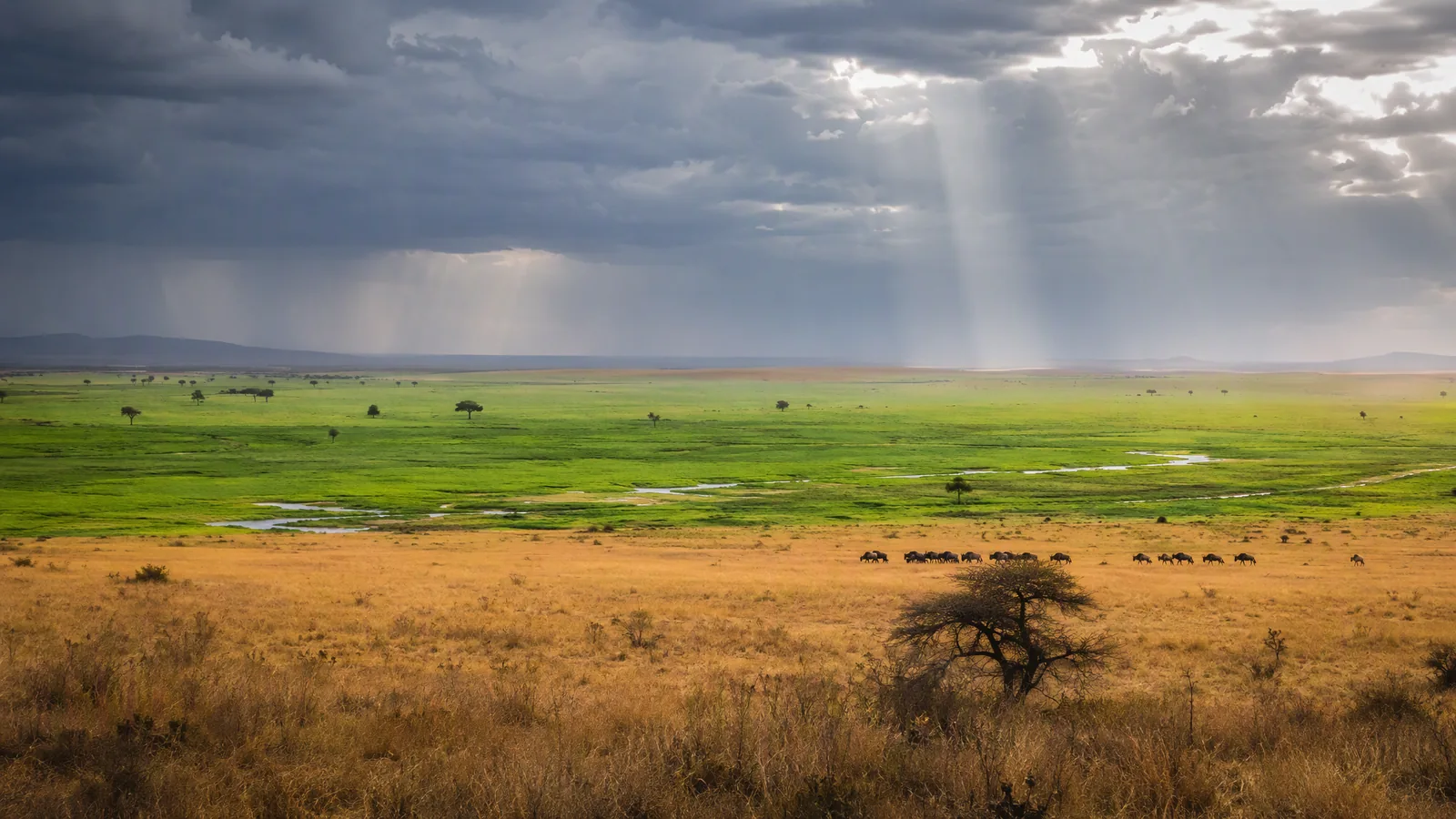
Green season brings fresh grass, flowers, dramatic skies and a sense of space. Many animals spread out, so you may drive more between sightings — but what you see can be special: breeding behaviour, migrant birds, and landscapes that look like a documentary.
If you are a photographer who loves mood and colour, or a traveller who dislikes crowds, green season is worth serious consideration.
- Pros: fewer vehicles, vivid landscapes, excellent birding.
- Cons: animals are more dispersed; some tracks may be muddy.
- Tip: keep expectations flexible — green season rewards patience.
References & further reading
- Sinclair, A. R. E., et al. (Eds.) (2015). Serengeti IV. Chicago: University of Chicago Press.
- Estes, R. D. (2012). The Behavior Guide to African Mammals. Berkeley: University of California Press.
- Kingdon, J. (2015). The Kingdon Field Guide to African Mammals (2nd ed.). London: Bloomsbury.
- IUCN (2024). The IUCN Red List of Threatened Species, Version 2024-1. www.iucnredlist.org.
Do it with SafariLingo
Take SafariLingo on safari: 300+ species, real animal calls, offline maps and sighting logs — all in your language, wherever you roam.
Get the appFrequently asked questions
Is the dry season always the best time?
Not always. Dry season is often easiest for sightings, but green season can be better for scenery, birds and avoiding crowds.
When is the Great Migration?
It is year-round movement, not one event. The exact timing of river crossings and calving shifts with rainfall each year.
Will rain ruin a safari?
Usually no. Many green-season safaris have short showers and long clear periods. Pack a light rain layer and embrace dramatic skies.
Which season is best for photography?
Both can be excellent. Dry season offers cleaner visibility; green season offers colour, clouds and softer moods.
How do I prepare if I’m travelling in shoulder season?
Plan flexible days and use an offline field guide like SafariLingo so you can learn and log sightings even when the signal is patchy.