
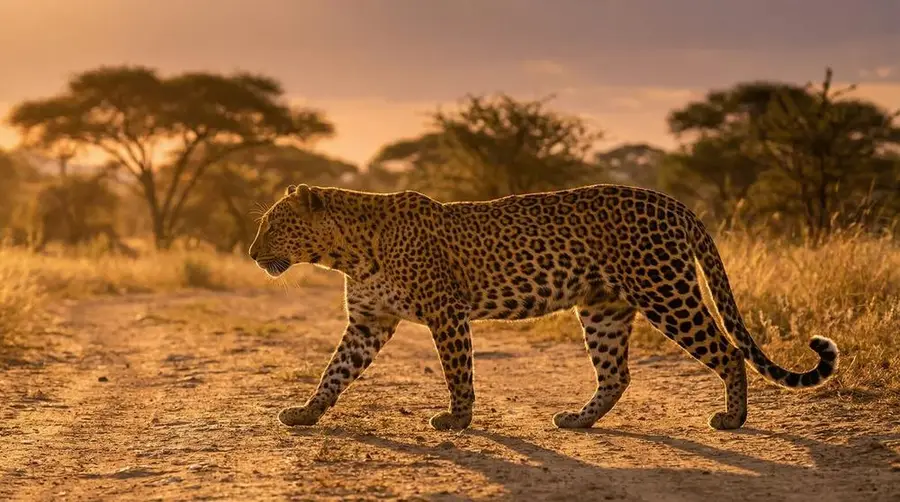
Solo Travel on Safari
A practical, expert guide to solo travel on safari — safety, the single supplement, meeting fellow travellers, choosing sociable versus remote camps, and the trip styles that suit going alone.
Safari is one of the friendliest and most rewarding places to travel alone. The days have a natural shape — pre-dawn coffee, a morning drive, a slow lunch, an afternoon drive, sundowners, dinner around the fire — and that shared rhythm means you fall into easy conversation without ever having to work at it. You also set your own priorities in a way you rarely can with company: linger at the leopard, skip the birding, sleep in when the previous night felt magical. For nervous first-timers, the reassuring truth is that a guided safari is a very structured way to travel. You are moved from airport to camp by people who do this every day of the year, looked after by staff who know their guests by name, and led into the bush by professional guides. The wildlife is genuinely wild, but the surrounding logistics are as steady as travel gets. This guide covers what solo safari really feels like, how to handle the infamous single supplement without wrecking your budget, how to choose between sociable and solitary camps, and the trip shapes — small-group departures, mobile camping, walking safaris — that suit going alone. Read it before you book and you can tune the trip to the kind of solo experience you actually want.
Key things to know
- Guided safaris are one of the safest and simplest ways to travel alone in Africa
- Shared vehicles, communal meals and fireside evenings make it naturally sociable
- The single supplement is the real financial catch — plan for it before you commit
- Scheduled small-group departures often waive or reduce that supplement
- Sociable camps have communal dining; private-style camps let you dine alone
- Mobile camping and walking trips build fast, easy camaraderie with fellow guests
- Age, gender and pace are less of a barrier than most solo travellers expect
- Tell your operator exactly what you want — company or solitude — before booking
Is a solo safari safe?
Within the framework of a reputable guided safari, going solo is about as safe as international travel gets. From the moment you land you are met, transferred and looked after by known operators; camps are staffed around the clock and often escorted after dark; guides are trained, licensed and armed where regulations require it. The people you are handed between are not strangers to each other — they work with the same operators year in, year out, and take pride in the reputation of the itinerary.
The real risks are the mundane ones that apply to every traveller, and the same common sense applies. Long road transfers are statistically far more hazardous than the animals, so choose an operator with well-maintained vehicles and unhurried drivers. Handle valuables and documents the way you would in any unfamiliar city. Buy comprehensive travel insurance that covers remote areas and medical evacuation, and share your itinerary and camp contact details with someone at home. Do those things and the solo aspect fades into the background.
- Book through a reputable, licensed operator with clear emergency procedures
- Insist on quality vehicles and unhurried driving on transfers
- Buy travel insurance that explicitly covers remote areas and evacuation
- Keep digital and paper copies of passport, insurance and camp contacts
- Share your daily itinerary with someone at home before you leave
The single supplement — and how to soften it
Camps and lodges almost always quote a per-person rate based on two people sharing a room, so a solo traveller pays a supplement — often thirty to eighty per cent of the sharing rate — to occupy the whole tent. On a two-week high-end trip that gap can run into several thousand dollars, and it is the single biggest financial surprise for people booking their first solo safari.
There is real room to soften it. Scheduled small-group departures, run by many good operators, are the classic solution: you join four to twelve other travellers, are matched with a same-gender room-share where possible, and the supplement is either reduced or waived entirely. Shoulder seasons — just before or after peak — often carry lower supplements, and some camps run 'solo weeks' or 'no single supplement' promotions. Mobile camping and overland trips are structurally sociable and tend to keep supplements small. Ask your operator to price two or three options rather than one, and you will quickly see where the leverage lies.
- Ask upfront for the exact single-supplement percentage at every camp
- Compare a private itinerary against a scheduled group departure
- Look at shoulder-season dates where supplements are often reduced
- Watch for camps advertising 'no single supplement' weeks
- Consider mobile camping or overland trips, which are cheaper for solos
Meeting people — or protecting your solitude
Whether a safari feels sociable or reflective is largely a matter of camp choice, and both are entirely achievable. Traditional guided camps use shared vehicles of six or eight people and often host guests at a communal dinner table, so you meet everyone twice a day whether you planned to or not. Small-group scheduled trips take that further, giving you the same companions for the whole itinerary and a shared story to build on each evening.
If you want quiet, ask for camps that offer private vehicles as standard, in-tent or private-table dining, and low guest numbers. Owner-run and villa-style properties suit contemplative travellers well, and a private guide-vehicle combination is the most reliable way to insulate your rhythm. Many solo travellers hybrid the two — a couple of days of sociable group camp early in the trip to make friends, then a quieter final leg to digest what they have seen. Your operator will tune the mix if you tell them honestly what you want.
Trip shapes that suit going alone
Some trip formats are naturally friendlier to solo travellers than others. Scheduled small-group departures are the obvious winner: fixed dates, a mixed guest list, shared vehicles, and pricing designed with solo travellers in mind. Mobile safaris — where staff move a small camp with you between wildlife-rich sites — are similarly warm, because everyone eats together and the guide-guest ratio is close. Overland trips in East and Southern Africa attract a young, sociable, budget-minded crowd and are almost designed for going alone.
Walking safaris in Zambia's Luangwa or in Zimbabwe's Mana Pools, canoe trips on the Zambezi, and horseback safaris in Botswana or Kenya build the fastest friendships of all — nothing bonds a group like walking behind a rifle-carrying guide with elephants downwind. If you already know you like your own company, a fly-in circuit of small private camps and a dedicated guide gives you the most personal experience of the bush. Match the format to your temperament and the safari does most of the social work for you.
- Scheduled small-group departures with mixed guest lists
- Mobile tented safaris with communal dining and small guest numbers
- Overland trips through East and Southern Africa for younger budgets
- Walking, canoe and horseback safaris — intense shared experiences
- Fly-in private circuits with a dedicated guide for reflective solos
Practical solo etiquette in camp
Solo travellers are common in African safari camps and staff are entirely used to them, so there is no need to explain yourself or apologise for arriving alone. A few small habits make the experience smoother. Introduce yourself at the first meal — guides and managers often help by seating solos with sociable couples — and ask a couple of open questions about where people have travelled; safari guests love talking about their trip so far.
Be clear with the manager about what you want each day. If you would like the private-vehicle option one morning, ask; if you would prefer a quiet table one night, say so. Tip your guide personally and use the communal tip box for staff, exactly as any couple would. Pack a good book, a journal and a headtorch for the evenings when you would rather retreat to your veranda than linger by the fire. Above all, remember that arriving alone is not a defect to manage — it is one of the more relaxed ways to experience the bush, and it usually shows on your face by day three.
Solo safari for women, older travellers and first-timers
Women travel solo on safari in large numbers and describe it as one of the more comfortable places in the world to do so; the guided structure removes most of the friction and camps are professionally staffed. Sensible city-precaution habits still apply in gateway hubs like Nairobi, Johannesburg or Arusha — use trusted transfers, avoid walking alone at night, keep valuables discreet — but once you are in the bush the environment is almost pastoral in its steadiness.
Older solo travellers are equally well catered for; many camps have permanent-tent-style accommodation with real beds, en-suite bathrooms and easy transfers, and operators can dial the pace down to two nights per camp instead of one. First-timers should keep the itinerary simple — two or three parks in a single country, one style of accommodation, minimal internal flights — so the trip has room to breathe. Add complexity on your second safari, not your first. Whatever your profile, the bush treats solos kindly, and the story you take home is often the most personal of all your travels.
References & further reading
- Sinclair, A. R. E., et al. (Eds.) (2015). Serengeti IV. Chicago: University of Chicago Press.
- Estes, R. D. (2012). The Behavior Guide to African Mammals. Berkeley: University of California Press.
- Kingdon, J. (2015). The Kingdon Field Guide to African Mammals (2nd ed.). London: Bloomsbury.
- IUCN (2024). The IUCN Red List of Threatened Species, Version 2024-1. www.iucnredlist.org.
Do it with SafariLingo
Take SafariLingo on safari: 500+ species, real animal calls, offline maps and sighting logs — all in your language, wherever you roam.
Get the appFrequently asked questions
Is it safe to travel to Africa on safari alone?
Within a reputable guided safari, yes — you are moved, hosted and guided by professionals throughout, and the biggest real risks (road transfers, health precautions, gateway-city common sense) are the same whether you travel alone or with company. Choose a licensed operator, buy comprehensive insurance covering medical evacuation, and share your itinerary with someone at home.
How bad is the single supplement, really?
Typically it adds thirty to eighty per cent to a camp's per-person sharing rate, and on a longer high-end trip that can amount to several thousand dollars. It is the single biggest financial factor for solo safari-goers, but scheduled group departures, shoulder-season dates and 'no single supplement' promotions can reduce or eliminate it — always ask for options.
Will I feel lonely on a solo safari?
Most solo travellers describe safari as more sociable than expected. Shared vehicles, communal meals and fireside evenings create constant, low-pressure interaction, and wildlife sightings are natural conversation-starters. If you want more solitude, choose camps with private vehicles and in-tent dining; if you want more company, choose a scheduled small-group departure.
What is the cheapest way to safari alone?
Scheduled small-group departures, mobile camping and overland trips all keep supplements small and share costs across more travellers. Shoulder-season dates, less-famous parks (South Luangwa, Ruaha, Hwange), and fewer internal flights all trim the total further. Never cut costs on guiding quality or insurance — those two protect the value of the whole trip.
Is Africa a good place for a woman to travel solo for the first time?
For a first solo trip abroad, a guided African safari is one of the gentler options: highly structured, professionally hosted, and full of other travellers. Use standard city common sense in gateway hubs, but expect the bush portion to feel remarkably steady. Many first-time solo women return for a second safari within a few years.
Related guides
 Planning & Tips
 Gorilla and Chimpanzee Trekking
A guide to gorilla and chimpanzee trekking in East Africa: permits, what to expect, the fitness required and how to prepare.
 Planning & Tips
 Vaccinations and Health for Safari
A practical, non-prescriptive health guide for safari travellers, covering travel-clinic planning, vaccines to discuss, yellow fever rules, malaria precautions, food, water, sun and medical kits.
Planning & Tips How Many Days Do You Need for a Safari?
A guide-level answer to how many days a safari really needs, covering the realistic minimum, the sweet spot, park-night rules, transfer maths and when a longer itinerary earns its keep.