
Safari packing list 2026: what to bring (and what to leave)
A practical safari packing list for 2026: clothing, gear, documents, health items, and mistakes that cause the most regret on game drives.
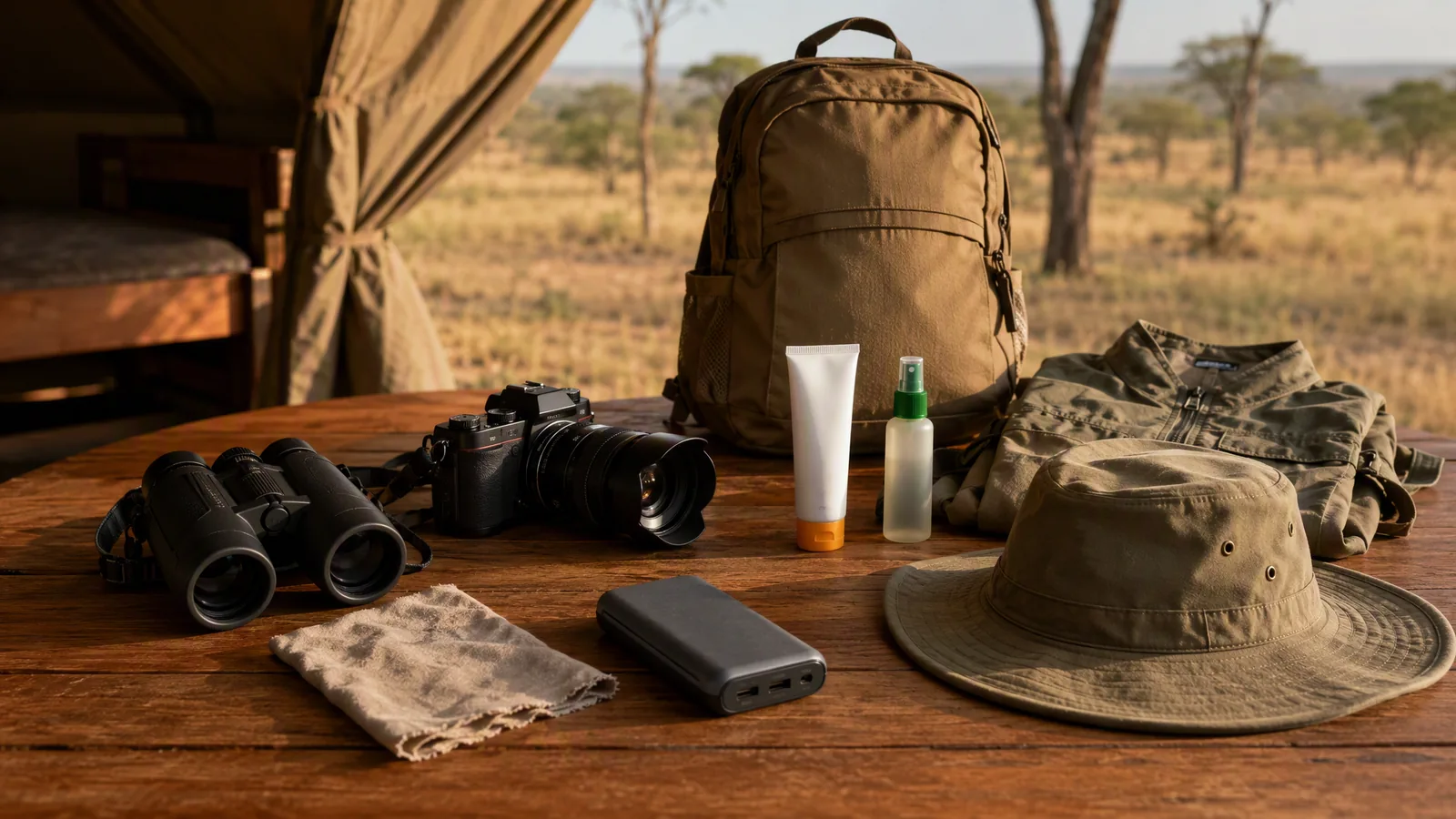
Packing for safari is less about ‘more gear’ and more about ‘the right few things’. Temperatures swing between cold mornings and hot afternoons, dust gets everywhere, and weight limits on small planes are real. This checklist is designed to keep you comfortable, respectful and ready for wildlife — without overpacking.
Key things to know
- Neutral colours and layers beat heavy ‘safari outfits’.
- Bring sun protection and dust protection; both matter daily.
- Power management (battery + adapters) is often the real bottleneck.
- Keep key items in your day bag: camera, water, meds, binos.
- Download offline essentials (SafariLingo, maps) before you lose signal.
Clothing: light layers, not fashion
Most game drives start at dawn, when it can feel surprisingly cold. By midday it may be hot and bright, and by evening dust and wind can pick up. Pack layers you can add and remove quickly.
Avoid bright colours and noisy fabrics. Neutral tones also help with photography, because they do not reflect colour casts onto faces and gear.
- 2–3 breathable long-sleeve shirts (sun + insects).
- 1 warm mid-layer (fleece or light puffer).
- A windproof outer layer for open vehicles.
- Light trousers (avoid jeans if you dislike dust and stiffness).
- A brimmed hat + buff or scarf for dust.
Gear and tech that actually helps
Binoculars and a small headlamp often beat ‘more camera stuff’. Bring a day bag you like, because it will be with you on every drive.
Power can be limited in some camps. Your phone and camera may both compete for the same outlet, so plan your charging.
- Binoculars (even a compact pair changes the experience).
- Universal adapter + a small power strip (one outlet, many devices).
- Power bank (10,000–20,000 mAh) for long drives.
- Offline apps: SafariLingo, maps, tickets, and any PDFs you need.
- A dry bag or zip pouches to keep dust out of lenses and chargers.
Health, documents and ‘boring but essential’
For many travellers, the biggest safari disruption is not wildlife — it is sunburn, dehydration, or missing documents at a border. Pack a small, targeted kit. If you are unsure about vaccines or malaria risk, follow official travel health advice for your exact destinations.
- Passport + copies (paper + offline digital).
- Travel insurance details and emergency contacts.
- Rehydration salts and any personal medication.
- Insect repellent and after-bite relief.
- Small sunscreen you will actually reapply.
Common packing mistakes
Overpacking makes transfers stressful and steals time from the trip. Underpacking the small daily essentials makes every drive harder. Aim for a simple system: day bag always ready, main bag stays in camp.
- Packing too many outfits, not enough layers.
- Bringing expensive ‘new shoes’ instead of broken-in comfort.
- Forgetting dust protection for camera gear.
- No plan for charging and backups.
- Relying on internet — download what you need before you go offline.
References & further reading
- Sinclair, A. R. E., et al. (Eds.) (2015). Serengeti IV. Chicago: University of Chicago Press.
- Estes, R. D. (2012). The Behavior Guide to African Mammals. Berkeley: University of California Press.
- Kingdon, J. (2015). The Kingdon Field Guide to African Mammals (2nd ed.). London: Bloomsbury.
- IUCN (2024). The IUCN Red List of Threatened Species, Version 2024-1. www.iucnredlist.org.
Do it with SafariLingo
Take SafariLingo on safari: 300+ species, real animal calls, offline maps and sighting logs — all in your language, wherever you roam.
Get the appFrequently asked questions
Do I need safari-specific clothing?
Not really. Neutral colours, light layers and comfortable footwear matter far more than branded ‘safari outfits’.
Should I bring binoculars if I have a camera?
Yes. Binoculars help you find animals and enjoy behaviour, even when you are not shooting.
Are power banks allowed on flights?
Usually yes in carry-on, but rules vary by airline. Check your carrier’s current guidance and keep power banks with you, not in checked luggage.
What is the single best thing to pack for comfort?
A warm layer for dawn drives. Many people underestimate how cold an open vehicle feels at sunrise.
What should I download before safari?
SafariLingo (offline field guide), offline maps, travel documents, tickets, and any key info you will need without reception.