
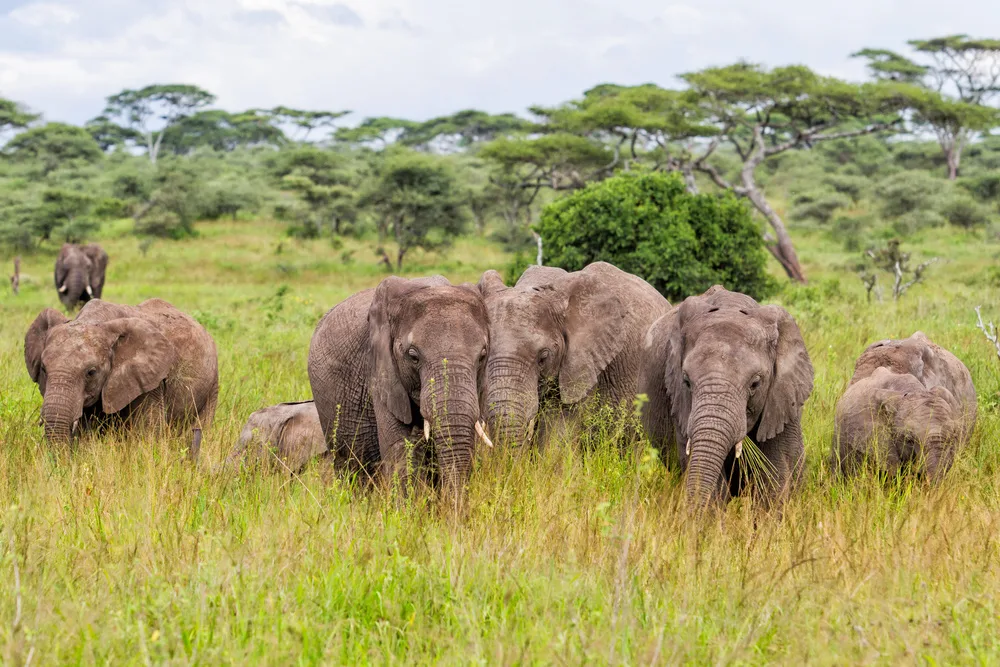
Mobile Camping Safaris Explained
A clear guide to mobile camping safaris: how camps that move with the seasons and into wilderness work, the different comfort levels, the staff behind them, and why they offer exclusivity and value that fixed lodges rarely match.
For many travellers the word camping conjures a leaky tent and a cold night on hard ground, so the term mobile camping safari can be misleading. In modern African safari, a mobile camp is a semi-permanent or fully portable camp that is set up in a wilderness area, used for a season or a few nights, then packed down and moved, often following the game, the migration, or simply into areas too remote and unspoiled for any fixed lodge. Depending on the operator it can range from a genuinely rugged, pared-back bush camp to a surprisingly comfortable canvas suite with real beds, hot bucket showers and fine cooking under the stars. The appeal is simple: a mobile camp puts you where the wildlife actually is, in seasons and places that permanent lodges cannot reach, and it does so with a sense of exclusivity and immersion that is increasingly rare. Because the camp is small and temporary, you are often the only people for miles, falling asleep to lions calling and waking to fresh tracks around the tents. It is safari stripped back to what many consider its purest form, yet done with skill and care rather than hardship. This guide explains how mobile camping safaris actually work: the difference between mobile, participatory and semi-permanent camps, the range of comfort levels you can expect, the team that makes it all happen behind the scenes, and why, for the right traveller, this style offers both a deeper experience and genuine value. Comfort, pricing and logistics vary widely between operators and countries, so treat the descriptions here as a framework and confirm the specifics of any trip before you book.
Key things to know
- A mobile camp is set up in the wilderness, used briefly, then packed down and moved.
- Camps often follow the game or migration, reaching areas fixed lodges cannot.
- Comfort ranges from rugged participatory camps to genuinely luxurious canvas suites.
- A skilled behind-the-scenes team handles setup, cooking, and camp logistics.
- Small, temporary camps deliver rare exclusivity and deep immersion in the bush.
- Participatory camps involve guests in daily tasks and cost noticeably less.
- Mobile camping can offer strong value compared with high-end fixed lodges.
- Comfort, price, and logistics vary widely, so confirm details before booking.
What a Mobile Camp Actually Is
At its heart, a mobile camp is a camp designed to be set up, lived in, and taken down again, rather than built to stay in one place. Some are semi-permanent, established in a private concession for a whole season and left standing until the game moves on; others are fully mobile, pitched fresh at each new site and struck within a day or two. The common thread is that the camp exists to put guests in the heart of a wilderness area for a specific window of time, then leaves little or no trace behind.
This flexibility is the whole point. A permanent lodge is fixed to one view and one stretch of country, which is wonderful when the game is there and frustrating when it is not. A mobile camp can be positioned to follow seasonal concentrations of animals, to sit beside a river when the crossings are due, or to open up a remote corner that would never justify permanent infrastructure. It is a way of reaching the right place at the right time, rather than hoping the wildlife comes to a fixed address.
- Semi-permanent camps stand for a season, then are removed.
- Fully mobile camps are pitched and struck within a day or two.
- The camp exists to place guests in the heart of the wilderness.
- Mobile camps leave little or no lasting trace on the land.
- Flexibility lets the camp follow the game rather than wait for it.
Following the Seasons and the Migration
The clearest example of why mobile camps exist is the great wildebeest migration. As the herds move through the year, some operators run camps that shift with them, setting up in the far north near the river crossings in one season and in the southern calving grounds in another, so that guests are always close to the heart of the action rather than a long drive away. No single fixed lodge can be in the right place all year, but a well-run mobile operation can chase the spectacle across vast distances.
The same logic applies well beyond the migration. Mobile camps open up dry-season wilderness where water and game concentrate for only part of the year, remote wetlands accessible in certain months, and vast tracts of country that could never support a permanent lodge. This is why serious safari-goers often build a trip around a mobile camp: it is a deliberate choice to prioritise being in the best possible place for that particular season, even if it means a simpler, more temporary style of accommodation.
- Migration camps relocate through the year to stay near the herds.
- No fixed lodge can be ideally placed in every season.
- Mobile camps reach dry-season and seasonal wilderness areas.
- They open up country that cannot support permanent infrastructure.
- The style prioritises being in the best place for the season.
The Range of Comfort Levels
One of the biggest misconceptions is that mobile camping means roughing it. In reality there is a wide spectrum. At the simpler end, participatory or basic mobile camps use compact walk-in or dome tents, shared or simple bush bathrooms, and a relaxed, hands-on atmosphere; the focus is entirely on the wilderness and the experience, not the trimmings. At the other end, high-end mobile camps offer large walk-in tents with proper beds and linen, private bucket or safari showers with hot water carried to your tent, comfortable furnishings, and excellent food cooked over the fire, all set up and struck by staff so guests simply arrive and enjoy.
Between these extremes sit many comfortable classic tented camps that most travellers would consider genuinely luxurious, just under canvas and in the middle of nowhere. The key is to understand exactly what a given camp offers before you commit, and to match it to your own tolerance and expectations. Many people are surprised at how comfortable even a mid-range mobile camp can be, and how little they miss the solid walls and swimming pools of a lodge once they are falling asleep to the sounds of the bush.
- Basic mobile camps use simple tents and shared or bush bathrooms.
- High-end mobile camps offer real beds, hot showers and fine food.
- Many classic tented camps feel genuinely luxurious under canvas.
- Comfort levels vary hugely, so check exactly what is offered.
- Match the camp's style to your own expectations and tolerance.
The Team Behind the Camp
What makes a good mobile camp feel effortless is an unseen team working hard behind the scenes. A typical camp is run by a crew that may include a camp manager, guides, a cook and kitchen staff, waiters and tent stewards, and often a dedicated crew to strike, transport and rebuild the camp as it moves. Long before guests arrive, this team has driven ahead, chosen and cleared a site, pitched the tents, dug or set up the bush bathrooms, and prepared the kitchen and mess area, all in the middle of the wilderness with no mains power or plumbing to rely on.
This is why a well-run mobile camp is such an achievement. Hot water appears when you want a shower, meals emerge from a camp kitchen that would shame many restaurants, and the whole operation runs on generators, gas, careful planning and hard work. Understanding this helps you appreciate the experience and treat the crew with the respect they deserve. It also explains why quality mobile camping is not necessarily cheap: you are paying for a large, skilled team to create comfort and safety in places with no infrastructure at all.
- Camps are run by managers, guides, cooks and camp crew.
- A dedicated team strikes, moves and rebuilds the camp.
- The crew arrives ahead to clear the site and pitch tents.
- Everything runs on generators, gas and careful planning.
- A large skilled team is why quality camping is not always cheap.
Exclusivity and Immersion
The great reward of a mobile camp is a sense of exclusivity and immersion that larger, permanent lodges struggle to match. Because these camps are small, often just a handful of tents, and set in private or remote areas, you frequently have the landscape almost entirely to yourself. There are no crowds at sightings, no queue of vehicles, and no sense of being processed through a busy lodge. Instead there is the deep quiet of the bush, the sounds of animals moving around camp at night, and the feeling of being a genuine guest in the wilderness rather than a tourist at a resort.
This immersion changes the whole rhythm of a safari. Meals are often taken around the fire under an enormous sky, guiding tends to be personal and flexible, and the boundary between camp and wild is thin and thrilling. Nights are spent listening to lions, hyenas and nightjars, and mornings often begin with fresh tracks pressed into the sand right beside your tent. For many travellers this closeness to nature, unfiltered and unhurried, is precisely what they came to Africa to find, and it is something a mobile camp delivers better than almost anything else.
- Small camps mean you often have the landscape to yourself.
- Sightings are uncrowded, with no queues of vehicles.
- Nights are filled with the close sounds of the bush.
- Guiding tends to be personal, flexible and unhurried.
- The thin line between camp and wild is the whole appeal.
Value and Who It Suits
Mobile camping can also represent genuine value, though how much depends on the style you choose. Participatory camps, where guests help pitch tents, carry gear or assist around camp, are among the most affordable ways to experience top wildlife areas, trading some comfort and convenience for a much lower price and a hands-on, adventurous feel. Even fully serviced mobile camps can be better value than the most exclusive fixed lodges, because you are paying for the experience and the location rather than for solid buildings, pools and spas you may barely use.
Whether it suits you comes down to what you want from a safari. If you love the idea of being deep in the wild, do not need luxury for its own sake, and are excited rather than daunted by canvas, bucket showers and the sounds of the night, a mobile camp can be the trip of a lifetime. If you need constant connectivity, solid walls, and resort-style facilities, a lodge may suit you better, or you might combine a few nights of mobile camping with more comfortable stays. The best approach is to be honest about your expectations and to talk through comfort, facilities and pace with a good operator before you book.
- Participatory camps are among the most affordable ways to safari.
- Serviced mobile camps can beat exclusive lodges on value.
- You pay for experience and location, not solid buildings.
- It suits travellers who want immersion over resort comforts.
- Consider combining mobile camping with more comfortable stays.
References & further reading
- Sinclair, A. R. E., et al. (Eds.) (2015). Serengeti IV. Chicago: University of Chicago Press.
- Estes, R. D. (2012). The Behavior Guide to African Mammals. Berkeley: University of California Press.
- Kingdon, J. (2015). The Kingdon Field Guide to African Mammals (2nd ed.). London: Bloomsbury.
- IUCN (2024). The IUCN Red List of Threatened Species, Version 2024-1. www.iucnredlist.org.
Do it with SafariLingo
Take SafariLingo on safari: 300+ species, real animal calls, offline maps and sighting logs — all in your language, wherever you roam.
Get the appFrequently asked questions
Is a mobile camping safari uncomfortable?
Not necessarily. Comfort spans a wide spectrum, from simple participatory camps with basic tents and shared bush bathrooms to high-end mobile camps with real beds, hot bucket showers and excellent food. Many mid-range and premium mobile camps are genuinely comfortable, just under canvas and far from anywhere. The key is to check exactly what a given camp offers and match it to your own expectations, rather than assuming that camping means hardship.
Why choose a mobile camp over a permanent lodge?
Because a mobile camp can be in the right place at the right time. Fixed lodges are tied to one location, which is wonderful when the game is there and limiting when it is not. Mobile camps follow seasonal concentrations of wildlife, sit near migration crossings, and open up remote areas no permanent lodge could reach, all with a strong sense of exclusivity. If being close to the action and deep in unspoiled wilderness matters most to you, a mobile camp is hard to beat.
What is a participatory mobile camp?
It is a more basic, hands-on style of mobile camp where guests take part in daily tasks such as helping pitch tents, carrying gear or assisting around camp. In exchange for this involvement and for simpler facilities, participatory camps are among the most affordable ways to reach top wildlife areas, and many travellers love the adventurous, close-knit feel. If you enjoy being involved and do not mind a rougher, simpler setup, they can be extremely rewarding and good value.
Are mobile camps safe with wildlife around?
When run by a reputable operator, yes, provided you follow the camp's guidance. Experienced staff choose sites carefully, brief guests on procedures, and escort you between your tent and communal areas after dark, since animals can and do move through camp at night. The essential rules are to stay in your tent at night unless escorted, keep it zipped, never leave food inside, and always follow the crew's instructions. Treated with respect and common sense, a well-run mobile camp is a safe base in genuinely wild country.
Does mobile camping offer good value?
It often does, though it depends on the style. Participatory camps trade comfort for a much lower price and are among the cheapest ways to experience premier wildlife areas. Even fully serviced mobile camps can be better value than the most exclusive fixed lodges, because your money buys the experience, the guiding and the remote location rather than solid buildings, pools and spas. What you are really paying for is being in the best possible place, with a skilled team making it comfortable and safe.
Related guides
 Planning & Tips
 Fly Camping and Sleeping Out Under the Stars
What fly camping is, how a night sleeping out in the bush works, the equipment and safety, what to expect from bedrolls to bucket showers, and who this adventurous experience suits.
 Planning & Tips
 All-Inclusive vs Full-Board Safari Lodges
What all-inclusive and full board really mean at a safari lodge, what is and is not covered, the hidden extras like drinks, park fees and tips, and how to compare rates fairly.
 Planning & Tips
 How to Save Money on Safari Without Ruining It
Practical, honest ways to cut the cost of an African safari without gutting the experience: shoulder-season timing, cheaper countries and parks, mobile camping, self-drive, and the few places where spending more is money well spent.