
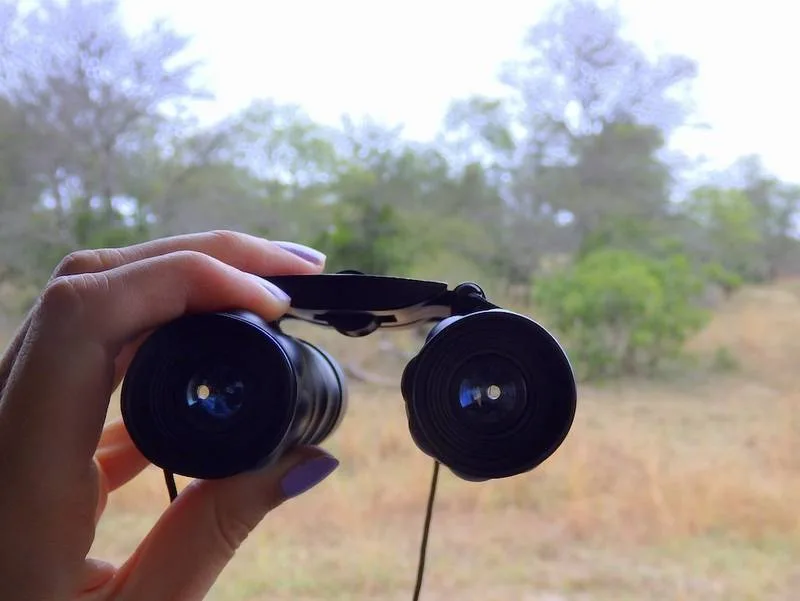
How to Plan a Birding Safari
A practical guide to planning a birding safari: green-season timing, choosing habitat diversity, specialist guides, target lists, sensible pace, combining birds with general game viewing and Africa's top birding regions.
A birding safari is a different animal from a classic game-viewing trip, even when it happens in the same parks. The rhythm is slower, the eyes are trained higher into the canopy and lower into the reeds, and the day is measured not only in lions and elephants but in bee-eaters, rollers, storks and the small brown birds that reward patience. Plan it well and Africa becomes one of the richest birding stages on Earth, with hundreds of species possible in a single well-chosen trip. The key is to plan deliberately around birds rather than hoping they turn up between big-game sightings. That means timing the trip for when birds are most active and visible, choosing places that stack several habitats close together, travelling with a guide who truly knows birds by sight and call, and setting realistic expectations about pace. It also means deciding honestly how much general game viewing you want alongside, because the two can complement each other beautifully or pull in different directions. This guide walks through the decisions that shape a great birding safari: when to go, where to go, who to go with, how to pace the days, how to blend birds with mammals, and which regions consistently deliver. Treat any numbers as rough ranges, confirm current conditions locally, and remember that the best birding trips are built on curiosity and patience as much as on logistics.
Key things to know
- The green season, when many parks are quiet for mammals, is often the peak time for birds.
- Choose places that pack several habitats close together to lift the species count.
- A genuine bird specialist guide, who knows calls as well as sightings, transforms the trip.
- Set a realistic target list rather than trying to see everything at once.
- Birding rewards a slower pace, more time in fewer places and patience at productive spots.
- Migratory birds arrive in the wetter months, boosting diversity beyond resident species.
- You can blend birding with general game viewing, but be honest about how much of each you want.
- Southern and East Africa both offer world-class birding, with strong regional specialities.
Timing: Why the Green Season Wins
For classic big-game viewing the dry season is usually best, because thin vegetation and concentrated water make mammals easy to find. Birding often flips this logic. The green season, when the rains bring life to the bush, is frequently the peak birding window, because resident birds come into breeding plumage and song, insects and seeds are abundant, and, crucially, migratory species arrive from the northern hemisphere and within Africa itself. Suddenly a park that felt quiet for mammals is alive with colour and calls.
The trade-off is that the same rains thicken the vegetation, so birds can be harder to see even as they are more numerous, and mammal viewing may be slower. Many birders happily accept this, planning for the shoulder of the wet season when diversity is high but conditions are still workable. If you want both strong birding and good general game, aim for the transition months and be ready to compromise a little on each. Always confirm the local seasonal pattern, since it varies markedly across the continent.
- Green season brings breeding plumage, song and abundant food.
- Migratory species swell the list well beyond resident birds.
- Thicker vegetation can make numerous birds harder to spot.
- Shoulder-of-the-wet-season timing balances diversity with visibility.
- Seasonal patterns vary by region, so confirm locally before booking.
Where: Stacking Habitats
Species counts on a birding safari are driven less by luck than by habitat. Every habitat holds its own suite of birds, so the richest trips are built around places that stack several habitats close together: open grassland, woodland, riverine forest, wetland, and perhaps a rocky escarpment or a patch of montane forest. A camp within reach of a lake, a river and a wooded hillside can offer more species in a morning than a vast but uniform plain does in a day.
When you plan the route, think in terms of habitat diversity rather than famous names. A wetland adds waterbirds, waders and kingfishers; a forest brings turacos, barbets and secretive understorey species; grassland delivers bustards, larks and raptors quartering for prey. Sequencing a trip through contrasting habitats not only lifts the total count but keeps each day fresh. It is the same logic as a general itinerary, but tuned to the specific mosaic that birds respond to.
- Each habitat holds its own distinctive set of birds.
- Wetlands add waterbirds, waders and kingfishers.
- Forests bring turacos, barbets and shy understorey species.
- Grassland delivers bustards, larks and hunting raptors.
- Route the trip through contrasting habitats to maximise variety.
Who: The Specialist Guide
The single biggest upgrade to a birding safari is the guide. A general safari guide is skilled at finding mammals and reading the bush, but a true bird specialist operates on another level: identifying species by silhouette, flight, behaviour and, above all, by call. So much birding is done by ear that a guide who knows the soundscape will find and name birds you would never have noticed, and will locate skulking or canopy species that are almost invisible to the untrained eye.
When arranging a birding trip, ask specifically for a birding guide rather than assuming a general guide will do, and share your experience level and priorities in advance. A good specialist will also manage the group's pace and etiquette, positioning for light, keeping noise down and giving everyone a fair chance at a sighting. If you are travelling with non-birding companions, discussing this early helps the guide balance everyone's expectations. The right guide is often the difference between a good list and a great one.
- Bird specialists identify species by call, not just by sight.
- Much of birding is done by ear, so soundscape knowledge is vital.
- Request a dedicated birding guide rather than a general one.
- Share your experience and target species in advance.
- A good guide manages pace, light and etiquette for the group.
Target Lists and Realistic Pace
It is tempting to want to see everything, but the most satisfying birding trips are built around a realistic target list. Perhaps a handful of sought-after specials, a few families you especially love, and an openness to whatever else appears. Sharing this list with your guide focuses effort and turns the trip into a series of achievable quests rather than an overwhelming blur. It also helps you savour quality sightings instead of rushing to inflate a number.
Pace matters just as much. Birding rewards slowing down: spending longer at a productive waterhole or forest edge, returning to the same spot at different times of day, and accepting that the best sightings often come to those who wait quietly. This usually means fewer places and more nights in each, the opposite of a whistle-stop tour. Build in unhurried mornings, a rest through the harsh midday, and gentle late-afternoon sessions when birds become active again, and the days will feel rich rather than rushed.
- Set a realistic target list of specials and favourite families.
- Share the list with your guide to focus the search.
- Slow down and spend longer at productive spots.
- Return to good places at different times of day.
- Favour fewer places with more nights over a whistle-stop tour.
Blending Birds and Big Game
One of the joys of an African birding safari is that you rarely bird in isolation. The same drive that turns up a rare roller may also deliver elephants, and a walk for forest specials might round a corner onto a browsing antelope. Many trips blend serious birding with general game viewing, and the two can complement each other wonderfully, giving quieter moments between big sightings and adding depth to every landscape you cross.
The key is honesty about the balance you want. A dedicated birder travelling with a keen photographer or a family will need to agree how mornings are shared, because stopping twenty minutes for a warbler feels very different to someone waiting for a leopard. Discuss this with your guide and companions before the trip, not during a tense standoff at a sighting. Done well, a blended trip satisfies everyone; done carelessly, it frustrates all sides. Deciding the ratio in advance is what keeps the whole group happy.
- Birding and game viewing often happen on the same drives.
- Quieter birding moments add depth between big-game sightings.
- Agree the birds-to-mammals balance before the trip begins.
- Different travellers value time very differently at a stop.
- A clear ratio, set in advance, keeps mixed groups happy.
Africa's Top Birding Regions
Both East and Southern Africa offer world-class birding, each with its own character. East Africa, taking in the great Rift Valley lakes, highland forests and vast savannahs, is famous for spectacular concentrations of waterbirds, a rich raptor fauna and an accessible diversity that makes it a superb first birding destination. Southern Africa, spanning the Okavango and its wetlands, the Kalahari's dry-country specialities, coastal and montane forests and fynbos, delivers a different palette, strong on endemics and arid-adapted species.
Within these broad regions, wetland systems, forest patches and highland areas are reliable engines of diversity, while certain zones are prized for endemics found nowhere else. Rather than chasing a single famous park, the strongest birding itineraries string together contrasting habitats within a region and lean on local knowledge for what is around at the time. Wherever you go, treat published species counts and best-time advice as guidance and confirm current conditions, because rainfall, water levels and migration timing shift what you will actually see.
- East Africa: Rift Valley lakes, highland forests and raptor-rich savannah.
- Southern Africa: Okavango wetlands, Kalahari dry-country and forest endemics.
- Wetlands, forests and highlands are reliable diversity hotspots.
- Some zones are prized specifically for local endemics.
- String contrasting habitats within a region rather than chasing one park.
References & further reading
- Sinclair, A. R. E., et al. (Eds.) (2015). Serengeti IV. Chicago: University of Chicago Press.
- Estes, R. D. (2012). The Behavior Guide to African Mammals. Berkeley: University of California Press.
- Kingdon, J. (2015). The Kingdon Field Guide to African Mammals (2nd ed.). London: Bloomsbury.
- IUCN (2024). The IUCN Red List of Threatened Species, Version 2024-1. www.iucnredlist.org.
Do it with SafariLingo
Take SafariLingo on safari: 300+ species, real animal calls, offline maps and sighting logs — all in your language, wherever you roam.
Get the appFrequently asked questions
When is the best time for a birding safari?
Often the green season, roughly the wetter months, when resident birds are in breeding plumage and song and migratory species arrive, swelling diversity well beyond the dry-season list. The trade-off is thicker vegetation, which can make birds harder to see, and slower mammal viewing. Shoulder-of-the-wet timing balances diversity and visibility, but confirm the local pattern, since it varies across the continent.
Do I really need a specialist bird guide?
For a serious birding trip, yes. A general guide is excellent at finding mammals, but a bird specialist identifies species by call as well as sight, and so much birding is done by ear that this transforms your list. Request a dedicated birding guide rather than assuming a general one will do, and share your experience and target species in advance so the guide can plan accordingly.
How does birding change the pace of a safari?
It slows it down. Birding rewards spending longer at productive spots, returning to places at different times, and waiting quietly for shy species. That usually means fewer places and more nights in each, with unhurried mornings, a midday rest and gentle late-afternoon sessions. A whistle-stop tour works against good birding, so build the itinerary around depth rather than distance.
Can I combine birding with normal game viewing?
Yes, and they often complement each other, since the same drives produce both birds and mammals. The key is agreeing the balance in advance, because a dedicated birder and a companion waiting for a leopard value a twenty-minute warbler stop very differently. Discuss the ratio with your guide and companions before the trip so a mixed group stays happy throughout.
Where are the best birding regions in Africa?
Both East and Southern Africa are world-class. East Africa is known for Rift Valley lakes, highland forests, rich raptors and accessible diversity; Southern Africa for Okavango wetlands, Kalahari dry-country specialities and forest endemics. Rather than chasing one famous park, string contrasting habitats within a region and rely on local knowledge, confirming current conditions since rainfall and migration shift what is present.
Related guides
 Planning & Tips
 How to Read a Safari Quote
A practical guide to decoding a safari quote line by line: per-person-per-night pricing, what is and isn't included, park fees, internal flights, single supplements and conservation levies, so you can compare operators fairly and avoid nasty surprises.
 Planning & Tips
 When to Book Your Safari
A practical timeline for booking a safari: why premier camps and permits go months ahead, how deposits and cancellation terms work, when early-bird rates beat last-minute deals, and how to secure high-demand windows without overpaying.
 Planning & Tips
 Planning a Safari on a Tight Schedule
How to turn three or four days into a genuinely rewarding African safari by choosing one high-yield reserve, flying in to save time, and building the bush onto a business trip or layover.