
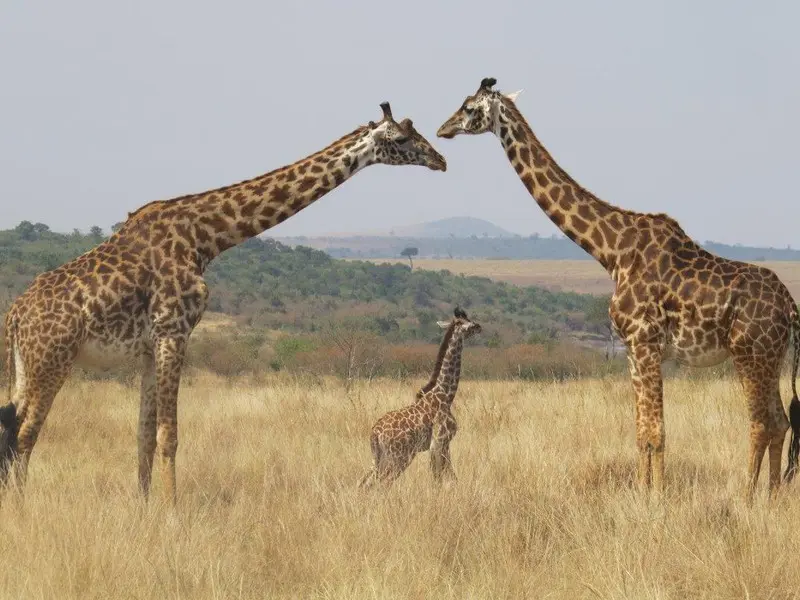
How to Identify African Animals
How to identify African animals on safari — the key features to look for, telling apart similar species, reading behaviour and habitat, and using field guides and apps to confirm.
Part of the joy of a safari is learning to name what you're seeing, and identifying African wildlife is a skill you build far faster than you expect once you know what to look for. Rather than memorising hundreds of species in advance, you learn to read a handful of key features — size, shape, markings, behaviour and habitat — that narrow any animal down in seconds. Suddenly the bush stops being a blur of 'some kind of antelope' and becomes a cast of recognisable characters, each with its own story. The approach matters more than raw knowledge. Experienced guides rarely run through a checklist consciously; they take in a whole impression at a glance, because they have learned which clues carry the most weight. You can shortcut years of that experience by focusing on the same high-value features and by practising on the common species first, so the rare ones stand out by contrast. This guide teaches the practical method: the features to focus on, how behaviour and habitat sharpen a guess, how to tell apart the look-alikes that trip up beginners, and how to use field guides and apps to confirm and deepen what you see. With a little practice you'll be surprising yourself, and impressing your guide, within a few days.
Key things to know
- Identify by size, shape, markings, behaviour and habitat together
- Learn the key groups first, then the species within them
- Focus on distinctive field marks that separate look-alikes
- Habitat and behaviour are powerful identification clues
- Compare against a known species to judge size and shape
- A field guide or app confirms and teaches as you go
- Note location and time — many species are predictable
- Ask your guide; naming animals gets easier remarkably fast
The key features to look for
Start with the features that separate animals fastest: size, overall shape, colour and markings. Judge size against something familiar in the same scene, such as a nearby zebra or the vehicle, rather than trusting a lone silhouette, which is easy to misread. Then read the shape — the slope of the back, the length of the legs and neck, the set of the head — because body architecture often identifies a group before you see any detail.
Markings are the next layer and often clinch it. Stripes, spots, patches, rings on a tail, a pale rump, a dark facial mask or a distinctive horn shape each point somewhere specific. Train yourself to notice the horns on antelope in particular: whether they are straight, spiralled, lyre-shaped or curved, and whether both sexes carry them, is one of the quickest routes to a confident name.
- Judge size against a known animal or the vehicle
- Read body shape — back line, legs, neck and head
- Note markings: stripes, spots, rump, face and tail
- Study horn shape and whether both sexes carry them
Reading behaviour and habitat
Where an animal is and what it is doing narrows the field as powerfully as how it looks. Habitat is a strong filter: some antelope stick to open plains, others to dense thicket, riverine forest, rocky koppies or wetland edges, and knowing a species' preferred ground rules out many look-alikes before you raise your binoculars. The same is true of water — animals that must drink daily stay within reach of it, while others rarely need to.
Behaviour adds another dimension. Grazers with heads down on short grass, browsers reaching into shrubs, animals that flick their tails a certain way, herds arranged by sex and age, or a cat's posture and time of day all carry information. Nocturnal habits, whether a species is usually solitary or in herds, and how it reacts to the vehicle are all clues that a photo alone would miss, which is why watching for a moment beats a snap judgement.
- Match the animal to its typical habitat
- Note whether it grazes, browses or hunts
- Consider herd size and social structure
- Factor in the time of day and activity
Telling apart similar species
A handful of look-alikes trip up almost every beginner, and learning them early pays off. The classic is cheetah versus leopard: a cheetah is slender and built for speed, with solid round spots and bold black 'tear marks' running from eye to mouth, and it is usually seen in the open by day; a leopard is heavier and more powerful, with rosette-shaped spots and no tear marks, and it favours cover and often trees. Size, build, spot shape and setting settle it quickly.
Other frequent confusions include the many spiral-horned and plains antelope, the smaller cats, and the black-backed versus side-striped jackal. Rather than memorising every difference, learn one or two reliable field marks per pair — a rump pattern, a horn shape, a facial stripe, a tail tip — and let those do the work. When two candidates remain, habitat and behaviour usually break the tie.
- Cheetah: slim, solid spots, tear marks, open by day
- Leopard: stocky, rosettes, no tear marks, loves cover
- Learn one or two reliable marks per confusing pair
- Use habitat and behaviour to break a tie
Mastering the antelope
Antelope defeat more beginners than any other group simply because there are so many, but a little structure tames them. Sort them first by size — from the tiny dik-dik and steenbok, through mid-sized impala and the reedbucks, up to the large kudu, wildebeest, eland and oryx — because size alone eliminates most of the field. Then look at horns, rump and face pattern, which separate the species within each size band.
Impala are the ones everyone learns first and the yardstick against which others are judged: a graceful russet body, a white belly, and a distinctive black 'M' marking on the rump and thighs. Once impala are automatic, the rest fall into place by comparison — a bigger grey animal with spiral horns and thin white stripes is likely a kudu, a stocky dark one on the plains a wildebeest, and so on.
- Sort antelope by size before anything else
- Learn impala first as your reference species
- Check the rump and face pattern for a quick ID
- Use horn shape to separate similar-sized species
Using field guides and apps
A good regional field guide is still the single best learning tool, because it groups species sensibly, highlights the key field marks, and shows range maps that tell you what is even possible where you are. Browsing it in camp between drives, rather than only in the moment, builds the mental library that makes identification quick in the field. Choose a guide specific to the region you are visiting rather than a whole-continent volume, which spreads itself too thin.
Apps add sound, range filtering and photo comparison, and some can suggest an identification from a picture, which is genuinely useful as a prompt. Treat any automated suggestion as a starting point to confirm against features and range, not a final answer, because lighting and angle fool them. Above all, ask your guide — a good one will not only name the animal but explain the clue that gave it away, which teaches you far faster than any screen.
- Choose a region-specific guide over a whole-continent one
- Study it in camp to build a mental library
- Use apps for sound, range and photo comparison
- Confirm app suggestions against features and habitat
Building the skill and avoiding mistakes
The fastest way to improve is to commit to the common species first. Learn impala, zebra, elephant, giraffe, wildebeest and the everyday birds cold, and the unusual sightings will announce themselves by standing out. Beginners often chase rarities and stay hazy on the basics, when it is fluency with the common cast that makes the whole bush legible and turns a good sighting into a understood one.
Avoid the classic errors: judging size from a lone animal with nothing to compare, trusting colour alone in tricky light, and calling an identification before you have watched for a moment. Say what you actually see — 'a spiralled horn, a striped flank, in thick bush' — and let the features lead you to the name, rather than deciding first and forcing the evidence to fit. That habit alone will make you markedly more accurate within days.
- Master the common species before chasing rarities
- Never judge size from a lone animal in isolation
- Watch behaviour briefly before committing to a name
- Describe the features first, then reach the identification
References & further reading
- Sinclair, A. R. E., et al. (Eds.) (2015). Serengeti IV. Chicago: University of Chicago Press.
- Estes, R. D. (2012). The Behavior Guide to African Mammals. Berkeley: University of California Press.
- Kingdon, J. (2015). The Kingdon Field Guide to African Mammals (2nd ed.). London: Bloomsbury.
- IUCN (2024). The IUCN Red List of Threatened Species, Version 2024-1. www.iucnredlist.org.
Do it with SafariLingo
Take SafariLingo on safari: 500+ species, real animal calls, offline maps and sighting logs — all in your language, wherever you roam.
Get the appFrequently asked questions
How do I identify animals on safari?
Read a few key features together rather than memorising species: size judged against something familiar, overall shape, markings, behaviour and habitat. Learn the common groups first, note distinctive field marks such as horn shape or rump pattern, and confirm with a field guide, an app or your guide. With a little daily practice the skill builds remarkably fast.
How do you tell a cheetah from a leopard?
A cheetah is slender and built for speed, with solid round spots and bold black tear marks from eye to mouth, and is usually seen in the open by day. A leopard is heavier and more powerful, with rosette-shaped spots, no tear marks, and a strong preference for cover and trees. Build, spot shape and setting separate them at a glance.
What's the easiest way to learn African wildlife?
Master the common species first — impala, zebra, elephant, giraffe, wildebeest and the everyday birds — so the unusual sightings stand out by contrast. Use impala as a size-and-shape yardstick, sort antelope by size, and ask your guide to explain the clue behind each identification. Fluency with the basics makes the whole bush legible.
Can an app help me identify animals in the field?
Yes, as a helpful prompt rather than a final word. Apps offer sound, range filters and photo comparison, and some suggest an identification from a picture, but lighting and angle can fool them. Treat any suggestion as a starting point to confirm against field marks and whether the species even occurs where you are, and cross-check with a guide.
Do I need to know the animals before I go?
It helps to learn a dozen common species and the big look-alike pairs in advance, but it isn't essential — much of the skill is built on the ground. Bring a region-specific field guide, browse it between drives, watch behaviour rather than snap-judging, and lean on your guide, and you will improve dramatically within the first few days.
Related guides
 Planning & Tips
 How to Photograph Birds on Safari
A practical safari bird photography guide covering lenses, settings, vehicle fieldcraft, light, behaviour and ethical ways to make sharper images of perched birds and birds in flight.
 Planning & Tips
 How to Use a Field Guide
How to use a wildlife field guide on safari — how guides are organised, a reliable method for narrowing down any identification, and how to get the most from a book or app in the field.
Planning & Tips Mokoro and Boat Safaris
A guide to water-based safaris: mokoro dugout canoes, motorboat cruises and the wildlife you can see from the water.