
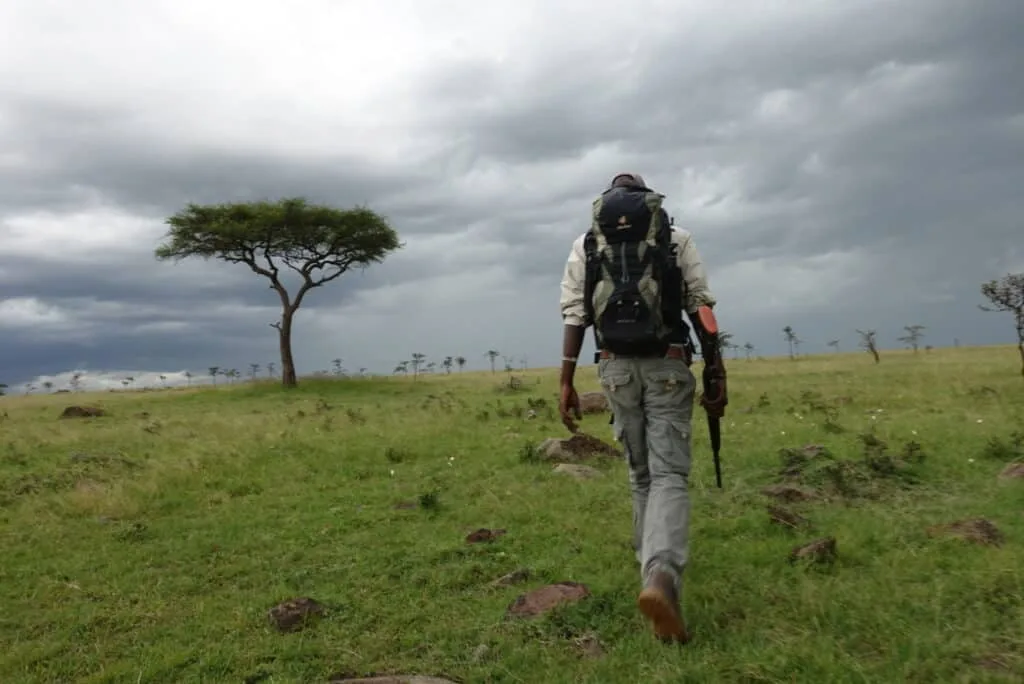
Horseback Safari Explained
How horseback safaris work in Africa — riding among plains game in the Okavango, Laikipia and Kenya's highlands — required experience, safety and the unique perspective of the saddle.
For a certain kind of traveller, a horseback safari is the pinnacle of the genre. On a horse you become part of the environment in a way no vehicle allows: zebra and giraffe read you as another large herbivore, wildebeest let you canter alongside them, and the sound of your hooves blends with the plains rather than announcing your arrival. The Okavango Delta and Kenya's Laikipia and Chyulu Hills offer the finest riding country in Africa, matched by top-tier horsemanship and safety. Horseback safari is not a beginner's format. You will spend three to six hours a day in the saddle over sand, rock and long grass; you will canter away from an elephant if asked; and you will do so on well-schooled but real African-conditioned horses. This piece explains what a ride looks like, the riding standard required, safety, and where to book — plus a few gentler options for less experienced riders.
Key things to know
- Riders integrate into herds — plains game rarely flee
- Best in the Okavango Delta, Kenya's Laikipia and Chyulu Hills
- Real intermediate-to-advanced riding required for most itineraries
- Fitness for 3–6 hours a day in the saddle
- Safety through experienced lead guides and calm ride discipline
- Some camps offer gentler dry-land rides for less experienced guests
- Combines beautifully with drives and walks
- Cannot approach big predators safely — off-limits by design
Why a horse changes everything
Africa's plains game evolved with large herbivores as neighbours, and they read a horse and rider as one — a bigger antelope than usual. The result is remarkable: zebra move a few metres and keep grazing, giraffe barely register, and you can move with a herd of wildebeest at a canter and feel the ground shake. From a vehicle, you observe wildlife; from a horse, you are inside it.
The experience is different from a walk, too — you cover more ground, you see over vegetation, and your relationship to the guide becomes a partnership at pace. For experienced riders, few things in wildlife tourism match it.
- Zebra, giraffe, wildebeest, eland approachable
- Sound blends into the landscape
- Cover 15–30 km a day
- Higher vantage than walking
- Read animals from their eye level
Where the best riding safaris happen
Botswana's Okavango Delta is the classic — Macatoo, run by African Horseback Safaris, is the icon, with vast concession and swimming rides through channels. Kenya's Laikipia (Ol Malo, Sosian, Loisaba Lodo Springs, Borana Lodge) and the Chyulu Hills (ol Donyo Waas) offer stunning highland riding with plains game and dramatic Kilimanjaro backdrops. South Africa has Horizon Horseback in the Waterberg for solid intermediate rides. Namibia's Damaraland and Malawi's Nyika Plateau are more specialised.
Each region has its own character. The Okavango offers water riding rare anywhere in the world; Laikipia's grasslands allow big-open cantering; Chyulu's cool climate suits longer distances.
- Macatoo, Okavango Delta
- Ol Malo, Sosian, Borana — Laikipia
- ol Donyo Waas — Chyulu Hills
- Horizon Horseback — Waterberg, SA
- Nyika Plateau, Malawi
What experience level is required
For the classic riding safaris in the Okavango, Laikipia and Chyulu, you must be a competent intermediate rider or above: comfortable at walk, trot and canter in open country, able to gallop out of trouble if a guide asks, and secure with hills and uneven ground. Camps ask honest riding CVs and reserve the right to reassign you if reality does not match the form.
Beginners are not excluded from horseback safari altogether. Many camps offer gentler dry-land rides, arena warm-ups, and short walk-and-trot outings — a chance to sample the format without joining a full ride. If a family combines beginners with experienced riders, private camps like Ol Malo can split groups accordingly.
Safety on a riding safari
Riding safaris are safe when the horses are well-schooled, the guide is experienced, and guests follow the ride discipline. Rules are strict: keep the order set by the lead, do not overtake, never dismount without permission, and if the guide signals to canter away from a large animal, you canter. The lead guide chooses paths that avoid buffalo herds and elephant family groups; horses are not approached to lions, leopards or hippos.
Injuries when they happen are usually falls, not wildlife-related. Wear a proper helmet, riding boots with a heel, and long trousers. Most camps carry a first-aid kit and radio contact with the main property; longer expedition rides sometimes shadow with a vehicle.
- Helmet always
- Boot with a heel
- Ride order set by the lead
- Never dismount unbidden
- Canter as instructed
A day on the saddle
A typical day starts early with a light breakfast, a saddle-up and 3–4 hours of morning riding across a variety of habitats. You come in for lunch and a siesta out of the heat, then head out again for 2–3 hours in the afternoon, often ending on a hill with a sundowner while the horses graze. Distances vary from 15 to 30 km a day across gentle terrain.
Camps range from luxury tented (a shower, wine list, laundry) to mobile fly-camps that move riders through wilderness. Both formats work — the choice depends on your comfort baseline and how deep you want to go into wild country.
How to combine and when to go
Riding safaris combine beautifully with drives, walks and boat/mokoro. Many Okavango programmes give you two or three days on horses at Macatoo followed by nights at a wildlife-focused water camp; Laikipia rides pair well with the Masai Mara or a coast add-on. Best season is broadly the dry months (June–October) for firm ground and concentrated wildlife, though Laikipia rides beautifully in the shoulder seasons too.
Book well ahead — good riding camps have limited beds and dedicated repeat guests, and the best guides are booked out months in advance.
References & further reading
- Sinclair, A. R. E., et al. (Eds.) (2015). Serengeti IV. Chicago: University of Chicago Press.
- Estes, R. D. (2012). The Behavior Guide to African Mammals. Berkeley: University of California Press.
- Kingdon, J. (2015). The Kingdon Field Guide to African Mammals (2nd ed.). London: Bloomsbury.
- IUCN (2024). The IUCN Red List of Threatened Species, Version 2024-1. www.iucnredlist.org.
Do it with SafariLingo
Take SafariLingo on safari: 300+ species, real animal calls, offline maps and sighting logs — all in your language, wherever you roam.
Get the appFrequently asked questions
How good a rider do I need to be?
For the flagship rides you must be at least a competent intermediate — walk, trot, canter and gallop in open country, secure over uneven ground. Camps ask riding CVs and can gently reassign you if your riding does not match.
Can beginners go on horseback safari?
Yes but on gentler dry-land options, arena warm-ups or short outings. Some camps run family programmes where beginners split off from advanced riders. Ask before booking.
How dangerous is a riding safari?
Statistically the greatest risk is a fall, not a wildlife incident. Guides route wide of predators, buffalo and elephant families. Wear a helmet and follow ride discipline.
How much riding a day?
Typically 3–6 hours across a morning and afternoon session with lunch and siesta in between. Distances 15–30 km on gentle to moderate terrain.
When is the best time?
Dry season (June–October) for firm ground and concentrated wildlife across most regions. Shoulder seasons ride well in Laikipia and the Chyulus.
Related guides
 National Parks
 Gorilla Trekking: What to Expect on the Day
A day in the mountain forest with a habituated gorilla family — permits, altitude, the seven-metre rule, the one-hour visit, porters, health rules and why it is one of Africa's most humbling experiences.
 National Parks
 Chimpanzee Tracking Explained
How chimpanzee tracking works — Kibale, Nyungwe, Mahale, Gombe — how it differs from gorillas, permit costs, forest sound and the strange intimacy of being nearer to our closest relative.
 National Parks
 Photographic Hide Safaris Explained
How photographic hides work in Africa — eye-level water holes, sunken shipping containers, night hides — where to find them, what they cost, and how to actually use the time.