
Combining Two Countries on One Safari
How and why to combine two countries on a single safari: classic pairings like Kenya and Tanzania, Botswana and Zimbabwe, or Rwanda and Kenya, plus flights, visas, pacing and getting real depth.
A two-country safari is one of the most rewarding ways to see Africa, letting you pair contrasting landscapes, wildlife and cultures in a single trip. Instead of seeing one country in isolation, you might follow the great herds across the Kenya–Tanzania border, balance Botswana's water wilderness with Victoria Falls in Zimbabwe, or add mountain gorillas in Rwanda to a classic Kenyan safari. The result is a richer, more varied journey that often tells a bigger story about the continent. But combining countries adds complexity: extra flights, visas, border formalities and the constant temptation to cram in too much. The art lies in choosing pairings that genuinely complement each other, then pacing the trip so each destination gets the days it deserves. This guide walks through the classic combinations, the logistics that make them work, and how to keep depth rather than turning your safari into a whirlwind of airports.
Key things to know
- Two-country safaris pair contrasting landscapes, wildlife and cultures in one trip
- Kenya and Tanzania is the classic East African combination, often following the migration
- Botswana and Zimbabwe pairs delta wilderness with the spectacle of Victoria Falls
- Rwanda or Uganda adds mountain gorillas to a savanna safari
- Flights, visas and border logistics need planning but are usually straightforward with a good operator
- Pacing matters most: give each country enough days to go deep
- Regional flights and open borders make many combinations easier than travellers expect
- A good ground operator or agent smooths transfers, permits and cross-border paperwork
Why combine two countries?
The best reason to combine countries is contrast. A single country, however wonderful, tends to offer variations on one theme; two countries let you experience genuinely different worlds within one journey. You might pair the open savannas and huge herds of one region with the waterways and elephants of another, or follow a single natural story—like the wildebeest migration—across a border that means nothing to the animals but everything to the map.
There are practical reasons too. Long-haul flights to Africa are expensive, so many travellers want to make the most of the journey by seeing more than one country while they are there. A well-designed combination can also smooth out the weaknesses of any single destination, balancing a big-game area with a cultural highlight, a beach, or a bucket-list experience like gorilla trekking or Victoria Falls. Done well, the whole becomes greater than the sum of its parts.
- Contrast is the main prize: different landscapes and wildlife
- Make the most of an expensive long-haul flight
- Follow a natural story like the migration across a border
- Balance big game with culture, beach or a bucket-list sight
- Cover weaknesses of any single destination
Kenya and Tanzania: the classic East African pairing
Kenya and Tanzania share the ecosystem that stages the great wildebeest migration, which makes them a natural pair. A typical trip combines Kenya's Masai Mara with Tanzania's Serengeti and Ngorongoro Crater, following the herds and enjoying two of the most famous reserves on Earth. Kenya often adds variety with Amboseli's elephants beneath Kilimanjaro or the northern conservancies, while Tanzania can extend to the Crater's dense concentrations of wildlife.
The main thing to understand is that crossing between the two takes planning. There is no casual drive across the Mara–Serengeti border for tourists; most travellers connect via a flight, often through Nairobi or Kilimanjaro, or use a specific border crossing with a change of vehicles and guides. It works smoothly with a good operator, but you should budget time and money for the transfer rather than assuming you can simply drive from one park to the next.
- Combines the Masai Mara with the Serengeti and Ngorongoro
- Follows the great migration across the shared ecosystem
- Kenya adds Amboseli, Kilimanjaro views and conservancies
- Crossing usually means a flight or a formal border transfer
- Budget time and cost for the connection between them
Botswana and Zimbabwe: delta, wildlife and the Falls
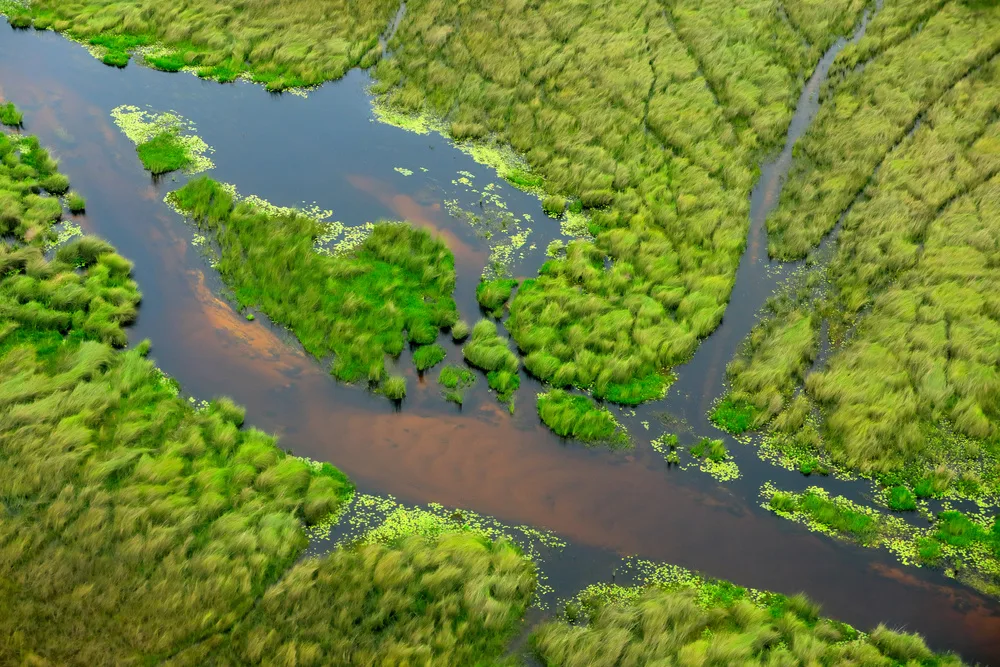
Botswana and Zimbabwe make a superb southern African pair, combining pristine wilderness with one of the world's great natural wonders. Botswana offers the water-based wilderness of the Okavango Delta and the elephant herds of Chobe, typically explored from intimate fly-in camps. Zimbabwe adds Victoria Falls—the thunderous, mile-wide curtain of water on the Zambezi—along with strong guiding and parks such as Hwange, famous for its elephants.
The logistics here are unusually friendly. Victoria Falls and Kasane, the gateway to Chobe, are very close together, so many itineraries pair a few nights at the Falls with Chobe and the Okavango almost seamlessly. This proximity, plus good light-aircraft networks, makes Botswana–Zimbabwe one of the easiest and most satisfying combinations, mixing serious wildlife with a genuine bucket-list spectacle.
- Pairs the Okavango Delta and Chobe with Victoria Falls
- Zimbabwe adds strong guiding and Hwange's elephants
- Victoria Falls and Chobe's gateway are very close together
- Good light-aircraft links make transfers easy
- Mixes serious wildlife with a bucket-list natural wonder
Adding gorillas: Rwanda or Uganda with a savanna safari
For many travellers, the ultimate add-on is mountain gorilla trekking, found only in Rwanda, Uganda and the DRC. Rwanda is especially popular as a pairing because Kigali is a well-connected, easy hub, and the gorillas of Volcanoes National Park are only a few hours away. Combining a classic savanna safari in Kenya or Tanzania with a couple of nights for gorilla trekking creates an unforgettable contrast between the open plains and the misty, forested mountains.
This kind of combination needs careful planning around gorilla permits, which are limited, expensive and must be booked well ahead. You also need a reasonable level of fitness for the trek, and should factor in the flights that link East Africa's savanna countries with the gorilla parks. It is not the cheapest add-on, but for most people a gorilla encounter is a genuine once-in-a-lifetime experience that more than justifies the extra logistics.
- Gorillas are found only in Rwanda, Uganda and the DRC
- Rwanda's Kigali is an easy, well-connected hub
- Pairs open plains with misty forested mountains
- Gorilla permits are limited, costly and must be booked early
- Requires reasonable fitness and extra connecting flights
Logistics: flights, visas and borders
The practical backbone of any two-country safari is the connection between them. Sometimes this is a scheduled international flight through a hub like Nairobi, Johannesburg or Kigali; sometimes it is a small light-aircraft hop between bush airstrips; and occasionally it is a road crossing at a land border. Each has cost and time implications, and it is worth understanding how you will move before you fall in love with an itinerary.
Visas and entry rules vary by country and nationality, so check current requirements carefully, including whether a single regional visa covers both destinations, as it can for certain East African combinations. Allow buffer time around international connections so a delay does not cost you a gorilla permit or a camp night, and keep luggage within the strict weight limits of light aircraft. A good ground operator or specialist agent is invaluable here, handling transfers, permits and cross-border paperwork so you can focus on the wildlife.
- Connections may be scheduled flights, light aircraft or road borders
- Check visa rules; a regional visa may cover both countries
- Allow buffer time around key international connections
- Respect light-aircraft luggage weight and size limits
- A good operator handles transfers, permits and paperwork
Pacing: depth over box-ticking
The commonest mistake on a two-country safari is trying to do too much. Every extra destination adds a travel day, a set of transfers and a fresh round of unpacking, and it is easy to end up spending more time in airports than on game drives. As a rule, it is better to see two countries well than three or four in a blur, and better to spend three or four nights in each key area than to hop every night.
Think in terms of a small number of substantial stops rather than a long checklist. Give the migration, the delta or the gorillas enough days to actually experience them, including a buffer for weather, delayed flights or simply a lazy morning. A slower, deeper trip almost always produces better wildlife sightings, better photographs and better memories than a frantic dash, and it leaves room for the unplanned moments that often become the highlight of the whole journey.
- Every extra stop adds travel days and transfers
- Two countries done well beats three or four in a blur
- Aim for three to four nights in each key area
- Build in buffers for weather and flight delays
- Slower trips yield better sightings, photos and memories
References & further reading
- Sinclair, A. R. E., et al. (Eds.) (2015). Serengeti IV. Chicago: University of Chicago Press.
- Estes, R. D. (2012). The Behavior Guide to African Mammals. Berkeley: University of California Press.
- Kingdon, J. (2015). The Kingdon Field Guide to African Mammals (2nd ed.). London: Bloomsbury.
- IUCN (2024). The IUCN Red List of Threatened Species, Version 2024-1. www.iucnredlist.org.
Do it with SafariLingo
Take SafariLingo on safari: 300+ species, real animal calls, offline maps and sighting logs — all in your language, wherever you roam.
Get the appFrequently asked questions
Is it worth combining two countries on one safari?
For many travellers, yes. Combining two countries lets you pair contrasting landscapes and wildlife, make the most of an expensive long-haul flight, and add a bucket-list highlight like Victoria Falls or gorilla trekking. The key is to choose complementary destinations and pace the trip so each gets enough time, rather than trying to cram in too much.
What is the easiest two-country safari combination?
Botswana and Zimbabwe is one of the easiest, because Victoria Falls sits very close to the gateway for Chobe and the Okavango, with good light-aircraft links between camps. Kenya and Tanzania is also popular but usually needs a flight or a formal border transfer between the Mara and the Serengeti, so it takes a little more planning.
Do I need separate visas for each country?
It depends on the countries and your nationality. Some East African destinations can be covered by a single regional visa, while others require separate visas or entry permits. Always check current requirements for your passport well before you travel, and let your operator advise on the best option for your specific route.
How many days do I need for a two-country safari?
As a guide, allow at least three to four nights in each key area, plus travel days for the connections, so many two-country trips run from around ten days to two weeks or more. The exact length depends on your pace and how far apart the destinations are, but it is better to add days than to rush each place.
Can I add gorilla trekking to a normal safari?
Yes, and it is a spectacular add-on. Rwanda and Uganda are the usual choices, often paired with a Kenyan or Tanzanian savanna safari. You will need to book limited, expensive gorilla permits well in advance, have a reasonable level of fitness for the trek, and allow for the connecting flights between the savanna and the gorilla parks.
Related guides
 Destinations
 How Safari Tourism Funds Conservation
How your safari helps protect wild Africa — park fees, private concessions, community land leases, local jobs, anti-poaching funding and responsible tourism — plus how to choose operators whose money genuinely reaches wildlife and people.
 Destinations
 Anti-Poaching and How Tourists Help
How Africa fights poaching — rangers, technology and demand reduction — and the concrete ways your visit and spending help protect wildlife and support communities.
 Destinations
 Meeting Local Communities Responsibly on Safari
How to visit local communities on safari in a way that is authentic, respectful and genuinely beneficial — covering staged versus real encounters, photo permission, fair pay and supporting local crafts and enterprise.